Even as a beauty journalist, it’s becoming increasingly difficult to see beyond skincare’s savvy marketing and influencer endorsements to distinguish which products are actually going viral for their efficacy. That’s why I was so intrigued when I first heard about Volufiline, a cosmetic ingredient blend, gaining traction as a topical ‘replacement’ for filler.
If you believe the TikTok posts, topically applied Volufiline can dramatically plump skin and smooth wrinkles, similar to the effect of hyaluronic acid injections. Others claim the ingredient can help with orbital fat loss, or hollowing around the eyes, which typically occurs with age. Tear trough filler is often used to treat this, but it can be costly and not everyone is a suitable candidate, so the idea of Volufiline, which doesn’t require a needle and comes at a fraction of the price, is an intoxicating one.
But is it too good to be true? Can any topically applied ingredient really replace more invasive treatments? I spoke to some of Marie Claire’s most trusted consultant dermatologists and plastic surgeons to sort the claims from the clinical.
What is Volufiline and How Does it Work?
Volufiline is a cosmetic ingredient blend that combines a plant-derived extract with a skin-softening carrier, known as hydrogenated polyisobutene, explains Dr Nupur Patel, Board Certified Dermatologist. “The compound attracting attention is sarsasapogenin, which comes from the roots of a plant called Anemarrhena asphodeloides. Although the botanical name is a mouthful, the important part is understanding what the ingredient has actually been shown to do.”
In lab research carried out by volufiline’s manufacturer, sarsasapogenin has been shown to encourage “fat cells, called adipocytes, to develop and store more fat,” says Dr Patel. “The theory is that increasing that underlying cushioning could create a fuller appearance and a plumping effect that enhances volume and smoothness.”
Demonstrating an effect on fat cells in a laboratory however, is absolutely not proof that an ingredient will reproduce those results when applied to human skin. While preliminary research suggests sarsasapogenin may influence how fat cells develop and store lipids, there is insufficient clinical evidence to establish whether topical Volufiline can penetrate the dermis deeply enough to produce meaningful changes in facial volume.
Both Dr Patel and consultant dermatologist Dr Derrick Phillips stress that clinical evidence for the use of Volufiline on the face is limited. “One small study found a modest increase in volume after eight weeks of twice-daily use, although the results were not statistically significant,” clarifies Phillips. “More research is needed to establish whether Volufiline can produce noticeable results and how long these might take to appear.”
Can Volufiline Really Replace Filler?
According to dual board-certified facial plastic and reconstructive surgeon Dr Steven Pearlman, Volufiline is categorically not a replacement for filler. “I think it’s important to be straightforward about that,” he says firmly.
“Injectable fillers like hyaluronic acid work by physically adding volume beneath the skin at a precise depth and location, and the results are immediate and significant. Volufiline works at the surface level by gradually encouraging the skin’s own fat cells to expand, creating a mild plumping effect over [a period of] weeks to months. I would encourage realistic expectations.”
And while this theory of Volufiline gently motivating our fat cells is promising, remember that it has yet to be convincingly demonstrated in human facial skin. What’s more, the ingredient is often included in moisturising formulations, which can make skin look smoother and more cushioned, temporarily softening fine lines.
As a general rule of thumb, experts recommend trying the product for eight weeks to see if you notice a difference. “Results tend to be seen in areas where the skin is thinner and volume loss is mild, such as the under-eye area and cheeks,” says Dr Pearlman. “It is less effective in areas that require structural support, like deep nasolabial folds or significant mid-face hollowing, because those concerns are driven by tissue descent and bone resorption rather than just surface-level volume.”
The ingredient is best suited, adds Pearlman, to “individuals in their late 20s to 40s who are experiencing early, mild signs of volume loss and want to be proactive about maintaining fullness without jumping to injectables.” Or if you’re already using fillers and just want a topical product to support the results by providing temporary plumping and moisturisation.
One thing we do know: any results you do see will only be maintained through continued use. If you stop applying Volufiline, the plumping effect will gradually diminish as the stimulated fat cells return to their baseline.
How to Use Volufiline
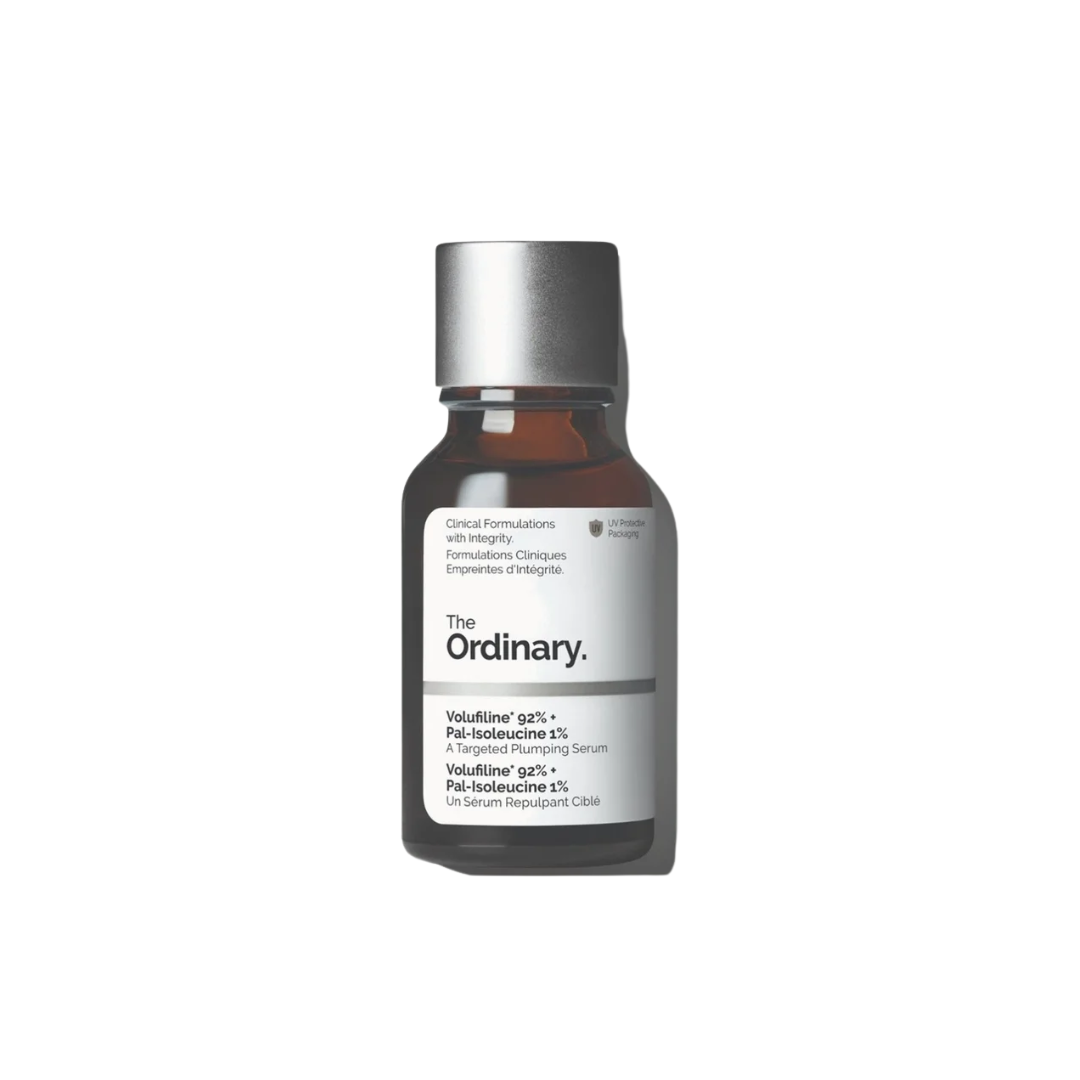
If you’re shopping around for a good Volufiline formula, Dr Patel recommends opting for a “clearly labelled, ready-to-use formula from an identifiable brand, rather than an untraceable bottle of raw ingredients. The Ordinary Volufiline 92% + Pal-Isoleucine 1% would be my first consideration. I like the short ingredient list, the absence of added fragrance and the straightforward, ready-to-use format. It combines the Volufiline complex with 1% palmitoyl isoleucine, a supporting ingredient included for its skin-plumping positioning.”
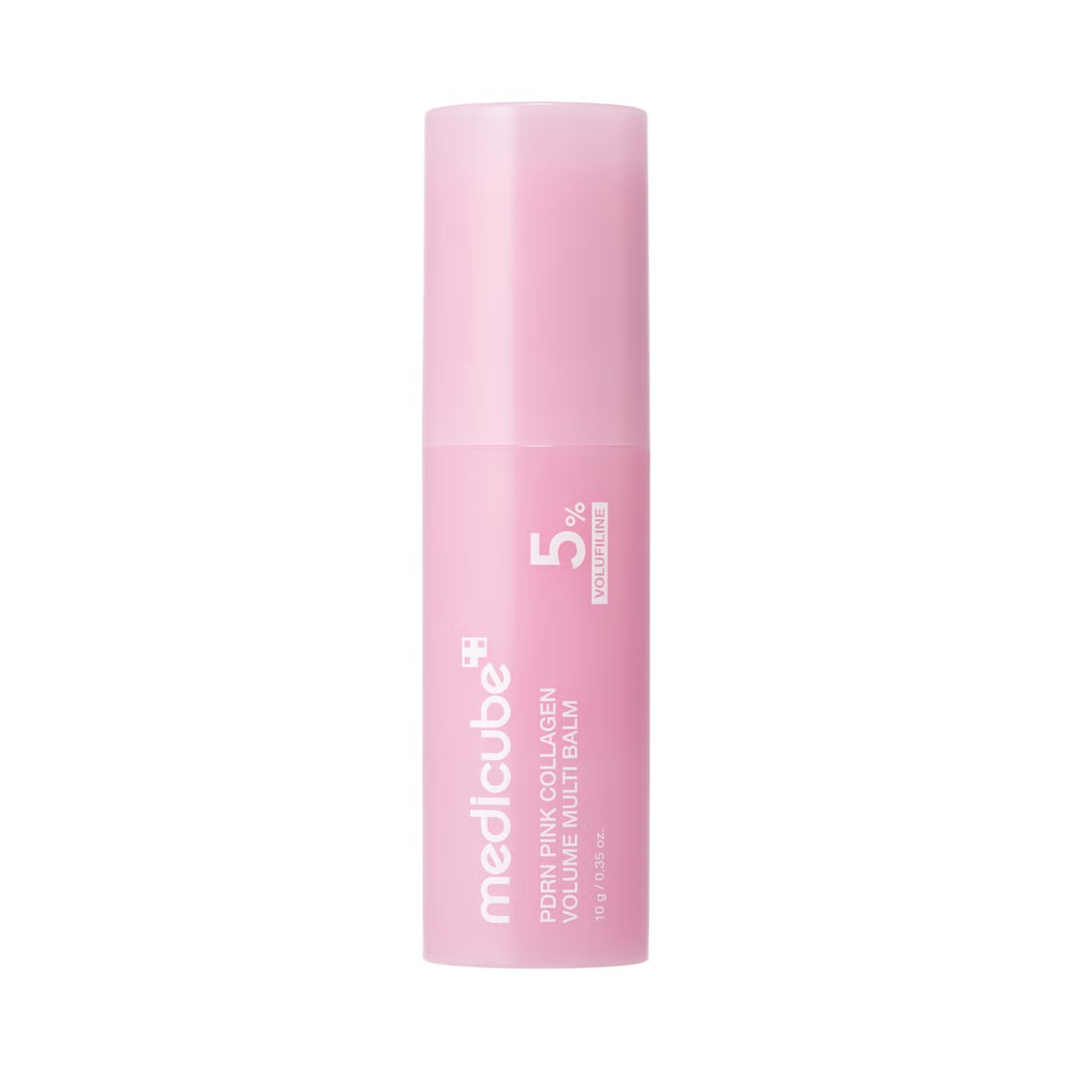
Medicube has the PDRN Pink Collagen Volume Multi Balm to offer. “I would consider this for someone who prefers a balm and wants targeted moisturising care for dry-looking lines,” says Patel. “The stick format is convenient, and the formula combines Volufiline with a substantial emollient-and-wax base.” Tread carefully with this one if you have reactive skin or eyelid sensitivity though, as it also contains retinol and potentially irritating aromatic plant oils, including geranium, bergamot, and ylang-ylang.
Are There Any Risks or Side Effects?
Alongside those with reactive skin, Dr Patel advises caution if you are acne-prone, as most formulas incorporating Volufiline are oil-based. “I recommend reviewing the entire formula, and I would never encourage someone to keep purchasing it indefinitely because they are waiting for a filler-like transformation.” As always, she advises patients to patch test first, use only on unbroken skin, and to stop if irritation develops. For the eye area, choose a product specifically intended for that location and keep it out of the eyes.
from Latest from Marie Claire UK https://ift.tt/H4VzK3J
via IFTTT

No comments:
Post a Comment