Wednesday, 21 October 2026

I Tried the ‘NSDR’ Relaxation Technique for 6 Weeks—Can Finding Time to Do Nothing Really Boost Our Energy?

https://ift.tt/JvaFnoy

Resting while awake? Honestly, not my strongest skill. I don’t mean scrolling Instagram, watching Netflix while your mind is crafting tomorrow’s to-do list, or spending Sunday blitzing through everything I didn’t manage during the week. I mean properly switching off. No productivity, no little side quest. Nothing to show for it.

I realised quite how bad I’d got when someone asked when I’d last taken a whole day just to rest. A whole day? I drew a blank. Like so many women I know, I’ve become convinced that every spare minute needs to earn its keep. Whether it’s an overachiever habit or the curse of a generation hell-bent on optimising absolutely everything, sitting still without feeling vaguely guilty is harder than it should be.

My apparently very reasonable conditions for resting: inbox zero, washing done, life in order. Only then may I lay down. Except, well, you know how that goes. So, in the spirit of finding balance, I had a difficult discussion with myself (and my psychic)... I need a way to switch off that didn’t mean relinquishing all my control to consumerism, buying another supplement, mastering an elaborate routine or adding yet another habit to my already overbooked day. Enter NSDR, or non-sleep deep rest: a practice that promises meaningful rest in just ten minutes. The gist? Lay down, close your eyes, follow a guided relaxation. No sleeping, no striving, no gold star required.

For six weeks, I tried ten minutes of NSDR a day, tracking my energy, mood, concentration and sleep, while speaking with experts to separate the science from the wellness waffle. Could ten minutes really help me feel less knackered? And could I finally switch off without mentally adding relax properly to my to-do list?

Can Finding Time to Do Nothing Really Boost Our Energy? I Tried the ‘NSDR’ Relaxation Technique for 6 Weeks to Find Out

What is NSDR, and how much of it is backed by science?

Before I committed to six weeks of lying around with my eyes closed (a daunting task for any restless Type A), I wanted to know whether NSDR was genuinely doing something for my brain, or whether I was essentially taking an elaborate nap minus the score points on my Oura ring.

First things first, explains neuroscientist and Brainwave founder Anne-Sophie Fluri: “NSDR is a label rather than a separate technique. Popularised by neuroscientist Andrew Huberman, it describes older practices such as yoga nidra, where you lie down, follow a guided focus on your body and breath, and stay awake while letting go of effort.” As Fluri points out, almost all scientific literature focuses on yoga nidra, with very little research looking specifically at NSDR. So, if you're scratching your head wondering why you haven’t come across NSDR before, then the lack of research under that name is probably why.

But why can doing nothing feel so difficult? Neuroscientist Farah Qureshi explains that “when we stop focusing on a task, the default mode network in the brain becomes more active” - a network involved in processing memories and experiences. Perhaps this helps explain why a quiet moment with our own thoughts can feel anything but relaxing. In a 2014 study, participants were so reluctant to do it that they preferred giving themselves a mild electric shock. Suddenly, my inability to sit still felt a little less ridiculous.

And while sitting still might not come naturally to all of us, there are potential benefits to giving it a go. Qureshi points to a 2002 study that found a rise in dopamine release during yoga nidra (although it involved just eight experienced practitioners). There’s also research suggesting that a little time spent doing absolutely nothing could help our brains consolidate new skills, giving them a chance to bed in what we’ve just learnt.

So, the science is promising, but yoga nidra and NSDR aren’t interchangeable, and neither is a magical dopamine reset or a substitute for sleep. Still, there are reasons to think deliberate rest could help us feel a little less frazzled. The question is how to fit it into everyday life - especially if, like me, sitting still for ten minutes feels like a challenge in itself.

5 ways to practise NSDR in everyday life

Where do we start when switching off doesn’t exactly come naturally? I asked the neuroscientists for their go-to NSDR techniques, from guided yoga nidra to purposeful slow breathing, and used their advice to shape my six-week experiment. As Fluri stresses, “there’s no single scientifically proven protocol, so the aim was to find something simple enough to stick to and easy to squeeze into everyday life.” No overhauled routine, no wellness homework, no new habit to feel guilty about not keeping up with. Promise.

1. Try a guided Yoga Nidra session

If you’re new to NSDR, start here. Yoga Nidra is the practice most of the research focuses on: you lie down, close your eyes and follow a voice guiding your attention through your body and breath. Fluri suggests starting with a recording of around 10 minutes, building up to 30 if it suits you. “The idea is to let the recording do the work, rather than turning relaxation into another task to get right.”

2. Breathe out a little longer

Both experts recommend slow breathing, particularly with a longer exhale, to help shift the body towards a calmer state. Qureshi recommends trying five minutes of cyclic sighing: inhale through your nose, take a second, shorter inhale, then exhale slowly. In a 2023 Stanford study, even just five minutes a day improved mood over a month, with greater improvements than mindfulness meditation. “It’s a simple standalone practice, or a gentle way to ease into yoga nidra when your mind is still racing,” says Qureshi.

3. Do a morning body scan

Rather than reaching for your phone the moment you wake up, try spending a few minutes noticing how your body actually feels. Fluri recommends a body scan: “Moving your attention slowly from one part of the body to another is central to yoga nidra, and gives a busy mind something gentle to focus on.” Fluri also sees it as a way to develop interoception: the ability to notice your body’s internal signals, from tension to tiredness. No wearable required; just a little curiosity about how you’re feeling before the day takes over.

4. Give your brain ten quiet minutes after focused work

This might just be the easiest habit to sneak into a busy day, and maybe one for the corporate baddies of the world to take note of. As Qureshi suggests above, there is solid evidence suggesting that resting quietly after learning something new can help the brain retain those memories, making a short, screen-free pause after a meeting, reading session or demanding task worth trying.

5. Make it work with your routine

There’s no magic hour for NSDR, but Qureshi recommends choosing a regular time, whether that’s first thing in the morning, before bed or somewhere in the middle of the day. “The brain responds well to routine,” she explains, “so consistency is a more useful goal than chasing the ideal moment. Find somewhere quiet, sit or lie comfortably, close your eyes and follow a guided recording so you don’t have to decide what to do next.”

I planned to experiment with these approaches over six weeks and see which, if any, made a noticeable difference, because knowing that rest should be good for me and actually managing to switch off two very different things.

Six weeks, 10 minutes a day: I put NSDR to the test.

Recently I found myself giggling with our Senior Health and Sustainability Editor, Ally Head, about just how spectacularly bad I am at doing nothing. A facial where I’m left alone under a red light for 20 minutes? Lovely in theory. In practice, my brain has worked through every email I need to respond to, replied to all of my 38 unopened WhatsApps (sorry to everyone waiting for a response), and telepathically asked my partner what he’s cooking for dinner, all before the therapist has even left the room. Being alone with my own racing mind isn’t exactly my happy place. Which, I figured, made me the perfect candidate for NSDR.

I’m also in the process of buying a house, and it turns out the rumours are true: it really is up there with the most stressful things you’ll ever do. If my solicitor happens to be reading this, rest assured I’m trying to find my calm.

Across the six weeks, I tried to work all of the NSDR techniques into my routine, from morning body scans to ten-minute yoga nidra sessions. I also experimented with where I practised. Living by the beach, I was curious to see whether taking my ten-minute rest outside, with the sea in front of me (and my Pomeranian in tow), would feel any different to lying down at home. Some days, I kept it simple and stayed put; on others, I took myself out for a little change of scenery.

And the best bit? I could always find ten minutes. Between emails, house admin and the general business of being a person, I could always find ten minutes to lie down, close my eyes and give my brain the breather it hadn’t quite realised it needed.

Qureshi assures me that repeating the practices daily can help my brain adapt. “Six weeks is a really good start”, she says, although research suggests longer-lasting changes may take eight weeks or more. “Building a habit takes around two months on average, too, with plenty of variation between people.”

I’ve found myself turning to those ten minutes when the house-buying admin starts mounting, my inbox feels vaguely threatening, or my brain has approximately 29 tabs open and no idea which one to deal with first. Does NSDR make the stress disappear? Sadly, no. My solicitor still thinks I'm a basket case. But taking a few minutes to lie down and stop feeding the mental to-do list does seem to give me a little breathing room…quite literally.

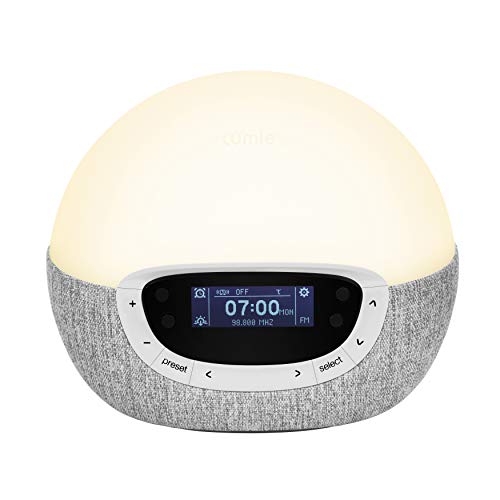
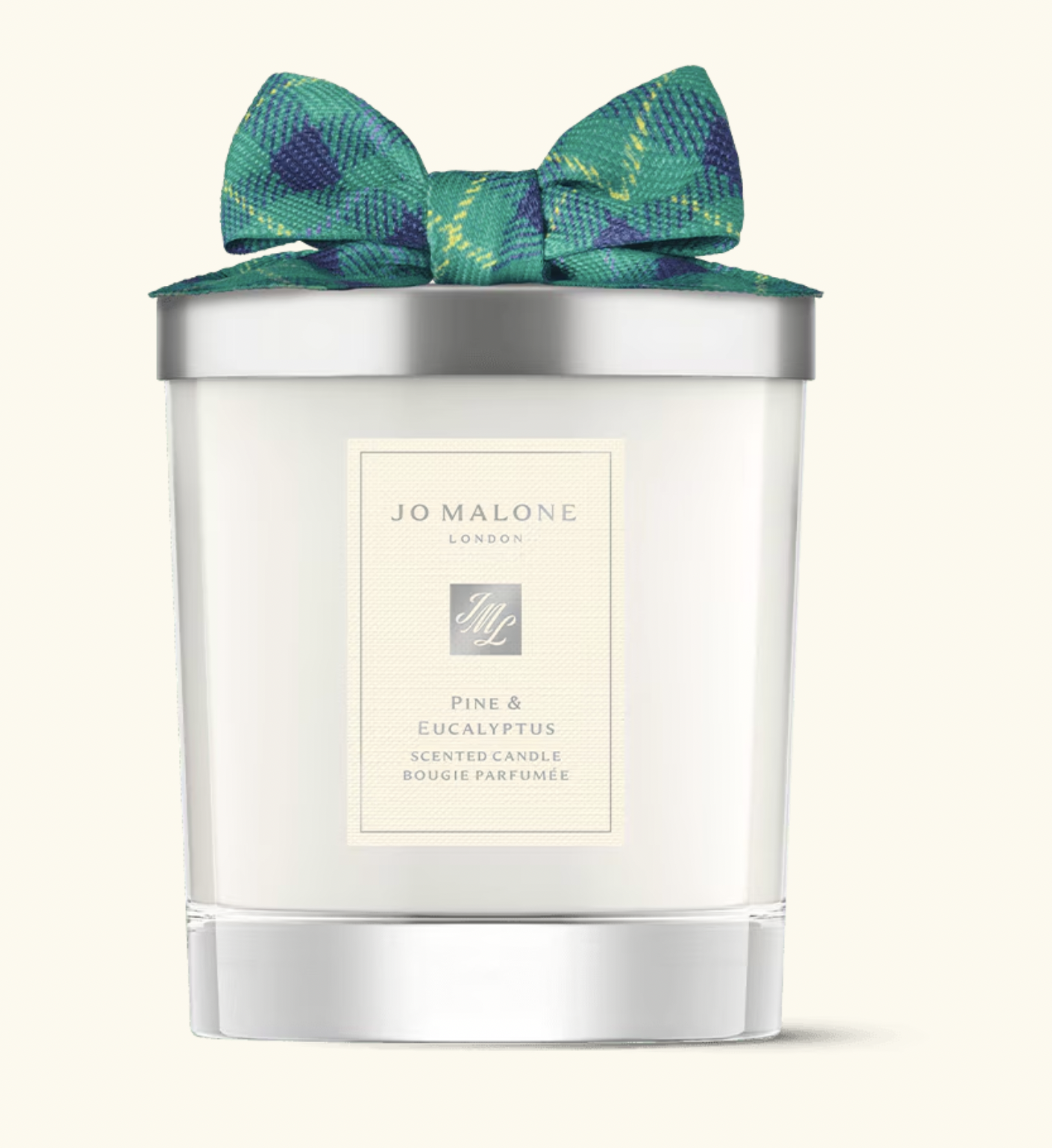
Need a breather? Shop MC's essentials for a little everyday reset


from Latest from Marie Claire UK https://ift.tt/3neBkcU
via IFTTT

Volufiline is the Latest Ingredient Being Lauded as a Filler Replacement, but Do Dermatologists Agree?

https://ift.tt/2hXNmjf

Even as a beauty journalist, it’s becoming increasingly difficult to see beyond skincare’s savvy marketing and influencer endorsements to distinguish which products are actually going viral for their efficacy. That’s why I was so intrigued when I first heard about Volufiline, a cosmetic ingredient blend, gaining traction as a topical ‘replacement’ for filler.

If you believe the TikTok posts, topically applied Volufiline can dramatically plump skin and smooth wrinkles, similar to the effect of hyaluronic acid injections. Others claim the ingredient can help with orbital fat loss, or hollowing around the eyes, which typically occurs with age. Tear trough filler is often used to treat this, but it can be costly and not everyone is a suitable candidate, so the idea of Volufiline, which doesn’t require a needle and comes at a fraction of the price, is an intoxicating one.

But is it too good to be true? Can any topically applied ingredient really replace more invasive treatments? I spoke to some of Marie Claire’s most trusted consultant dermatologists and plastic surgeons to sort the claims from the clinical.

What is Volufiline and How Does it Work?

Volufiline is a cosmetic ingredient blend that combines a plant-derived extract with a skin-softening carrier, known as hydrogenated polyisobutene, explains Dr Nupur Patel, Board Certified Dermatologist. “The compound attracting attention is sarsasapogenin, which comes from the roots of a plant called Anemarrhena asphodeloides. Although the botanical name is a mouthful, the important part is understanding what the ingredient has actually been shown to do.”

In lab research carried out by volufiline’s manufacturer, sarsasapogenin has been shown to encourage “fat cells, called adipocytes, to develop and store more fat,” says Dr Patel. “The theory is that increasing that underlying cushioning could create a fuller appearance and a plumping effect that enhances volume and smoothness.”

Demonstrating an effect on fat cells in a laboratory however, is absolutely not proof that an ingredient will reproduce those results when applied to human skin. While preliminary research suggests sarsasapogenin may influence how fat cells develop and store lipids, there is insufficient clinical evidence to establish whether topical Volufiline can penetrate the dermis deeply enough to produce meaningful changes in facial volume.

Both Dr Patel and consultant dermatologist Dr Derrick Phillips stress that clinical evidence for the use of Volufiline on the face is limited. “One small study found a modest increase in volume after eight weeks of twice-daily use, although the results were not statistically significant,” clarifies Phillips. “More research is needed to establish whether Volufiline can produce noticeable results and how long these might take to appear.”

Can Volufiline Really Replace Filler?

According to dual board-certified facial plastic and reconstructive surgeon Dr Steven Pearlman, Volufiline is categorically not a replacement for filler. “I think it’s important to be straightforward about that,” he says firmly.

“Injectable fillers like hyaluronic acid work by physically adding volume beneath the skin at a precise depth and location, and the results are immediate and significant. Volufiline works at the surface level by gradually encouraging the skin’s own fat cells to expand, creating a mild plumping effect over [a period of] weeks to months. I would encourage realistic expectations.”

And while this theory of Volufiline gently motivating our fat cells is promising, remember that it has yet to be convincingly demonstrated in human facial skin. What’s more, the ingredient is often included in moisturising formulations, which can make skin look smoother and more cushioned, temporarily softening fine lines.

As a general rule of thumb, experts recommend trying the product for eight weeks to see if you notice a difference. “Results tend to be seen in areas where the skin is thinner and volume loss is mild, such as the under-eye area and cheeks,” says Dr Pearlman. “It is less effective in areas that require structural support, like deep nasolabial folds or significant mid-face hollowing, because those concerns are driven by tissue descent and bone resorption rather than just surface-level volume.”

The ingredient is best suited, adds Pearlman, to “individuals in their late 20s to 40s who are experiencing early, mild signs of volume loss and want to be proactive about maintaining fullness without jumping to injectables.” Or if you’re already using fillers and just want a topical product to support the results by providing temporary plumping and moisturisation.

One thing we do know: any results you do see will only be maintained through continued use. If you stop applying Volufiline, the plumping effect will gradually diminish as the stimulated fat cells return to their baseline.

How to Use Volufiline

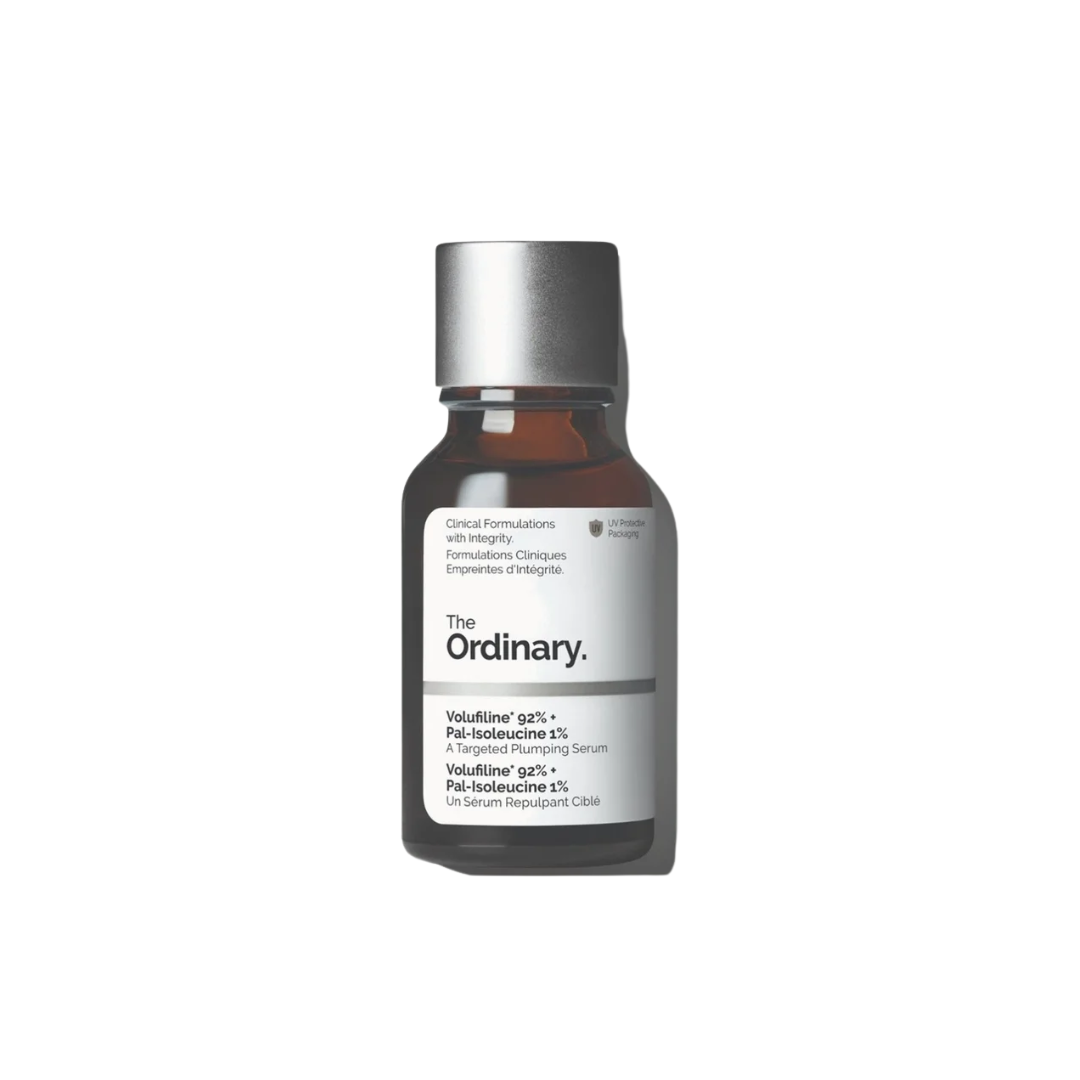
If you’re shopping around for a good Volufiline formula, Dr Patel recommends opting for a “clearly labelled, ready-to-use formula from an identifiable brand, rather than an untraceable bottle of raw ingredients. The Ordinary Volufiline 92% + Pal-Isoleucine 1% would be my first consideration. I like the short ingredient list, the absence of added fragrance and the straightforward, ready-to-use format. It combines the Volufiline complex with 1% palmitoyl isoleucine, a supporting ingredient included for its skin-plumping positioning.”

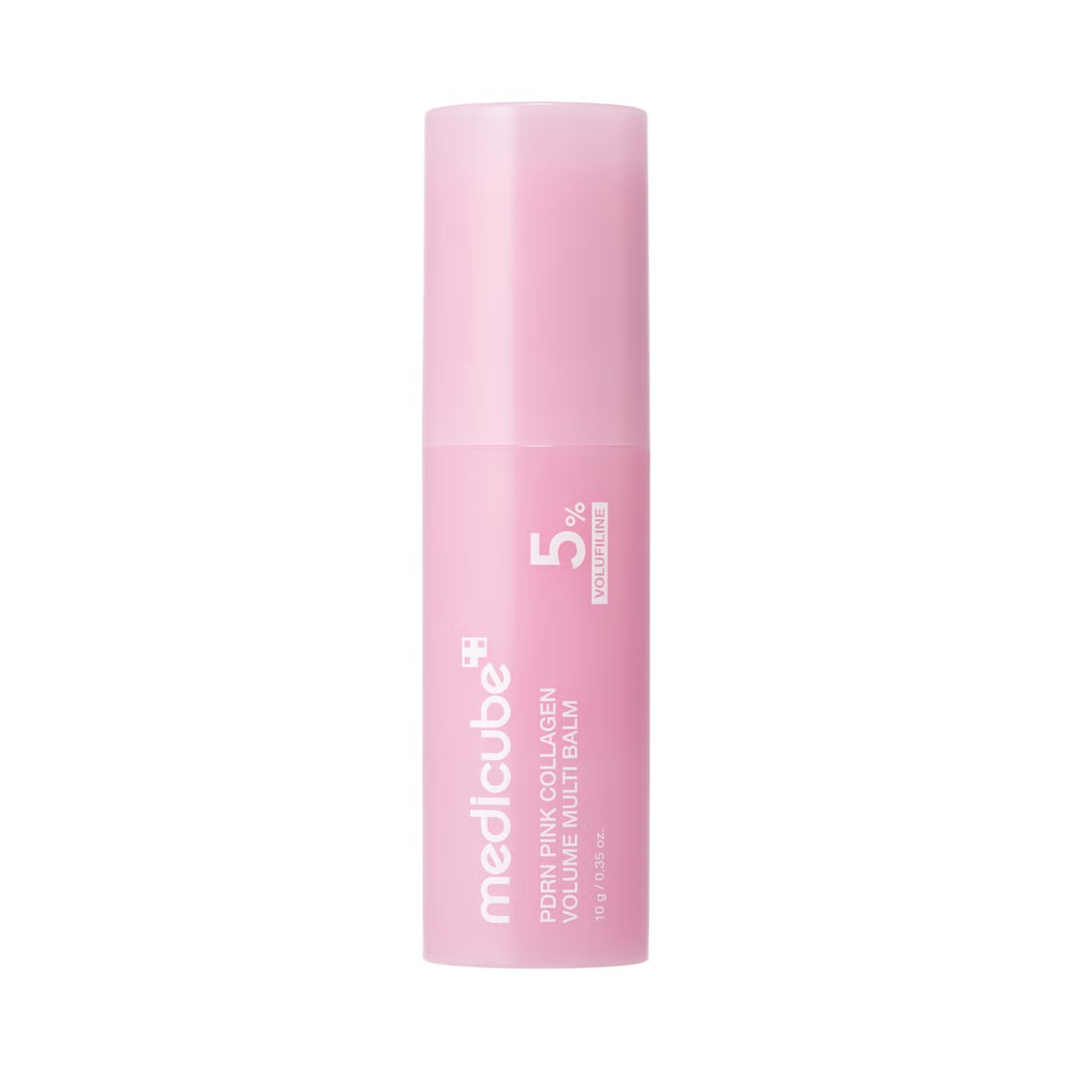
Medicube has the PDRN Pink Collagen Volume Multi Balm to offer. “I would consider this for someone who prefers a balm and wants targeted moisturising care for dry-looking lines,” says Patel. “The stick format is convenient, and the formula combines Volufiline with a substantial emollient-and-wax base.” Tread carefully with this one if you have reactive skin or eyelid sensitivity though, as it also contains retinol and potentially irritating aromatic plant oils, including geranium, bergamot, and ylang-ylang.

Are There Any Risks or Side Effects?

Alongside those with reactive skin, Dr Patel advises caution if you are acne-prone, as most formulas incorporating Volufiline are oil-based. “I recommend reviewing the entire formula, and I would never encourage someone to keep purchasing it indefinitely because they are waiting for a filler-like transformation.” As always, she advises patients to patch test first, use only on unbroken skin, and to stop if irritation develops. For the eye area, choose a product specifically intended for that location and keep it out of the eyes.


from Latest from Marie Claire UK https://ift.tt/H4VzK3J
via IFTTT
A Dark Blue Wash is the Secret to Making Jeans Look Polished, Swears Our Fashion Director

https://ift.tt/5g0ypL7

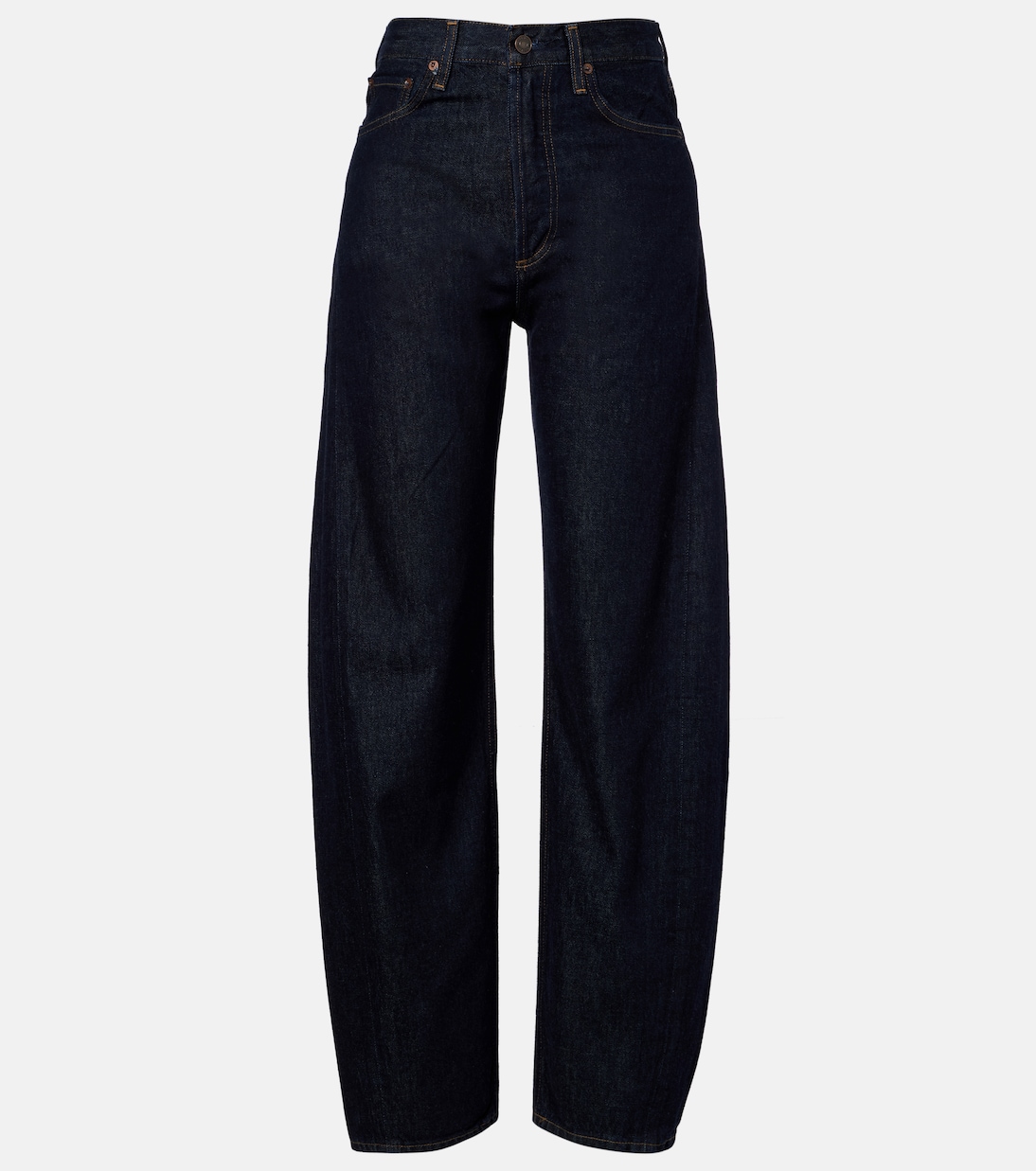
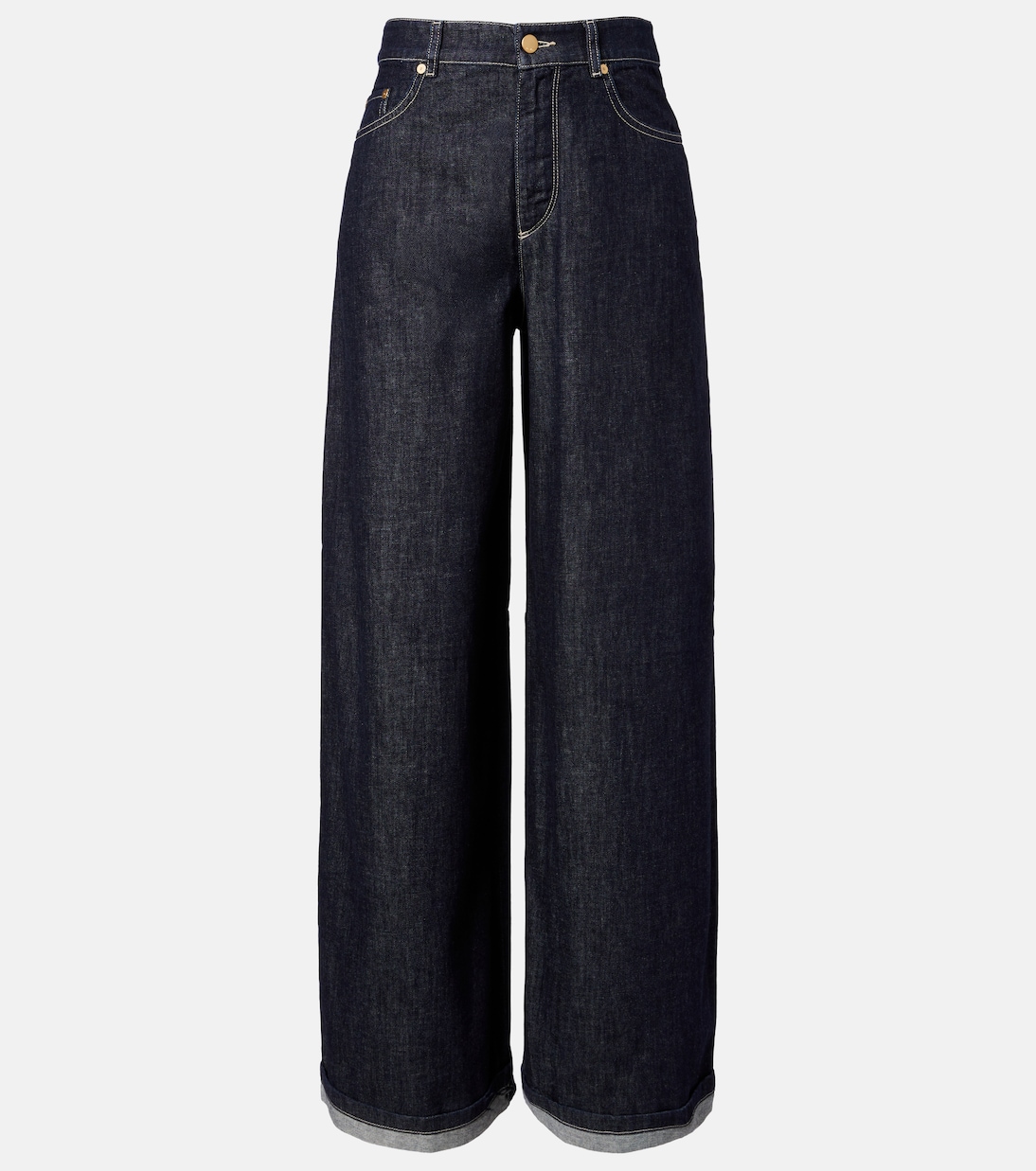
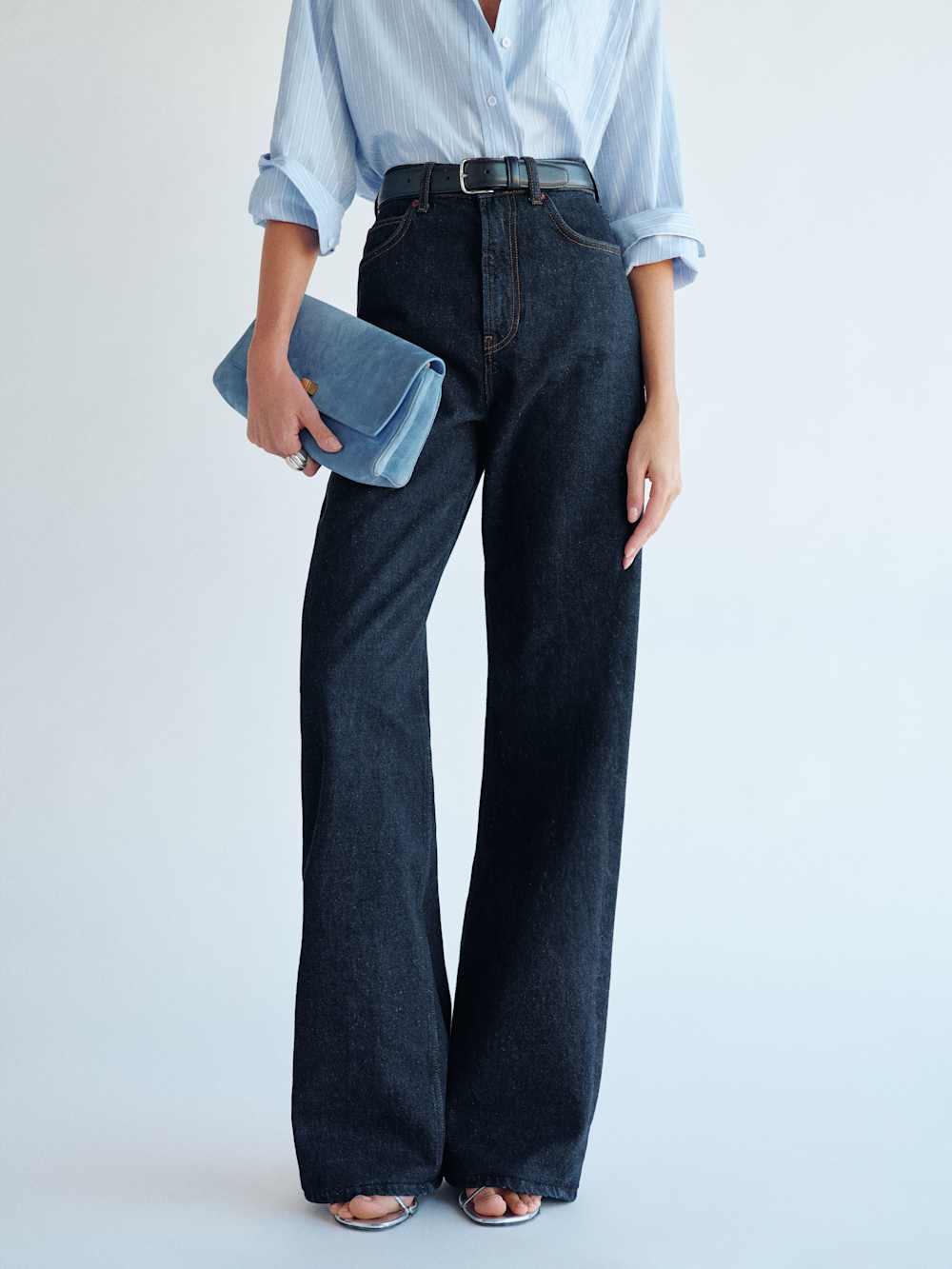
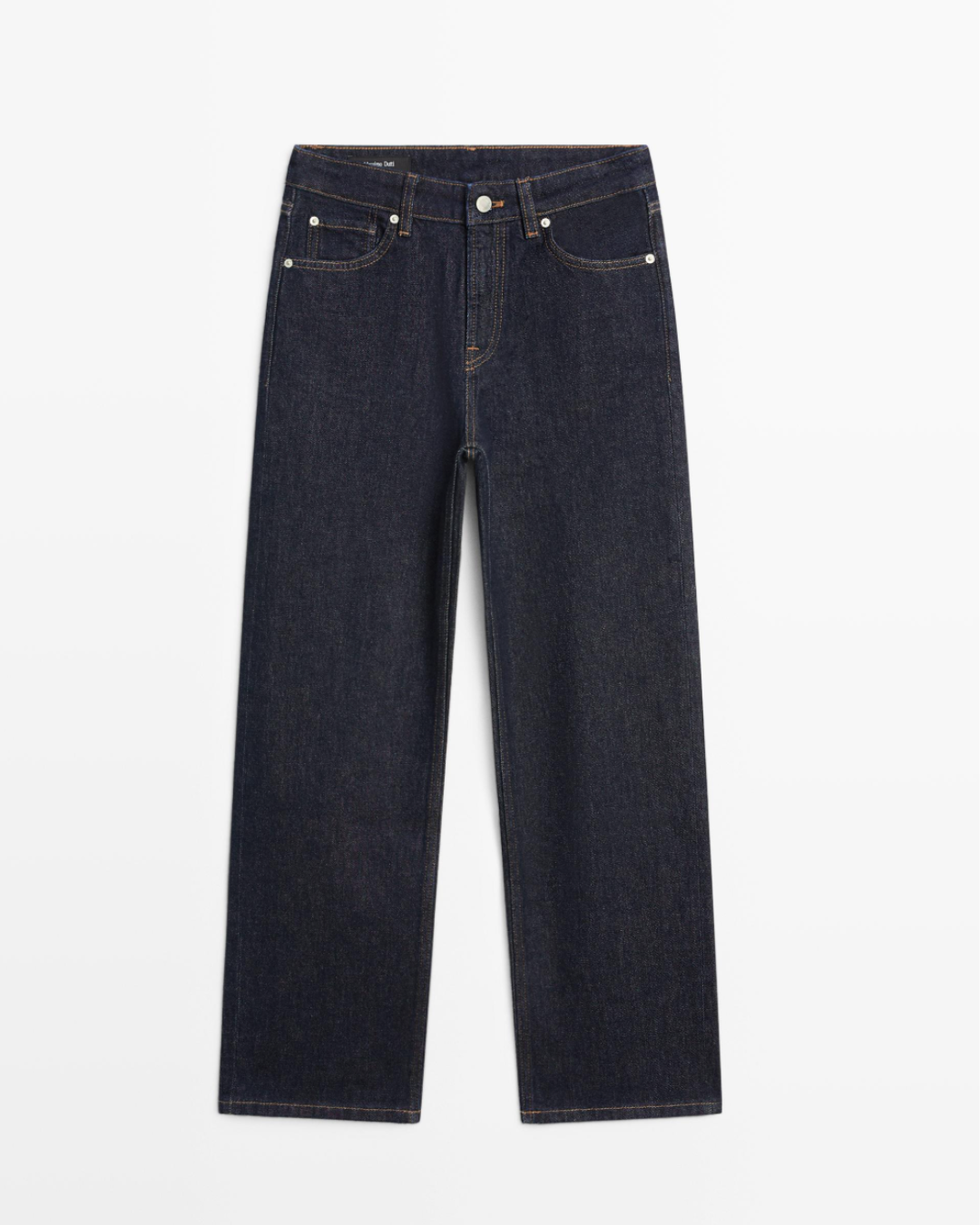
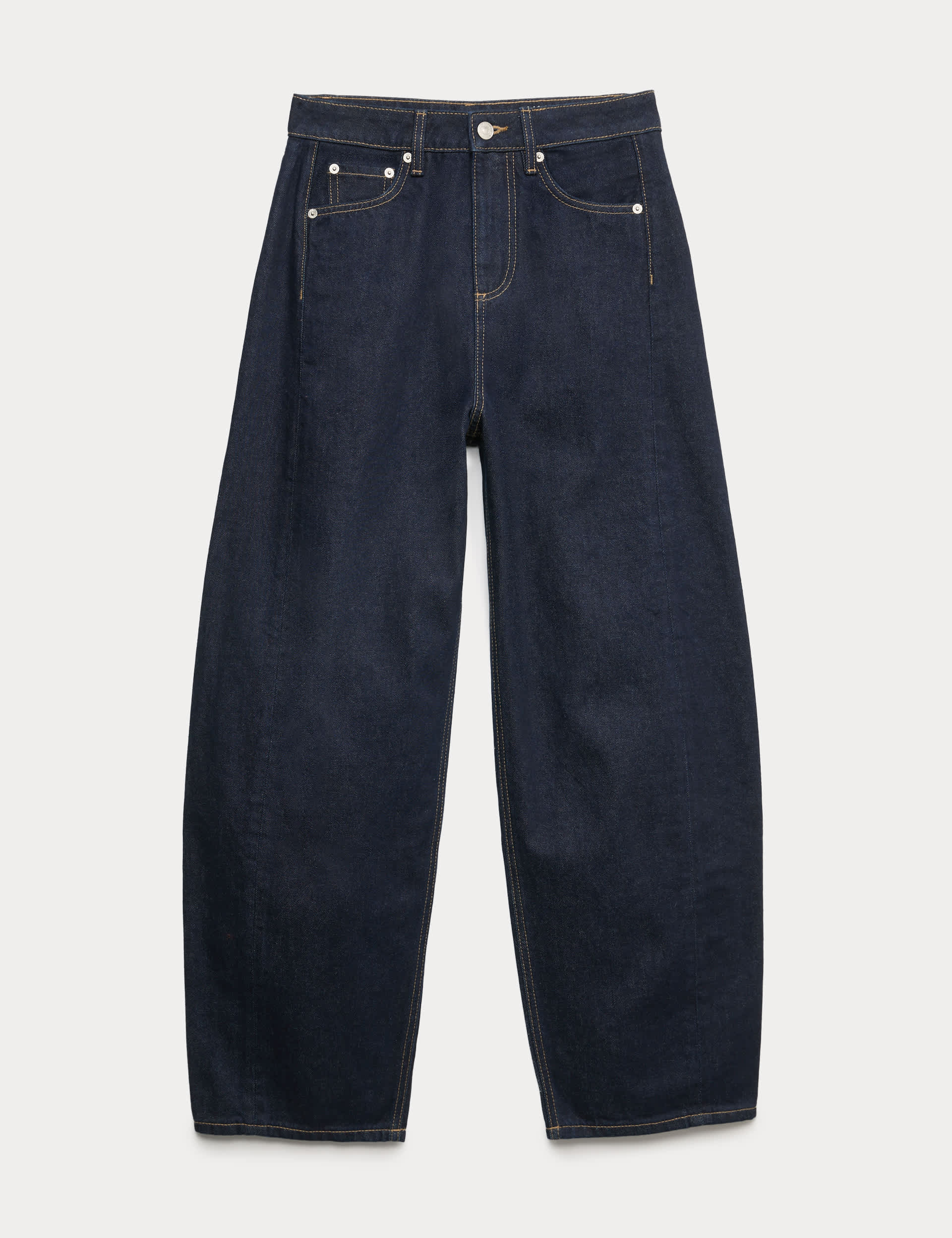
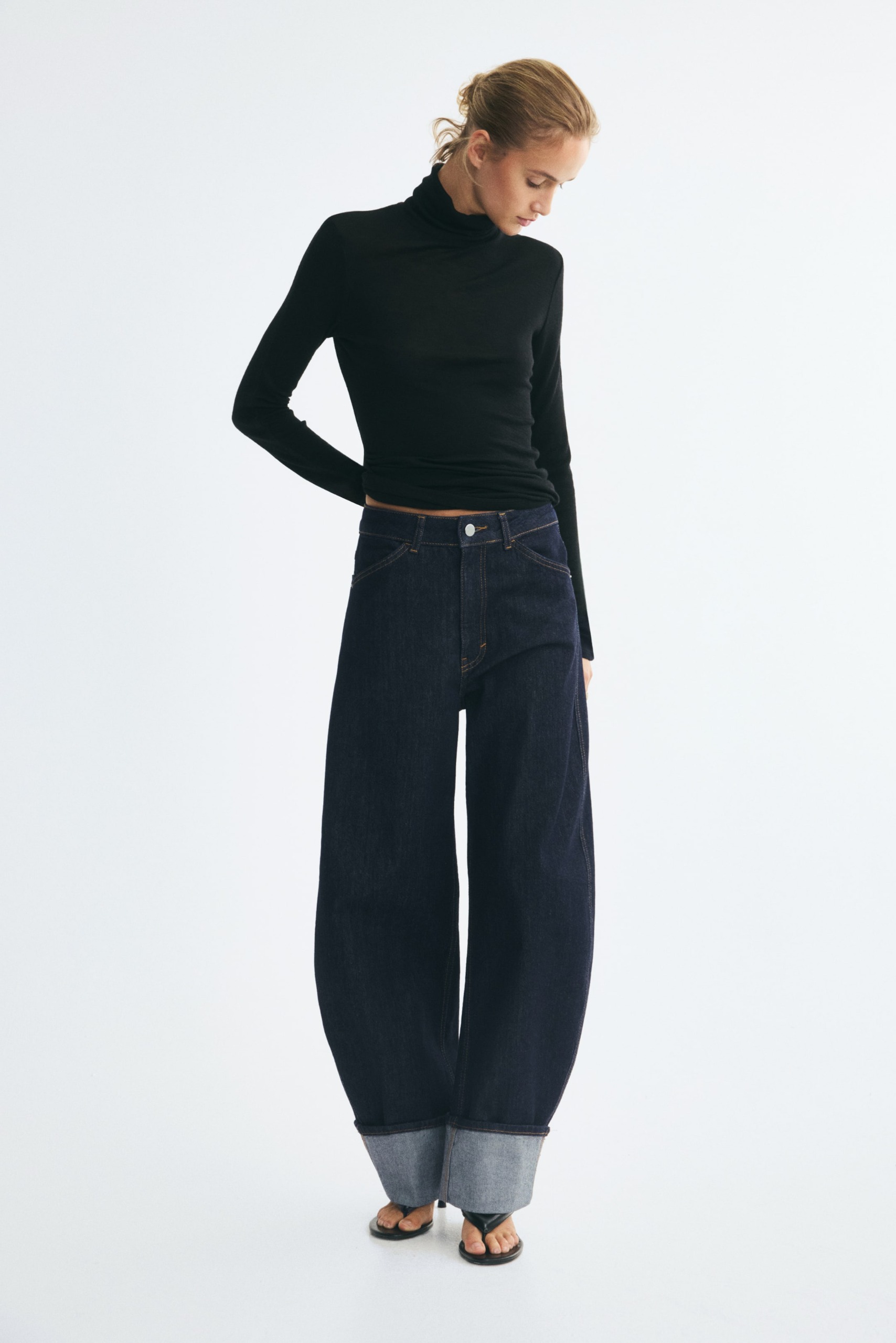
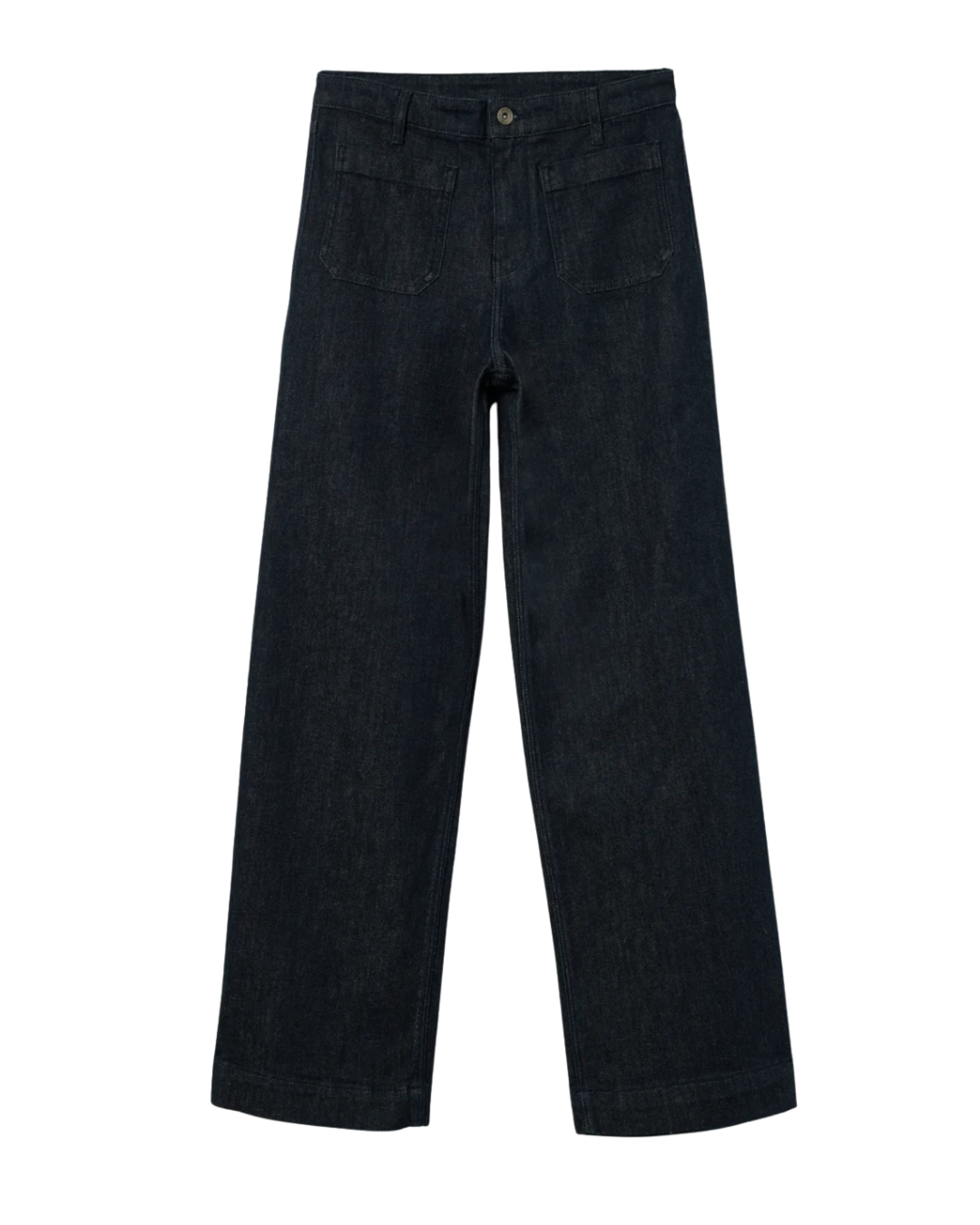
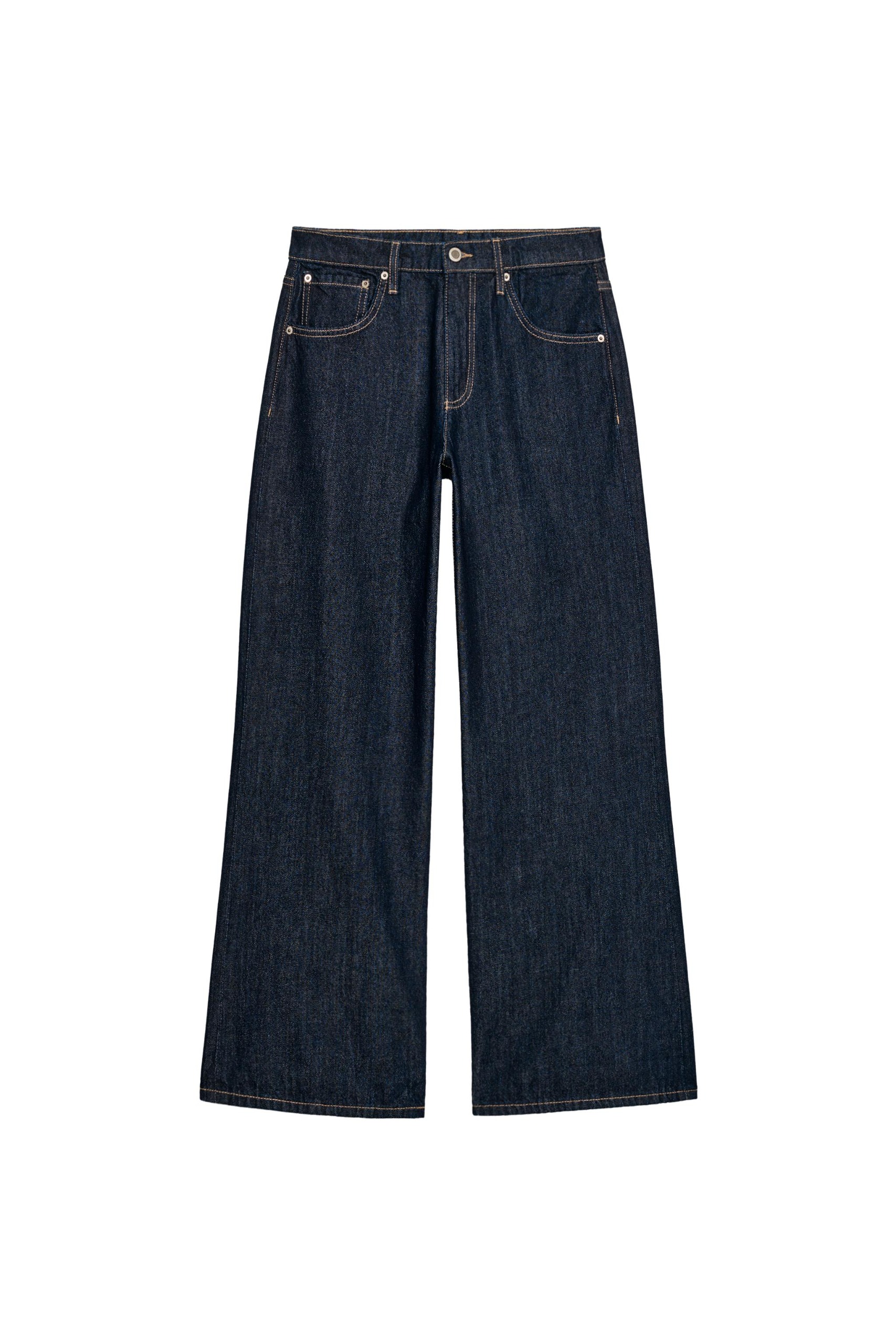
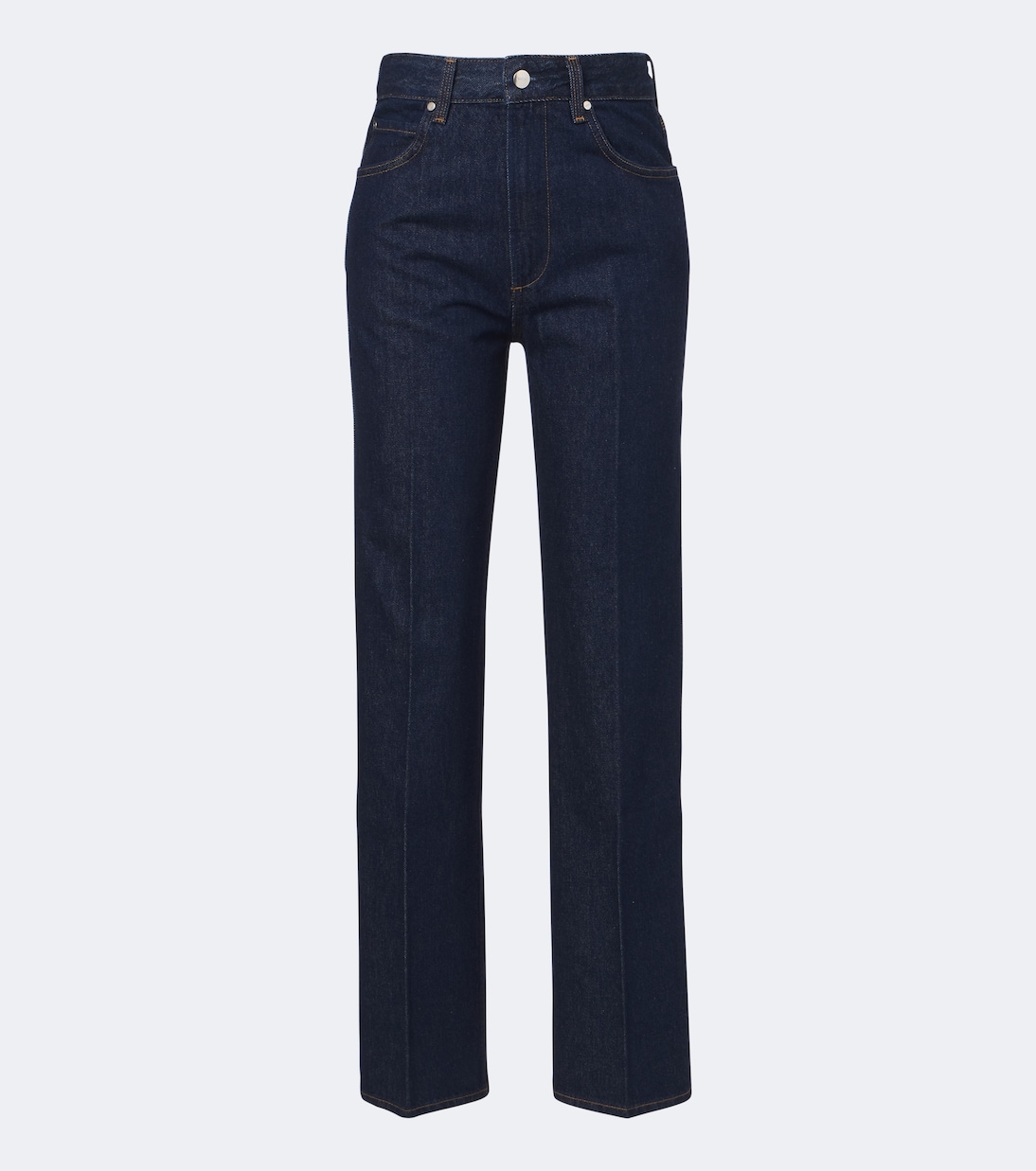
We love denim every bit as much as you do, which is why we keep tabs on the latest styles, washes and brands to share in our best jeans roundups. From our favourite ’90s straight-leg jeans to barrel-leg jeans, stone washes have dominated our wardrobes for the past few seasons. And while we won’t be relegating them any time soon, dark indigo jeans are firmly on our radar this autumn.

There’s something about dark denim that makes you feel instantly sharper. The darker wash lends everyday jeans a smarter feel, whether you’re wearing them with a simple T-shirt or an oversized jumper. Givenchy’s voluminous cuts and Balenciaga’s slim cigarette-leg shapes offered plenty of inspiration on the autumn/winter 2026 catwalks. For your own wardrobe, start with the silhouette you already love, and simply opt for a deeper shade of blue.

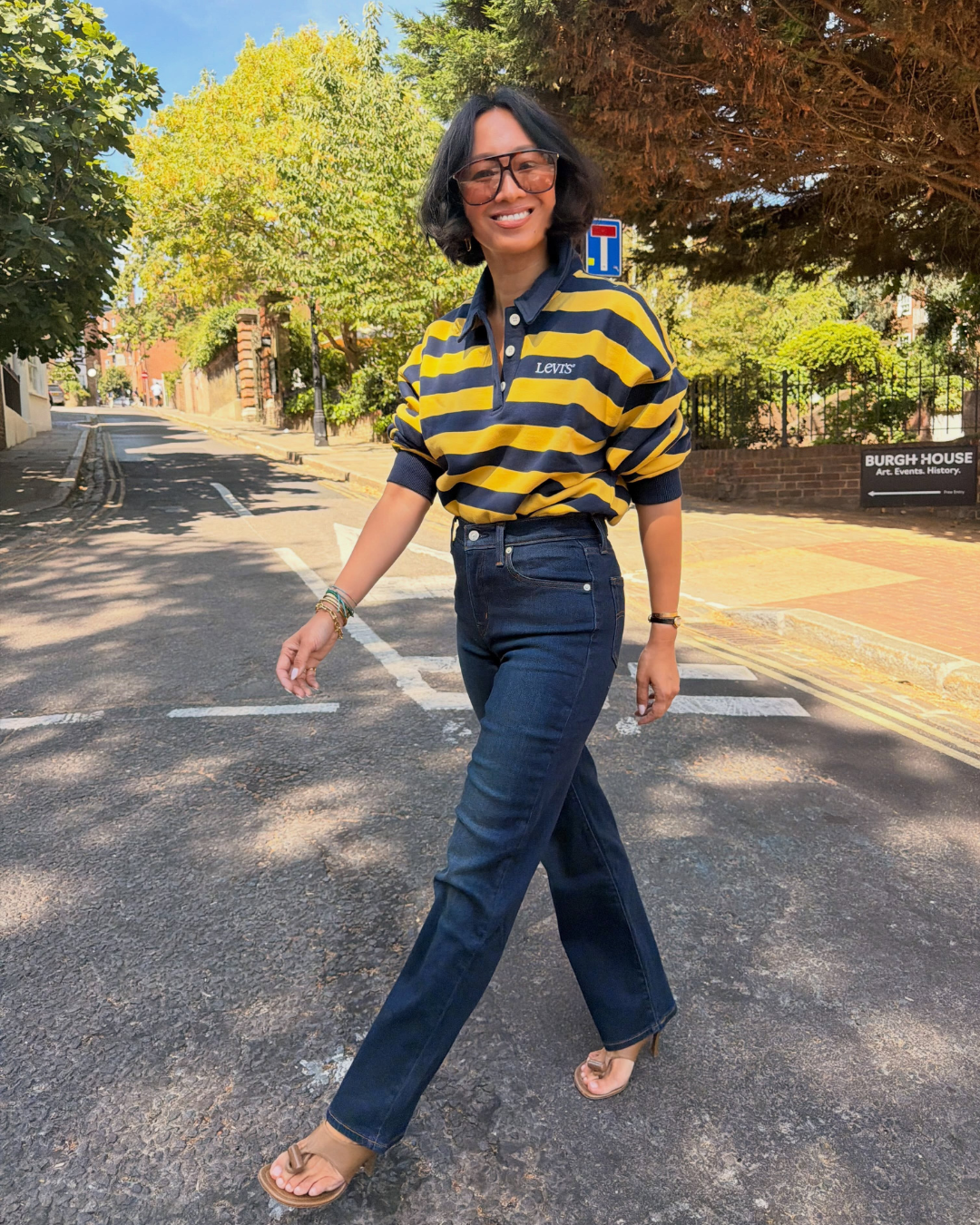
Lisa ing marinelli in dark denim jeans and stripe top.

(Image credit: @Lisaingmarinelli)

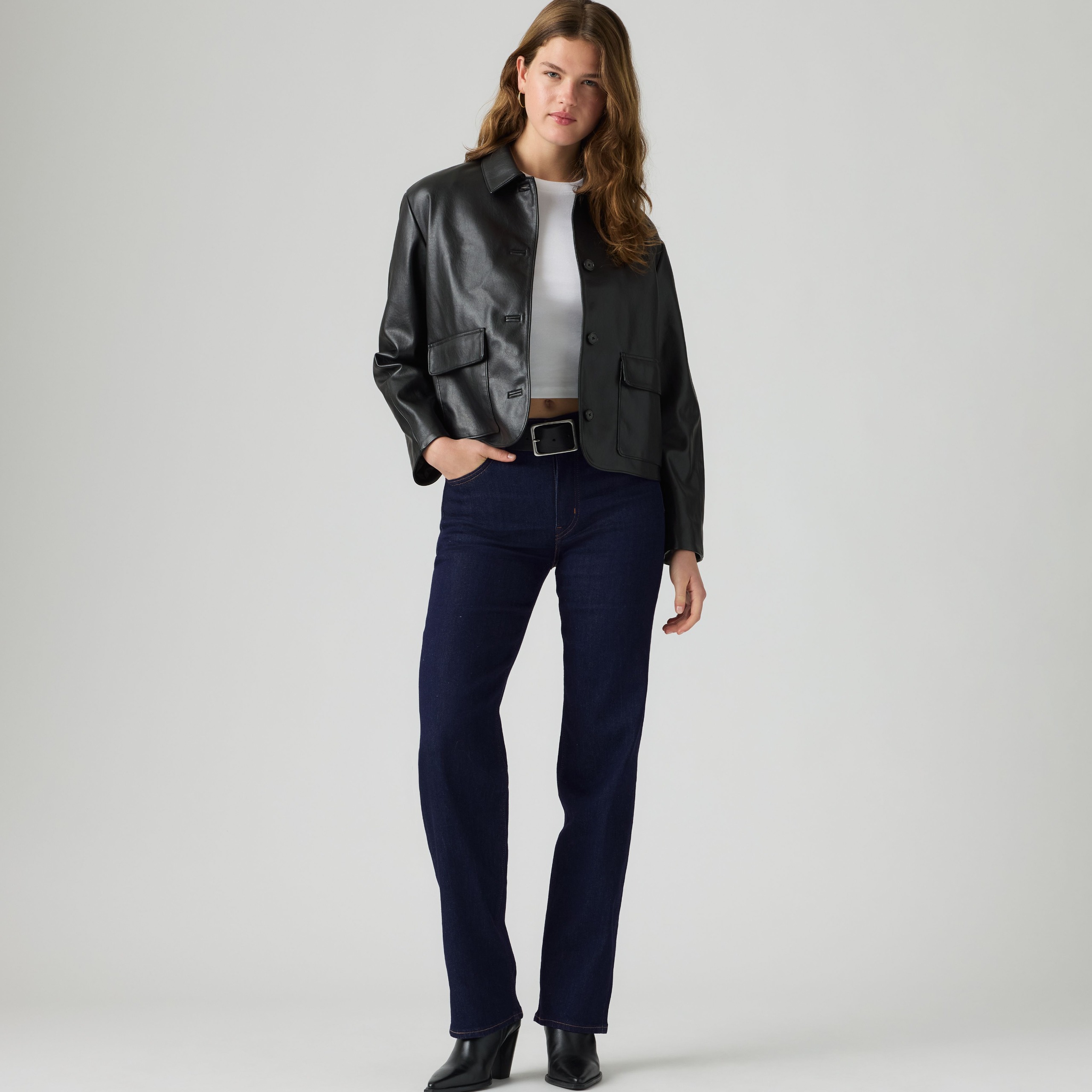
Marie Claire Master and corporate lawyer Lisa Ing Marinelli recently stepped out in the Levi’s 723 High Rise Straight Leg Jeans, also a favourite of our Fashion Director, Lily Russo-Bah. As Lily explains:

“It’s been a while since I found a pair of jeans that are this comfortable, with a straight leg, slight stretch and a high waist. I haven’t stopped wearing them, and they’re even comfortable enough to travel in. Now, I want to get the slimmer-leg style to wear with knee-high boots in winter.”

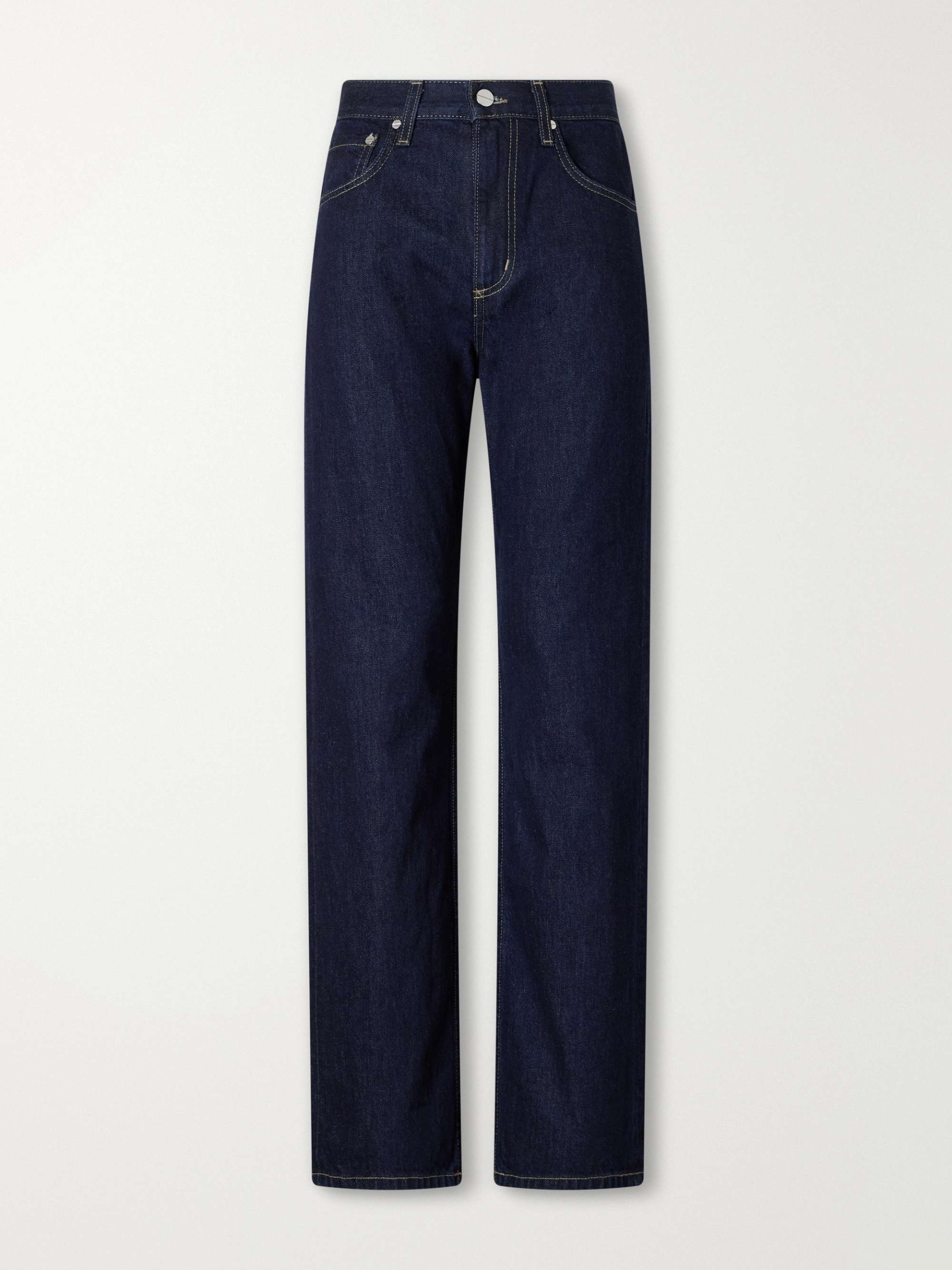
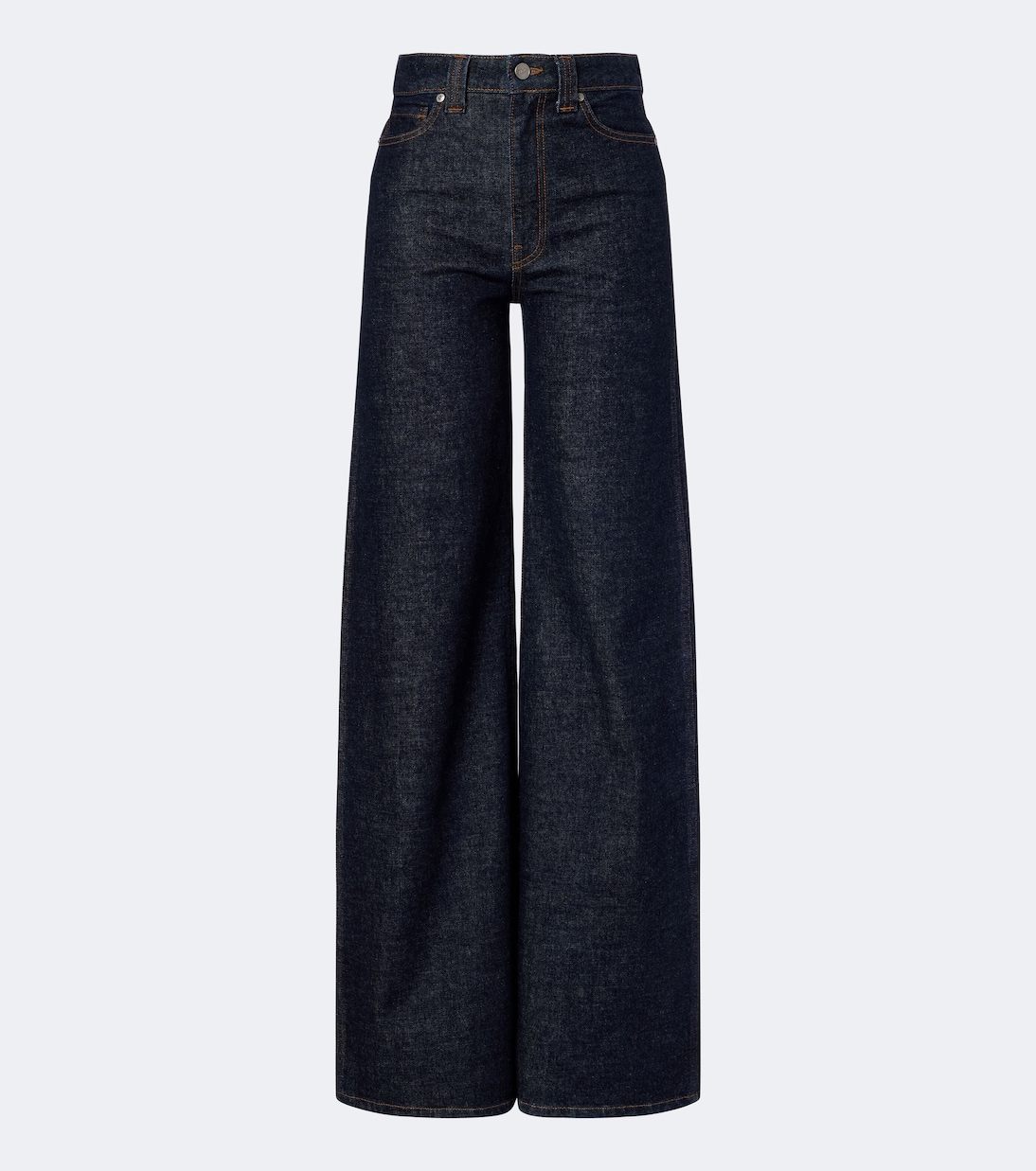
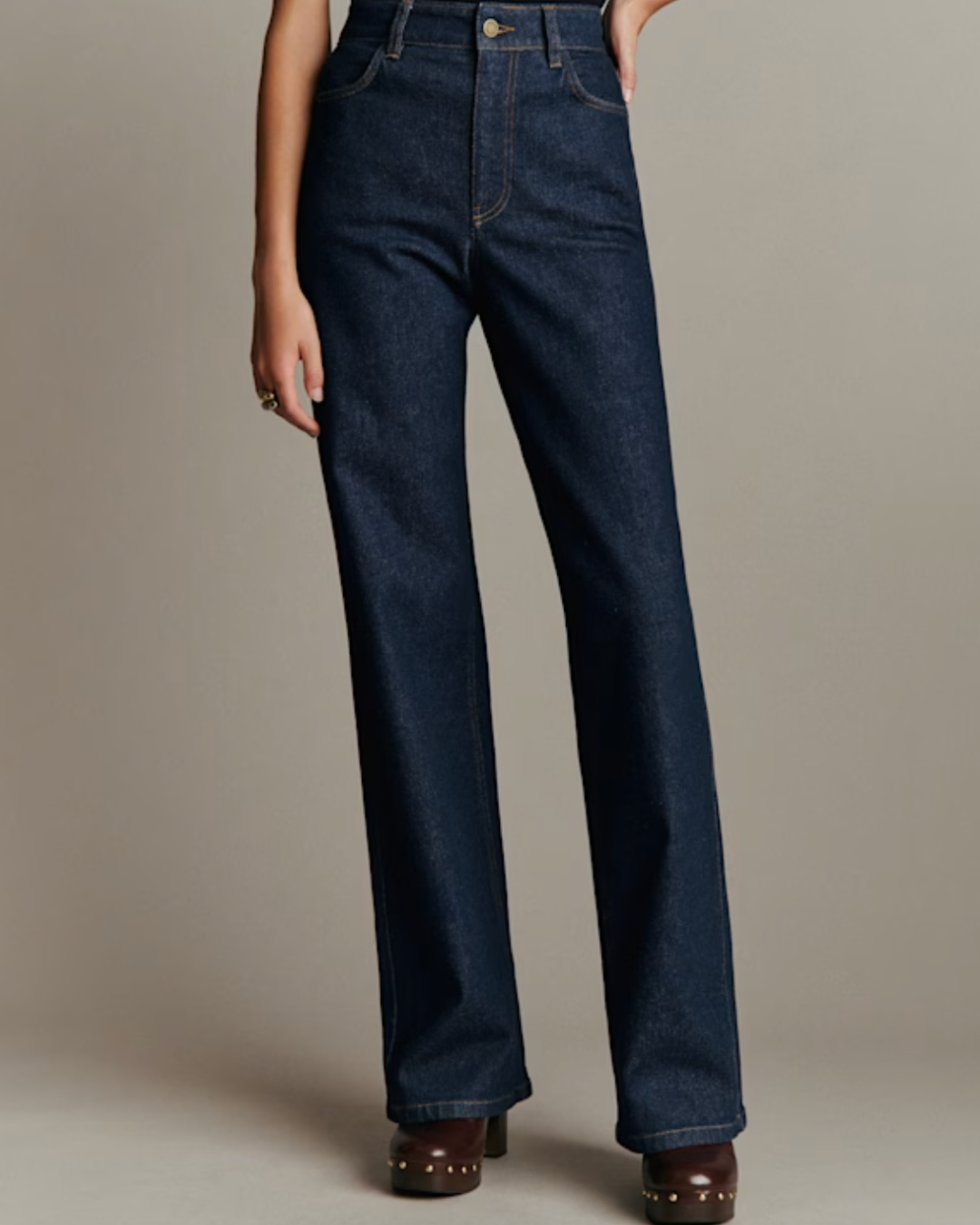
That’s proof enough that adding dark denim to your autumn wardrobe can make for an impactful yet relatively low-lift update. The depth of colour gives everyday jeans a more polished feel, making even your most familiar outfits feel considered. Shop our favourite dark denim jeans below.

Shop Dark Denim Jeans


from Latest from Marie Claire UK https://ift.tt/4mZwgiB
via IFTTT
Tuesday, 20 October 2026

The edit by Marie Claire: Your cold-weather wardrobe starts with Uniqlo

https://ift.tt/tNFXA3h


from Latest from Marie Claire UK https://ift.tt/Dal49yI
via IFTTT
Why Is It So Hard to Throw Away Things From Our Past?

https://ift.tt/PFtyDsr

At the back of my wardrobe is a box full of memories — people, places and versions of myself I haven’t quite been able to let go of. Inside are letters, a single red rose from an ex, birthday cards, paper concert tickets and boarding passes from before everything went digital. There are old journals, too, and the obituaries of two people I loved: my best friend, who died more than 20 years ago, and my grandmother, my Oma.

When I moved from Canada to London in 2019, these were among the few possessions I chose to bring with me. Everything else stayed at my parents’ house. I open the box when I’m homesick or want to remind myself how far I’ve come. An old letter makes me wonder about someone I haven’t spoken to in years; a journal entry makes me feel protective of the younger woman who wrote it. The things I’ve collected since moving to London remind me of the relationships and experiences I might never have had if I hadn’t taken the risk of starting again.

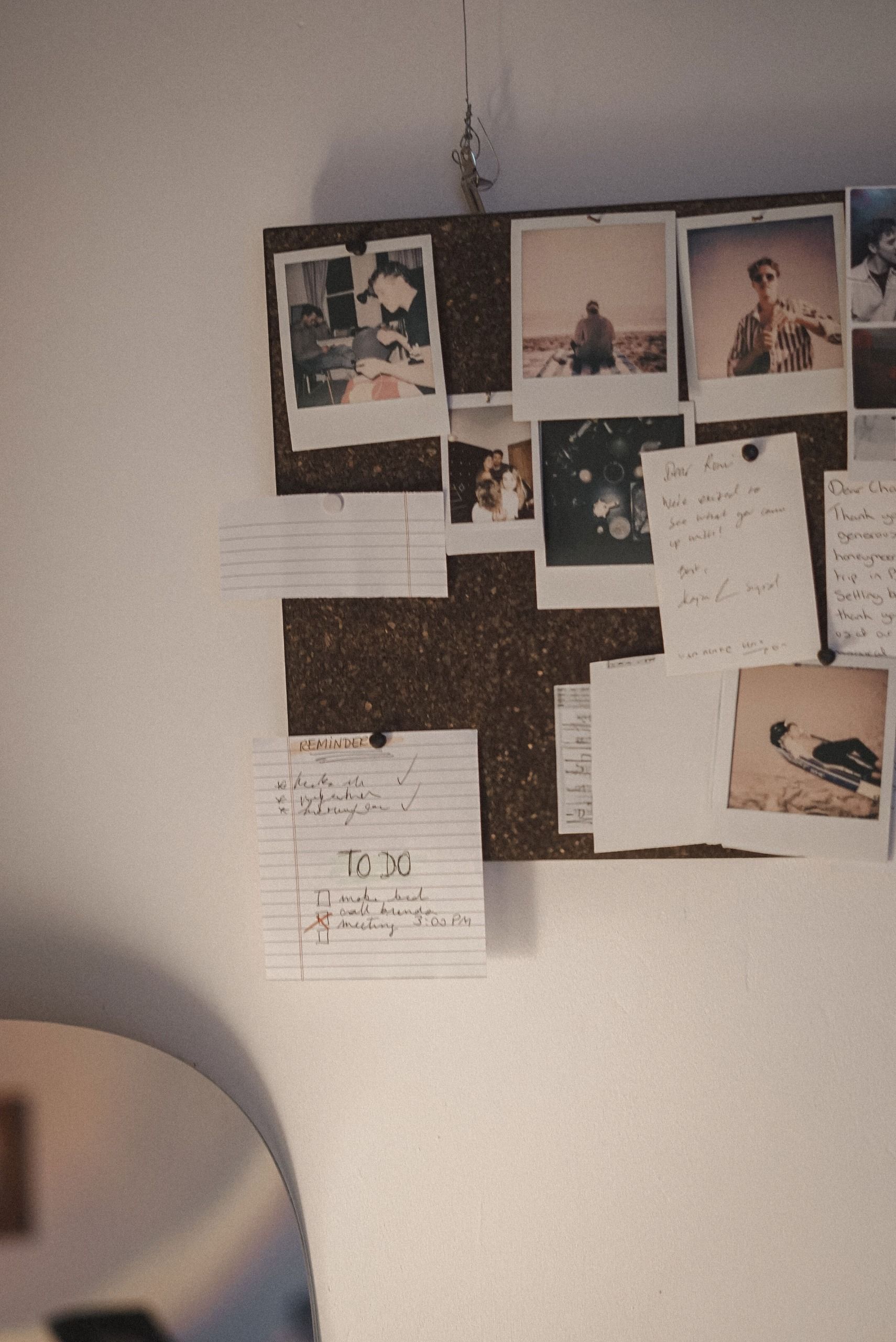
Elite - Polaroid photos and handwritten notes on cork board - TVS

(Image credit: The Vault Stock)

These things are important reminders, yet we’re often encouraged to declutter our homes, delete our exes’ numbers and make room for the next chapter. From minimalist living to the endless pursuit of self-improvement, we are sold the idea that becoming someone new means shedding everything associated with who we used to be. But what if, somewhere between clearing out our homes and reinventing our identities, we’ve confused letting go with pretending something never mattered?

Our attachment to possessions isn’t necessarily about the objects themselves, explains counsellor Julie Shehata-Morgan. “Belongings can act as external reminders, while also supporting an internal emotional world. Mementos and memories can help, but their meaning can change as time goes by. They can be a comfort at one point and later become a burden.”

Sometimes, Shehata-Morgan explains, holding onto possessions can be a sign that we haven’t fully processed a transition. But that isn’t always the case. “We don’t need to discard something meaningful simply to demonstrate that we’ve moved on.”

I know this to be true because one of the most meaningful things in my box is the obituary of my best friend. When Chantelle passed away, I found myself clinging to anything that made me feel close to her. I kept the obituary because in the aftermath of her death, I felt like I had so little to hold on to. I wanted to preserve every piece of her I could, and having something physical that belonged to that moment in time gave me a sense of connection to her.

For decades, I struggled to accept her death. It took years of therapy, and Eye Movement Desensitisation and Reprocessing (EMDR), before I could look at the obituary and truly see it as a celebration of her life. The words on the page hadn’t changed. I had. Once a painful reminder of everything I’d lost, it’s now something I treasure as a tangible connection to her.

We don’t need to discard something meaningful simply to demonstrate that we’ve moved on.

Julie Shehata-Morgan, Counsellor

I still miss my friend, but now I think about the person she was rather than just the fact that she’s gone. I haven’t stopped grieving, but instead, found a different way to remember her. An object can hold grief and love at the same time, and its meaning can change as we do.

Shehata-Morgan says people can be hurried through grief by the pace of everyday life and the expectation that they should move forward. But grief doesn’t follow a schedule and neither does our relationship with the things that remind us of what we’ve lost.

For Marissa Field, moving on involved a funeral of sorts. After her mastectomy, she held a ‘bra funeral’ with her friends, ceremonially saying goodbye to the bras that belonged to her pre-surgery body. Secretly, she held onto her favourite one.

Surrounded by friends, she had gone through the ritual of letting go, and yet one small piece of her former life remained tucked away. Before cancer, the bra had been part of her everyday life… afterwards, it became a reminder of the body she had lost and the woman she had been. “Our bodies are incredible testaments to our strength and I want to remember the woman I was while also recognising how much I’ve overcome, physically and mentally,” she says.

Not every keepsake carries the weight of grief. Harriet Smith tells me that she keeps every love letter she’s received and still sleeps in her ex’s T-shirt. She can treasure the memories, she says, without wanting the relationship back. Emily Ferbey, meanwhile, has bought the same candle for every home she’s lived in, creating a sense of continuity through different countries and chapters of life.

An object can hold grief and love at the same time, and its meaning can change as we do.

The meaning we attach to possessions isn’t always obvious from the outside. What looks like an inability to let go might instead be a way of preserving a connection to a person, a place or a former version of ourselves. Family photographs and inherited belongings can also preserve stories for the next generation. However, an object alone can’t tell us whether an attachment is meaningful or holding us back.

Rather than asking whether we should keep something, Shehata-Morgan suggests considering what it brings up, how we’d feel without it and whether it still serves us.

Objects can offer comfort and connection, but they can also become a psychological burden, their very presence keeping us tethered to painful memories, unresolved emotions or relationships we’re struggling to move on from.

I don’t keep my box because I want my old life back. I keep it because it’s part of the life I have now. The letters from Canada connect me to a place I once called home whilst my London keepsakes remind me that taking a chance opened doors to people and experiences I couldn’t have ever imagined. The obituaries remind me that grief can change shape without love disappearing.

Perhaps the pressure to move on comes from the belief that growth should be visible — in what we discard, the relationships we leave behind and the identities we no longer claim. But not every new chapter requires a clean break. We can outgrow a relationship without pretending it didn’t matter and we can become someone new without erasing who we used to be.

Maybe moving on isn’t about leaving every previous version of ourselves behind, just learning to carry them differently.


from Latest from Marie Claire UK https://ift.tt/SEw2yfv
via IFTTT
Strength Is a Key Indicator of Longevity—Test Yours With This Simple Quiz

https://ift.tt/z5t8cLy

When was the last time you measured your fitness by something other than the number on the scales or how your favourite jeans fit? If you're anything like me, it's probably not something you think about often.

But ask a physio or strength coach how strong you really are, and they might be less interested in your measurements than whether you can get up off the floor.

That's because the simple, everyday stuff can tell us a lot about our physical strength. “There’s often a misconception that people need to lift a certain weight or perform a set amount of reps to be considered 'strong',” says Samantha Cubbins, a lifting club manager at Gymshark. “However, this is completely false.”

Research backs up the importance of these everyday capabilities, too. A study of more than 2,000 adults aged 51 to 80 found that the better people scored on a test measuring the ability to sit down on the floor and get back up again, the longer they tended to live. And a 10-year study involving more than 300 female twins found those with greater leg power experienced less decline in memory and thinking skills as they aged.

Keen to find out what being 'strong enough' actually looks like, I spoke to industry experts about seven simple things every woman should be able to do, plus how to work towards them if you're struggling right now. And if you're looking for more ways to support your long-term health, check out our guides to strength training moves for healthy ageing, the best longevity workouts, healthy ageing habits and longevity moves you can do at home.

Is Functional Strength the Best Measure of Your Health? These Are the Expert Moves That Experts Say Matter Most

What Is Functional Strength?

“Functional strength is essentially whether your body is capable of doing the things your lifestyle asks of it,” explains Rebecca Bossick, physiotherapist and founder of One Body LDN. “This is generally what physios are assessing you for: how well your muscles, bones, joints, and nervous system work together."

It's a far better measure than pure weight or aesthetics, she explains, as neither can tell the difference between losing fat and losing muscle. Put simply: two women can weigh exactly the same, but they can have completely different amounts of bone density and muscle, depending on their genetics and lifestyle.

Everyday movements can act as a useful indicator of functional strength because they use several muscles at once. “If one of those is lacking, it will quickly show up in these everyday movements, usually as a hand on the knee or a breathless pause on the landing, or needing extra support,” adds Bossick.

Why Should Women Pay Attention to Functional Strength As They Age?

Our bodies change as we age, and for women, menopause can speed things up. We naturally lose muscle mass as we get older, while falling oestrogen levels—which help to protect bone health—can accelerate bone loss.

“In fact, women can lose up to 10% of their bone density in the first five years after menopause, making them more prone to osteoporosis and breakages,” says Bossick.

The good news? Functional strength is something you can build at any age—and it's key for staying independent for longer.

As personal trainer Carly Corrigall puts it: “These movements become particularly relevant to maintaining independence as we get older, but I don't think we should see them simply as “minimum standards” to preserve. We should be looking to build strength and physical capacity wherever possible, not just hang on to what we've already got.”

7 Functional Strength Markers Every Woman Should Know

According to the experts, these are the simple functional strength markers you should prioritise, whatever your age:

1. Get Down on the Floor and Back Up Again

Both Corrigall and Bossick rate this one highly, and it's one of Corrigall's favourites. “It requires strength across multiple muscle groups, alongside mobility, balance and coordination,” she explains. “After all, if we fall, we want to be able to get back up again.'”

Try it: Start by practising moving from standing into a half-kneeling position and back again, using a sturdy chair or wall for support. Over time, try to rely on using your hands less.

2. Balance on One Leg

If you're in your 20s or 30s, Cubbins suggests aiming to stand on one leg for 40 seconds.

“This shows that your vestibular system in your ear, the vision in your eyes, and your muscles are all able to work effectively together,” she says. “It also proves that you have strong core muscles and good lower body stability.”

There's research to back this up, too. A study published in the British Journal of Sports Medicine found that being able to balance on one leg for 10 seconds or longer was associated with better long-term survival in middle-aged or older adults.

Try it: “Next time you brush your teeth or wait for the kettle to boil, practise standing on one leg for 10 seconds at a time, which you can gradually build up,” suggests Cubbins.

3. Stand Up From a Chair Without Using Your Hands

“Being able to stand up from a chair without using your hands is a simple but useful indicator of leg and glute strength as well as your balance and coordination,” says Corrigall.

And how you sit back down matters just as much. “If you're effectively falling into the chair, it could suggest that you're lacking the strength or control to lower yourself slowly, which is something to work on,” she adds.

Try it: Start by using a higher surface (such as a bar stool or the edge of the bed) if you need to, then work towards a lower chair and eventually doing the movement without using your hands.

4. Carry Heavy Shopping Bags

“Carrying heavy shopping bags is perhaps my favourite marker of functional fitness, as it’s something most of us will have to do on a daily basis, says Cubbins. “Heavy bags test your core and upper-body strength, especially your grip strength.”

Try it: Start by holding a manageable weight in each hand and walking a short distance, keeping your shoulders relaxed and your body upright, then gradually increase the weight or distance.

5. Push Yourself Away From a Surface

Good news if you dread press-ups—you don't need to be able to perform 20 of them. “I’m not a fan of saying “you must be able to do x number of press-ups in order to be considered healthy”, as I think this is pretty arbitrary,” Corrigall says.

What matters more is having enough upper-body strength to be able to push yourself away from a surface, whether that's a heavy door or the floor.

Try it: Start with push-ups against a wall, then a kitchen worktop, and work your way down from there.

6. Lift Something From the Floor and Raise It Overhead

Whether you're lifting a suitcase into an overhead plane locker or lifting a child into a high chair, Corrigall says this is a great test of whole-body strength and coordination.

“You're asking several muscle groups to work together to move and control a load,” she explains.

Try it: Corrigall suggests breaking the movement into two parts. First, practise picking up a light object from a raised surface, and practise pressing a light weight from shoulder height to overhead, before combining the two movements.

7. Climb Four Flights of Stairs Without Stopping

“Climbing four flights of stairs without stopping in under a minute indicates good cardiovascular function," says Bossick. “While struggling usually points to weak legs, poor fitness, or both.”

And don't forget your calves, which Corrigall says are some of the most neglected muscles in strength training

Try it: Start with double-leg calf raises, holding onto a wall while lowering slowly, before progressing to single-leg raises.

Shop MC UK Approved Workout Essentials

I'm already fit, isn't that enough?

Being cardiovascularly fit doesn't necessarily mean you're strong, too. “There are those that are fit, but not strong,” explains physiotherapist Rebecca Bossick. "This means you might be able to run, cycle, and do exercise classes, but still not be able to lift heavy.” In other words, your cardio is good, but your strength is lagging behind, and your muscles may need more attention.

Cardio and strength training offer different benefits, so it's worth having a balance of the two in your routine.


from Latest from Marie Claire UK https://ift.tt/Ny8ia7l
via IFTTT
Monday, 19 October 2026

I Check the New-In Pages Every Day—These Are the High Street Coats I’d Actually Buy, Plus Mulberry’s Latest It Bag

https://ift.tt/juO8mVv

Welcome to What Lily Loves, a personal edit of the pieces, places, and ideas currently inspiring me. Think of it as your insider guide to what’s shaping my wardrobe and daily rituals. From standout finds and under-the-radar designers to shopping destinations, cultural hotspots—from restaurants and theatres to podcasts—here are the latest discoveries I’m loving.

Lily Russo-Bah

(Image credit: @lilyrussobah)

The Designer Drop

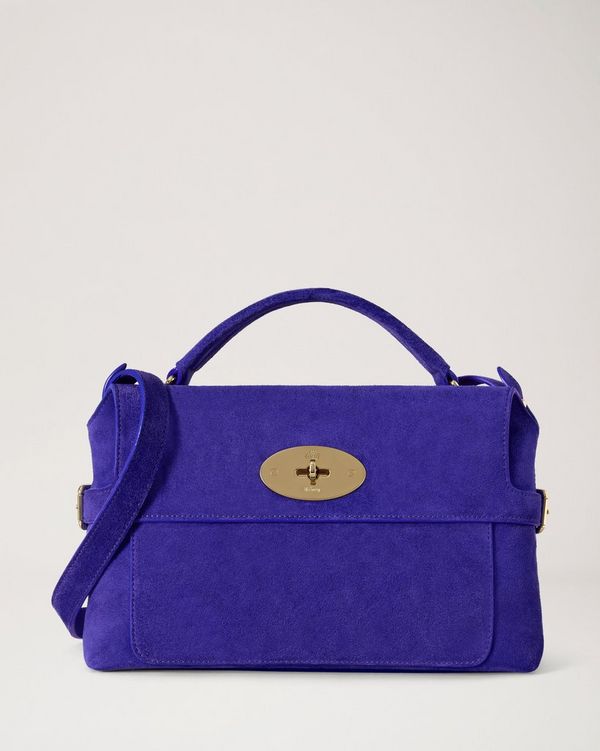
Mulberry's Stevie Bag

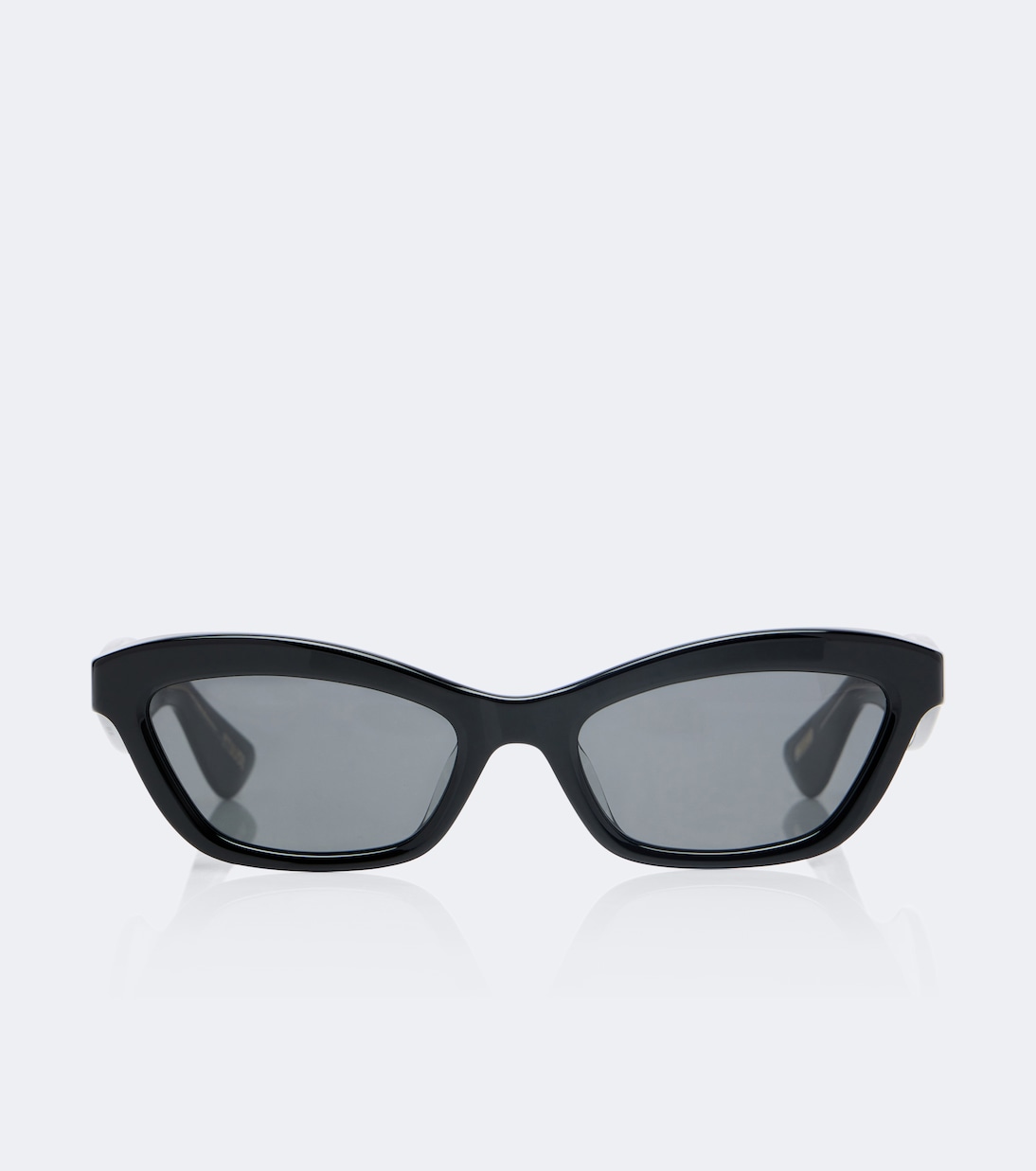
Alongside Christopher Kane’s triumphant return to London Fashion Week as Creative Director at Mulberry, we also saw the launch of the Mulberry Stevie bag. If you’ve been a long-time Bayswater fan, then this one’s for you. From sleek black leather with tonal black hardware to a rich shade of purple, there’s a style to suit every taste and need. There’s also a larger size available if you need room for your laptop. If you’re looking to upgrade your everyday handbag, this is it.

Spotlight On

High Street Coats

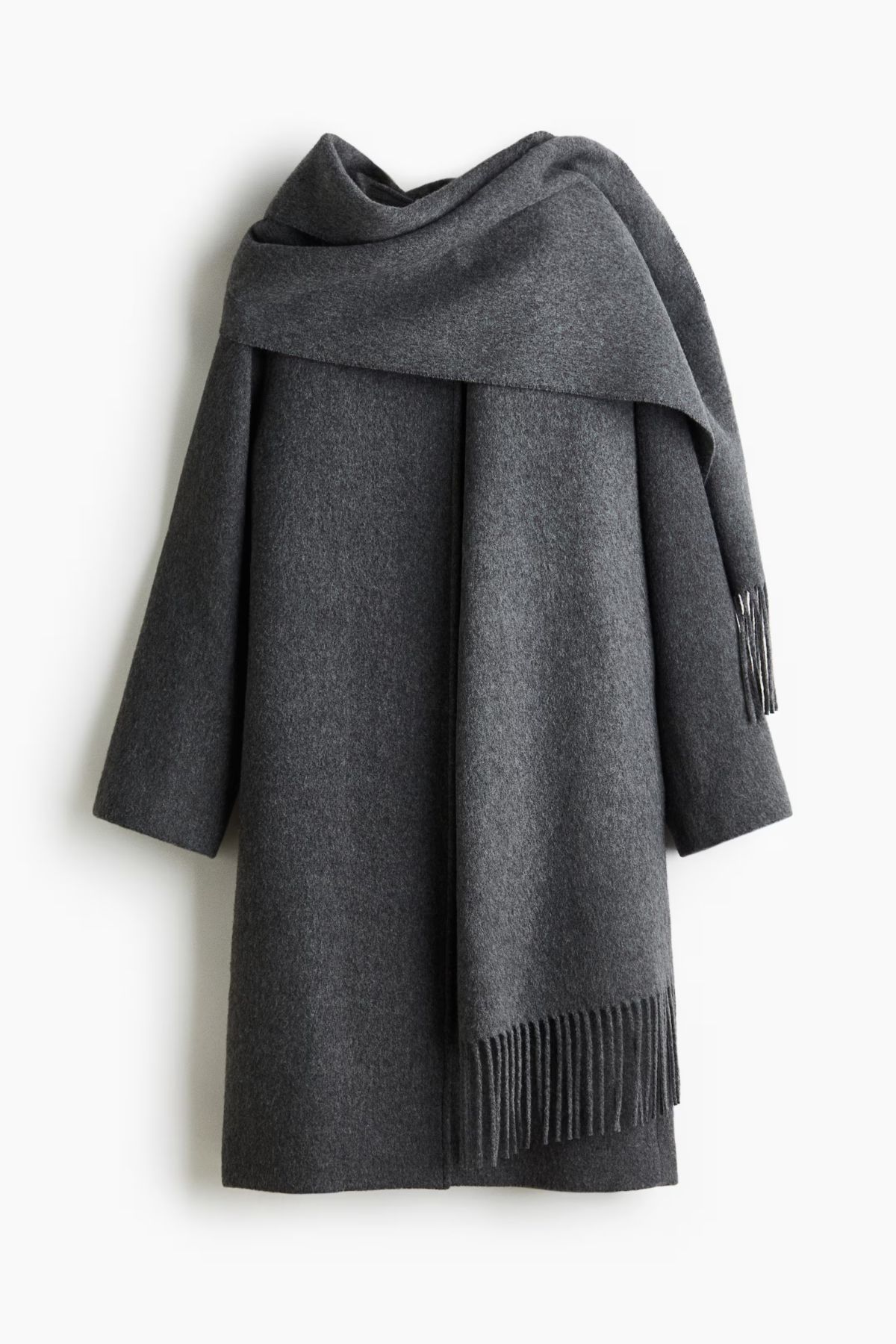
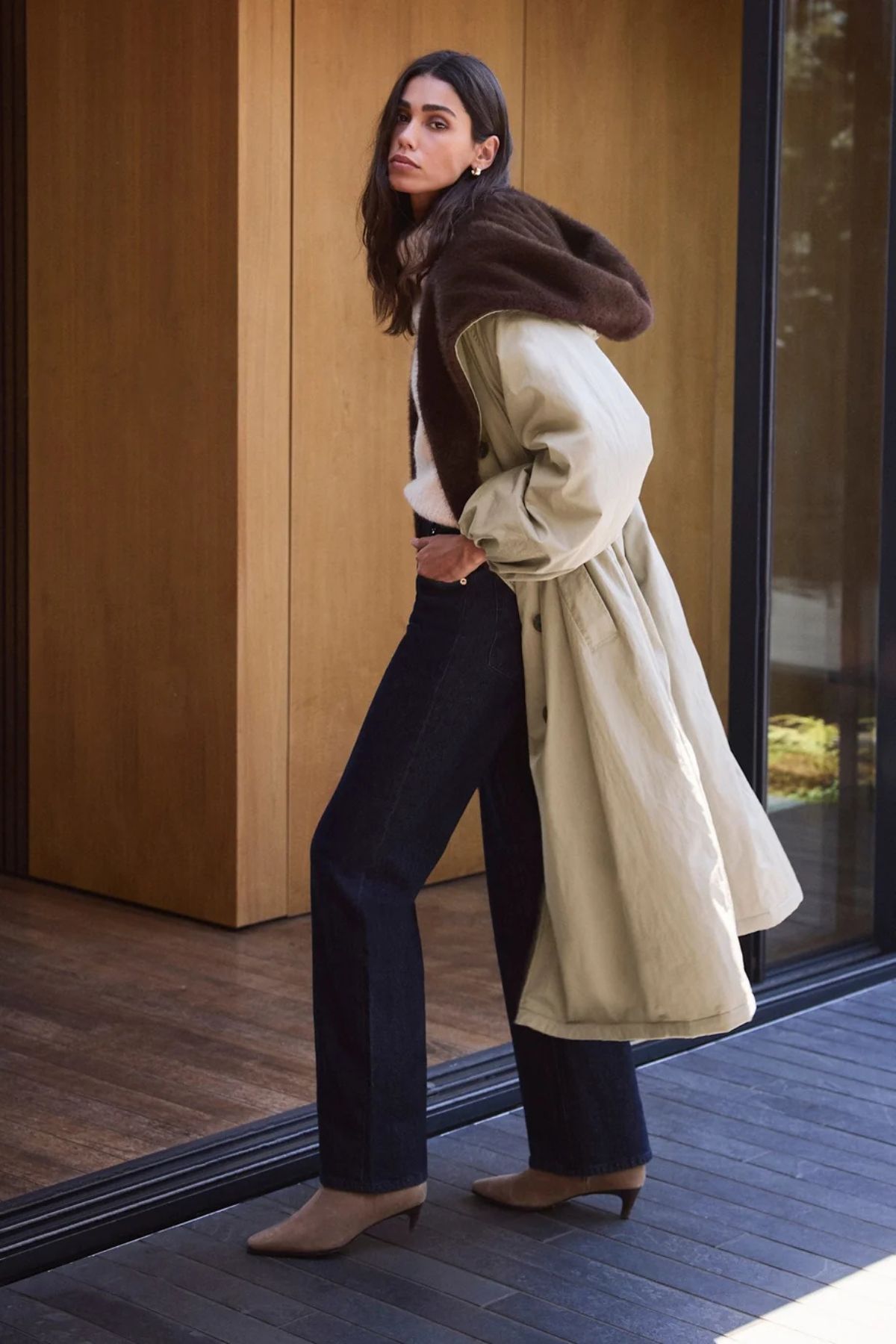
Despite loving the heat, after four months of wall-to-wall sunshine, I, along with the rest of the climate-conscious humans on Earth, have been praying for rain. Well, safe to say, our prayers have been answered. Rain is on the cards for most of the week ahead, and temperatures have also taken a dive.

So, what better time to pull last season’s coats out of your wardrobe and look to fill any gaps or replace tired-looking favourites? From Mint Velvet’s faux-fur-trim trench to ME+EM’s sharp wool overcoat, there are plenty of great options that will put a spring in your step on a cold and grey morning.

Shop my edit:

New In This Week

Mytheresa

I love the British High Street, but there are some pieces in my wardrobe that I choose to invest in, especially for winter. I’m always refreshing the Mytheresa new-in page, as it has long been my go-to for investment footwear from brands such as Aeyde and Le Monde Beryl, accessories such as Déhanche belts and Khaite sunglasses, and a great edit of one of my favourite Australian labels, Alemais. If you’re looking to add some special pieces to your wardrobe, here are six items worthy of your attention (and your money).

Shop my edit:

On My Radar

Tim Walker’s Fairyland: Love and Legends

Tim Walker

(Image credit: National Portrait Gallery )

Legendary photographer Tim Walker celebrates queer identity, love and community in his latest exhibition, Fairyland, at the National Portrait Gallery. Known for his whimsical, fairytale-inspired imagery, Walker spent five years photographing queer activists, artists, performers and writers for the project, bringing together a collection of portraits and fantastical landscapes that explore LGBTQ+ culture and self-expression. Curated by Susanna Brown, the exhibition celebrates those challenging conventions and creating space for everyone to be themselves. A companion book features contributions from writers and LGBTQ+ advocates, including Travis Alabanza, Shon Faye and Joelle Taylor. And if you love a post-exhibition gift shop, there’s plenty of super-cool merch to be had, including T-shirts and a collaboration with Pandora, all perfect for Christmas gifts.

The exhibition is running from 9 October 2026 - 7 February 2027. Tickets are available to buy from the National Portrait Gallery website.

In Case You Missed It...


from Latest from Marie Claire UK https://ift.tt/IJRCQ0i
via IFTTT

The Science-Backed Reason the Clock’s Changing Hits Women Harder Than Men

https://ift.tt/mR08xq2

A staggering 72% of women change their outdoor activity routines during winter due to safety concerns. It’s a sobering statistic to consider as we approach Daylight Saving Time on Sunday 25 October, when the clocks go back in the UK and afternoon twilight hours inch closer.

For many women, the arrival of winter means reconsidering evening runs, rearranging gym sessions and finding new ways to stay active without compromising their personal safety. As a Health Writer and keen runner, it’s a chilling and frustrating reality that I still struggle to wrap my head around. Why should the changing seasons dictate when, where and how women feel comfortable exercising?

But personal safety isn’t the only reason the clocks changing can feel particularly frustrating for women. There’s another, less obvious factor at play: our biology. And while I’m all for hunkering down during cosy season, I find it frustrating that just as our social feeds become a constant stream of wellness challenges like The Great Lock-In and the Winter Arc, I’m often left feeling uncharacteristically tired and sluggish. Coincidence? Perhaps not.

Scientific research suggests women’s internal body clocks naturally run slightly earlier than men’s, which could make changes to our sleep-wake cycles particularly disruptive. A further study found that women tended to sleep less during the working week following the clock changes, while men actually slept more. The effect was most noticeable in spring, but a similar pattern emerged in autumn.

With our circadian rhythms influencing everything from sleep and mood to reproductive hormone regulation, could that seemingly harmless one-hour shift be having a bigger impact on women’s health than we realise? To find out, I spoke to experts about the science behind seasonal sleep disruption, why women’s bodies may respond differently, and the simple ways we can prepare ourselves for the darker months ahead.

While you're here, you might find this deep dive into circadian fasting interesting. We've got guides to sleepmaxxing, science-backed antidotes to optimisation culture and micro-habits that could positively impact your hormone health, too.

Do The Clocks Going Back Really Impact Women More Than Men?

Our bodies run on an internal 24-hour clock, known as our circadian rhythm, which helps regulate everything from sleep and alertness to body temperature and hormone release. It's largely guided by natural light, which is why the transition into darker seasons can leave us feeling a little off-kilter.

“When the clocks go back, our body clock doesn’t change when the clocks do, so the two briefly fall out of sync,” explains Dr Helen O'Neill, co-founder and CEO of Hertility. “Most people realign within a week, but the loss of evening daylight as winter sets in has a longer-lasting effect.”

Interestingly, research has found that women's internal body clocks tend to run slightly earlier than men's, meaning they're generally more inclined towards earlier bedtimes and mornings. But does that mean we're biologically more sensitive to the clocks changing?

“It's more complicated than a simple yes,” says O’Neill. "Hormones affect sleep across the cycle, pregnancy and perimenopause, but social factors matter just as much; women also still carry more caring responsibilities and night-time waking, which fragments sleep.”

What Is the Impact of Winter Darkness on Women's Hormones?

For people who menstruate, our body clocks are closely connected to the hormones that regulate our menstrual cycles, which means changes to our sleeping patterns can have a knock-on effect on how we feel.

Our circadian rhythms work alongside reproductive hormones such as oestrogen, luteinising hormone (LH) and follicle-stimulating hormone (FSH), which play important roles in everything from egg development to ovulation. Research suggests that how much we sleep, and when we naturally prefer to sleep, may influence these hormonal patterns.

“Light is one of the most important signals that keeps our circadian rhythm clock synchronised with our environment,” explains women's health and menopause expert Dr Shirin Lakhani. As the days get shorter, reduced exposure to natural light can influence when our bodies release melatonin (the hormone that helps regulate sleep), potentially affecting everything from our energy levels to our mood.

That said, there’s a difference between the effects of long-term sleep disruption and a one-hour clock change. While research has linked prolonged disruption to changes in reproductive hormone patterns, there's not yet enough evidence to suggest that the clocks going back alone will significantly alter your hormone levels.

Can the Clocks Going Back Affect Your Period, Mood and Energy Levels?

“Poor-quality or insufficient sleep can affect mood, concentration, energy levels and our ability to cope with stress, potentially making premenstrual symptoms feel more difficult to manage,” explains Lakhani.

For women who experience premenstrual syndrome (PMS) or premenstrual dysphoric disorder (PMDD), that could mean more noticeable brain fog, irritability or fatigue when sleep is disrupted.

And it's not just our sleep patterns at play. Shorter days mean less natural light, which can also influence mood and energy levels. So, if your motivation to exercise tends to nose-dive along with the summer sunshine, there might be more to it than simply missing the warmer weather.

Why Might Menopausal Women Feel the Clock Change More?

Hot flushes, night sweats and disrupted sleep are already familiar symptoms for many, and the seasonal shift towards shorter days may add another layer of difficulty.

“In perimenopause, falling progesterone can disrupt sleep and shifting oestrogen triggers night sweats, so seasonal changes hit a system already under strain," explains O'Neill. "This stage also brings an increased risk of low mood, which shorter days can add to.”

And it’s not necessarily just a case of struggling to nod off. As Lakhani explains, changing hormone levels can cause women to wake repeatedly throughout the night, making a decent night's sleep increasingly difficult.

“When we add darker mornings, reduced daylight exposure and changes to daily routines, it may become harder for some women to maintain a consistent sleep-wake pattern,” she adds.

The TLDR? Poor sleep can leave you feeling more tired and emotionally drained during the day, while menopausal symptoms make a restful night harder to come by. The clock change isn’t necessarily responsible for those symptoms, but it could introduce another unwelcome disruption to an already unsettled sleep routine.

How to Prepare Your Body for the Clocks Going Back, According to Experts

1. Make the Most of Morning Daylight

If there’s one good reason to resist the snooze button this winter, it’s this. “Try to get natural light soon after waking,” recommends O’Neill. Daylight helps regulate our internal body clocks, so getting outside for a morning walk, a coffee run, or even a few minutes of fresh air can help your body adjust to the darker months.

2. Keep Your Sleep Routine Consistent

An extra hour in bed might sound like a treat, but O’Neill explains that it doesn’t necessarily translate into an extra hour of sleep. Many of us continue waking at our usual body-clock time, even after the clocks change. Her advice? Stick to regular bedtimes and wake-up times, and limit alcohol and late caffeine, particularly if you're already experiencing disrupted sleep. Most people adjust to the new clock time within a week.

3. Consider Supplementing With Vitamin D

O’Neill recommends following NHS guidance to consider taking 10 micrograms (400 IU) of vitamin D daily between October and March, when sunlight in the UK isn’t strong enough for our bodies to make sufficient amounts.

“Lower vitamin D over winter may also contribute, as it has been linked to worse PMS symptoms,” she adds. And if sleep problems, low mood or menopausal symptoms are interfering with daily life, it’s worth speaking to your GP rather than simply blaming the season.

Shop MC-UK approved sleep products now:

How long does it take your body to adjust to the clocks going back?

According to Dr Helen O'Neill, most people adjust to the clocks going back within a week. However, the transition isn't always instant. Our internal body clocks don't automatically change when the clocks do, meaning we might feel slightly groggier or notice changes to our usual sleeping patterns for a few days. Sticking to consistent bedtimes, getting plenty of natural daylight in the morning and limiting late caffeine can help ease the adjustment.


from Latest from Marie Claire UK https://ift.tt/xZF5UXA
via IFTTT