from Latest from Marie Claire UK https://ift.tt/DZGvNMj
via IFTTT
This summer has been one for the history books—wildfires in Europe; five blistering heatwaves in the UK; devastating floods in Nepal, not to mention the creeping proliferation of data centres (as one opinion writer put it in The Guardian: "In many people’s minds, datacentres [sic] are also a byword for the two totemic issues of yet another searing summer: heat and water").
Oxfam's State of Style report, released today, illuminates these issues with data that makes for particularly sober reading when it's framed around our buying habits: "The water used to produce Britain’s unworn clothes is enough to supply 1 million people for a lifetime." Overconsumption, coupled with under-wearing, is creating waste—not just of clothing but the resources used to produce it—at an unprecedented scale. "The average UK wardrobe contains 80 items—and 32% of them, around 26 items, haven’t been worn in the past 12 months." Put another way: "Our one-wear outfits waste the equivalent of 88 billion bottles of water."
The extreme nature of this summer's weather—Europe is officially the world's fastest-warming continent—is the call for action that we needed to hear. And in conjunction with the start of Oxfam's Second Hand September, a campaign that has been running since 2019 and which encourages people to not only shop second-hand but donate their unworn and unwanted clothing, there's never been a better time to start as you mean to go on this season.
The average UK wardrobe contains 80 items—and 32% of them, around 26 items, haven’t been worn in the past 12 months." Put another way: "Our one-wear outfits waste the equivalent of 88 billion bottles of water.
Oxfam State of Style report

Richard E. Grant owes his break-out role—as the eccentric hero of Withnail & I, to a second-hand coat he bought at none other than Oxfam. "It was 1986 and I arrived for my Withnail & I’audition soaking wet and in a second-hand Burberry trench coat. Turned out I’d nailed the look for the part without even trying. No Oxfam, no Withnail," says the actor, who is fronting the campaign for Second Hand September; a chance to remedy shopping habits that might have led you to an impulse-buy influenced by Instagram (Oxfam's State of Style report found that, "almost two thirds of people (64%) buy clothing they were not actively looking for, after seeing items on social media, apps or online shopping platforms").
Original style isn't about buying more. It's about finding pieces with a story, keeping them for as long as you can, and passing them on for someone else to discover...
Richard. E. Grant

“Original style isn't about buying more. It's about finding pieces with a story, keeping them for as long as you can, and passing them on for someone else to discover," says Grant, whose was styled by Bay Garnett, stylist, author and long-time second-hand afficionado. "We've already got too much of everything. Reusing and upcycling clothing—second-hand, vintage, call it what you like—just makes perfect sense,” says Grant.
It's hard to remember that water is a precious resource when you're on the verge of adding something to basket, a delicious frisson stirring as your finger hits "Place Order". But next time, consider the fact that water is not just an environmental issue. It's a humanitarian one. You might not think that pausing before purchase will make the slightest bit of difference to the climate crisis, a juggernaut that's bigger than any individual or group of people. But if we all stopped throwing away clothes instead of repairing or donating them—and reduced the amount of clothing in our wardrobes to hard-working pieces that all got worn (and worn and worn), you might be surprised. As the report puts it: "Today, 2.3 billion people live in water-stressed countries, 1.8 billion people lack access to safe water at home, and nine in 10 climate-related disasters are linked to water—through floods, droughts or changing rainfall patterns. While fashion is only one part of this wider picture, every decision to extend the life of clothing helps reduce demand for new production and the resources it requires."
If you were to peek into the calendar of the modern, city-dwelling woman, you'll start to notice a slew of familiar—or, depending on your proximity to the beauty-industrial complex—unfamiliar terms. Slotted in like routine appointments with the hygienist, there will be Botox and filler, sure, but increasingly treatments like polynucleotides, rexonage, radio-frequency microneedling, thermage... The list goes on, and is only becoming more stacked, much like our approach to aesthetics.
Earlier this year, Laura Reilly of the popular Substack Magasin sparked furore after launching a new newsletter, High Touch, in which she detailed the tweakments and longevity and wellness practices she had recently undergone. The list was staggering. "In January alone,” she wrote, “I’ve done Botox, Emface, IPL, scheduled Moxi / broadband light, seen my orthodontist, cardiologist, GP, OBGYN, ophthalmologist, dermatologist, plastic surgeon, trainer, and pilates instructor." She also injects peptides, has a six- to eight-step skincare regimen, a supplement stack of 17 pills, and uses a slew of at-home devices. While the list was roundly criticised, Reilly identified something key: “I am not alone here.”
In 2026, the tweakment industry has gone mainstream. Once the domain of celebrities and the ultra-wealthy, procedures like Botox and filler have become democratised and are routine in many of our quarterly regimens. Data shows that average annual consumer spending in this category has increased by 28 per cent over a two-year period; and specifically, non-surgical treatments are expanding faster than traditional surgery. This is in part due to a rising interest in "prevention" from clients under 30: roughly 1 in 5 young adults aged 18 to 25 have already tried Botox and fillers.
Poppy*, 29, tells me that she has been treatment stacking for the past two years, after trying Botox. "It was like a gateway drug. I first started to notice some fine lines and then after seeing Instagram before-and-afters of people getting Botox to lift their brows and open up their eyes, I tried that too." In the past year, she's undergone tear-trough filler, lip filler, a round of polynucleotides for undereye rejuvenation, and is considering Endolift to "snatch" her jawline and remove what she refers to as her double chin. "I didn't realise I was treatment stacking, but once you start it's hard to stop, even though it's probably the most costly thing I've done all year."
She adds that all the tweakments have set her back more than her two long-haul holidays.
“I definitely think patients are more aware of the sheer number of aesthetic treatments available than they were five or ten years ago,” comments Dr Ahmed El Muntasar, who has clinics across the country. “Previously, somebody might come in asking about Botox or filler. Now patients arrive having researched skin boosters, polynucleotides, biostimulators, lasers, radiofrequency, ultrasound and regenerative treatments, sometimes wanting several of them at once.”
Per the doctor, in certain cases and amongst the right demographic, this is actually the correct approach. “Ageing is multifactorial. We lose collagen, skin quality and fat changes, as well as muscle. Addressing different aspects of ageing can produce a much more natural result than simply putting more filler into the face. The problem comes when ‘combination treatment’ becomes ‘everything, all the time’.”
The practitioners I speak to highlight that, interestingly, more men are opting for this approach, as they tend to prefer device-based tweaks with little-to-no downtime and more natural results. Certainly, recent research shows inquiries for men rose by roughly 30 per cent in 2025.
As Poppy touches on, our preference for “more is more” has been massively influenced by social media. “It has completely changed the entry point into aesthetics," says Dr Tony Kaliya of the Neu Clinic. "People are coming in far younger, far more informed (and sometimes misinformed), and with much more specific requests than they used to have, often referencing a filter, an influencer, or a fox-eye or doll-face filler. I have seen a noticeable rise in enquiries, particularly from people in their twenties. The reasons vary: some are genuinely curious about prevention and want to start early with light-touch treatments; others are responding to comparison; constant exposure to filtered or heavily edited faces online, which resets what feels like a “normal” appearance."
Plus: “We’re constantly seeing ourselves on our phones, on video calls and in photos, notes master facialist Iris Magnolac. "You start noticing things you probably wouldn’t have thought twice about before.”
Then there's the growing prevalence of “beauty pilgrimages” to Seoul, where celebrities or influencers fly to the South Korean capital for a packed, often week- or two-week-long schedule of treatments, starting early in the morning and ending late at night. It’s become aspirational, agrees nurse Teresa Tan, one of the few practitioners performing these cutting-edge Korean treatments here in the UK.
“It has normalised the idea that we should be doing several procedures at once. The prices can look enticing, but people don't always factor in flights, accommodation, aftercare or what happens if a complication develops once they're back home,” she explains. The other issue, she adds, is doing everything at once without a long-term plan.
"You can't necessarily tell what helped if seven to ten different procedures have been performed in one sitting. When travelling abroad for treatment, additional considerations include language barriers, understanding the practitioner's qualifications, informed consent, and continuity of care. If a complication develops after you've returned to the UK, accessing appropriate aftercare from the original treating clinic can be much more difficult."
It’s no surprise, then, that facial dysmorphia is becoming a growing concern for aesthetic practitioners. I can speak for myself: I’ve spent the last few months undergoing all manner of tweakments in the name of journalism, from microneedling and polynucleotides to radiofrequency and ultrasound-based treatments. While I haven't done anything invasive, it has made me more aware of the finer intricacies of my face. It’s an easy rabbit hole to find yourself down, especially if you have a history of dysmorphia.
Too many treatments absolutely can influence dysmorphia, in both directions, comments Dr Kaliya. “It can be a symptom of an existing body dysmorphic disorder, and repeated treatment without satisfaction can also entrench it further. The pattern I watch for is someone who is never quite happy with the result, who wants just ‘a little’ bit more immediately after a treatment has settled, who compares themselves to a filtered or edited image, or who becomes distressed by asymmetries so minor that most people would never notice them. I use structured questioning around this, and if I see those signs I won’t proceed — I’ll pause treatment, and where appropriate refer to a psychologist or GP. A good practitioner should be willing to say no, even to a paying patient.”
I ask Poppy if she thinks she's developed any form of facial dysmorphia. "Maybe," she hesitates, "I'm definitely a lot more conscious of what I look like, and when I'm pleased with the results, I feel like I should do more to keep it up. Looking at all these influencers and celebrities on Instagram does create a lot of pressure. We feel like we should look like them, but we don't live their lives."
* Names have been changed
Like most millennials, I’ve watched Mykonos, Santorini and Italy’s Amalfi Coast go from aspirational destinations to Euro Summer rites of passage. But with their soaring popularity come the crowds, €30 Aperols and the realisation that you’re holidaying somewhere you’ve already experienced parasocially; all of which I’ve written about. At length.
Obsessed, as I was, with The Odyssey this summer, though, I still wanted the fantasy — with less turmoil and fewer “deathless gods” (yes, I’ve read the book, too) — of days spent coursing along an impossibly blue coastline.
Enter Türkiye’s Turquoise Coast. Stretching along the country’s south-western edge, it offers much of what draws the hordes to the Mediterranean’s more famous playgrounds: ancient ruins, crystalline water, excellent food and glamorous hotels, but with stretches of untouched coastline and rugged, forested terrain.
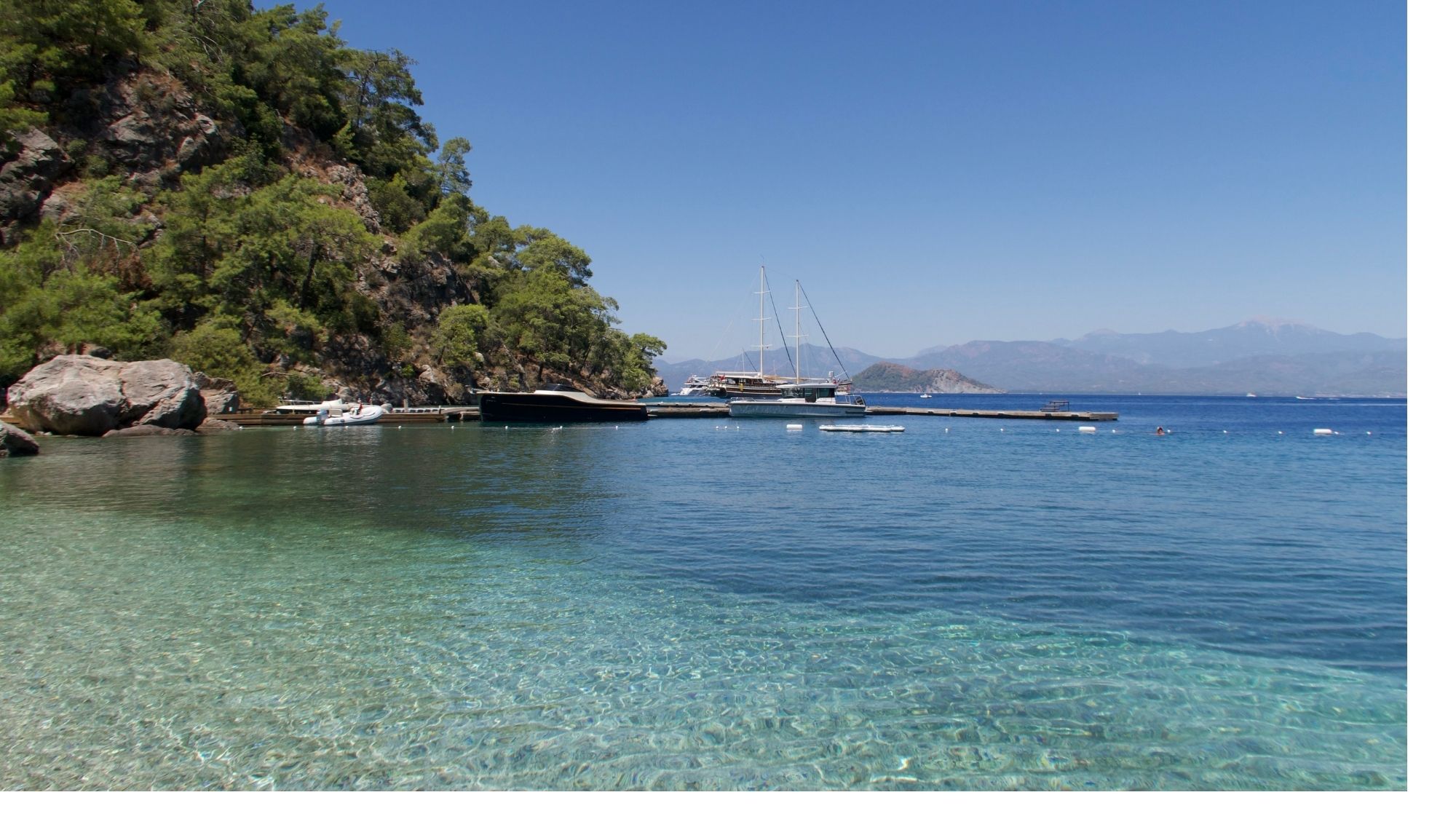
In fact, as we wound our way down the mountain from our first stay at Perdue — a clifftop bolthole perfect for honeymooners or, in my case, the newly engaged — I realised the glistening waters below were disappearing beneath great umber plumes. A wildfire was burning through the landscape, one of more than 1,600 to have blazed across Europe and the UK this summer.
It was a sobering puncture to the Mediterranean idyll. Helicopters carrying Bambi Buckets hovered overhead as we left the forested mountains behind and headed towards Homer’s “wine-dark sea” — a reminder, too, of how precious the landscape is; how much it needs protecting.
Further along the coast, secluded bays house a new generation of design-led hotels making the area a serious alternative to the usual Mediterranean circuit.
One such hotel is Yazz Collective, an Ibiza-meets-Turquoise-Coast retreat accessible only by boat and almost invisible from the sea until you enter its private bay, it feels less like a resort and more like a Bond lair.
As part of a new, slower approach to travel I’ve been trying to adopt (to middling success), I avoided researching Yazz Collective. But on the occasions I did have to search something, I’d invariably clock those all-too-ubiquitous travel buzzwords — ones I’m equally guilty of using — like ‘barefoot luxury’ and ‘polished ease’. Both felt slightly incongruous with an arrival that saw us chauffeur-driven from our hotel, ferried to a waiting port and deposited by yacht at what is essentially a private island. Barefoot, sure, but understated?
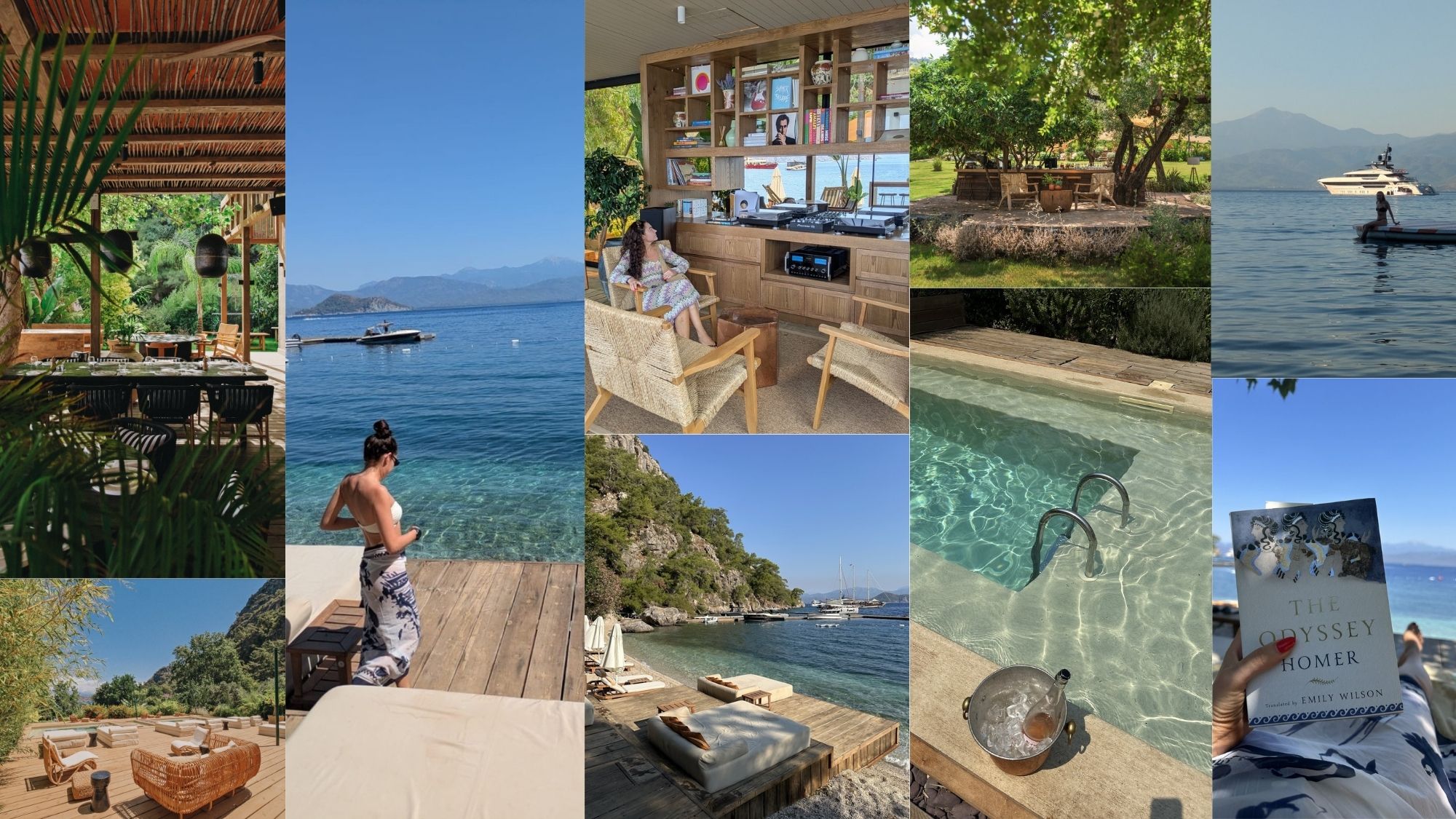
And yet, as I weaved past the outdoor watersports centre and art therapy area, I kinda understood what everyone was getting at. The aesthetic is barefoot but considered: natural materials and earthy tones against pine forest and dazzlingly blue sea, while just 16 guest houses keep things intimate (read: exclusive) rather than resort-like.
By day, the pace is slow: swims in the bay, long, wine-soaked lunches and afternoons on sunbeds as superyachts drift in and out of view. Suffice to say, the people-watching is excellent. Then, as the afternoon sun slips towards the horizon, things become more convivial, as those aboard the yachts — freshly gussied up after a hard day sunning themselves — come ashore for dinner.
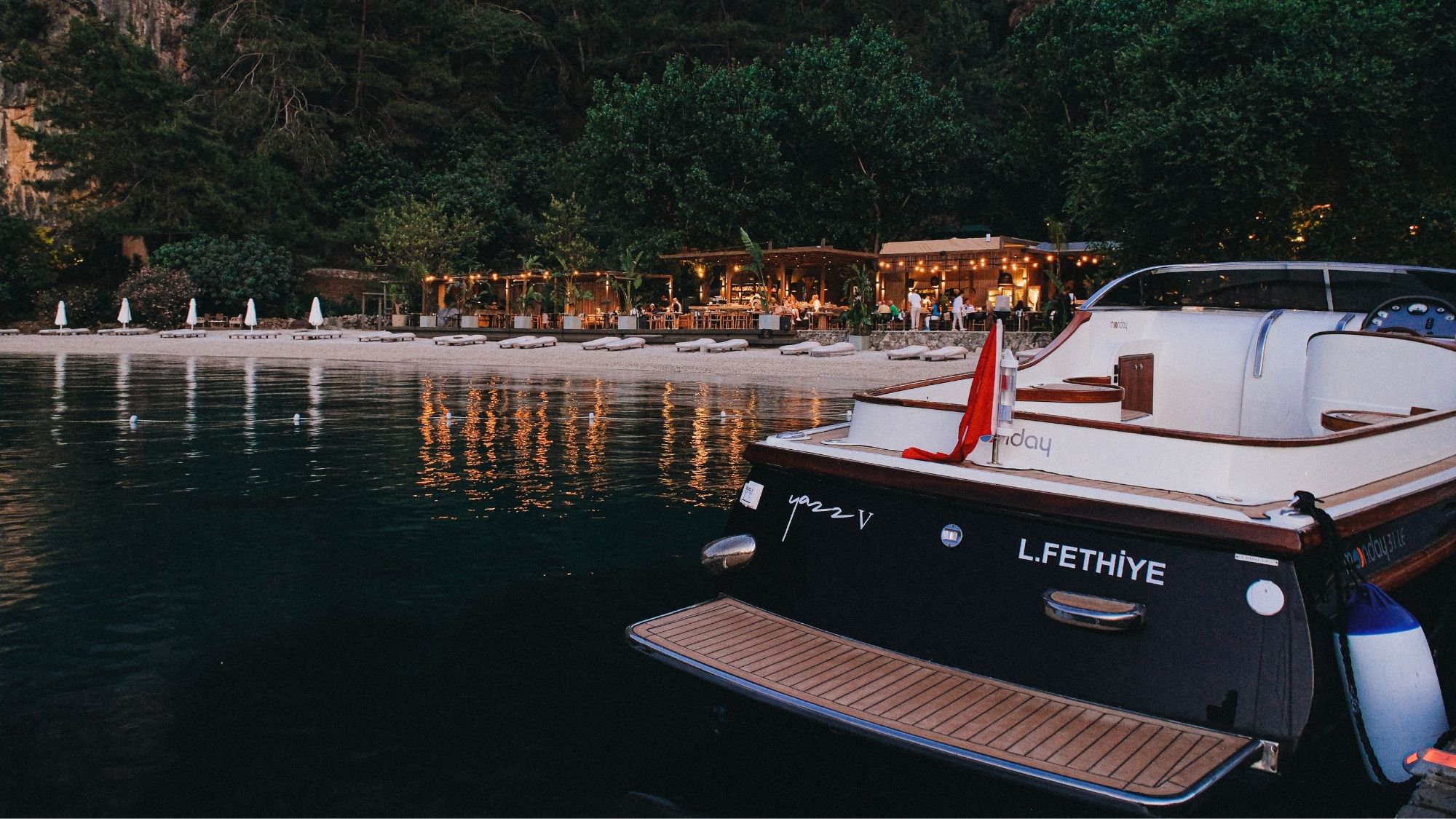
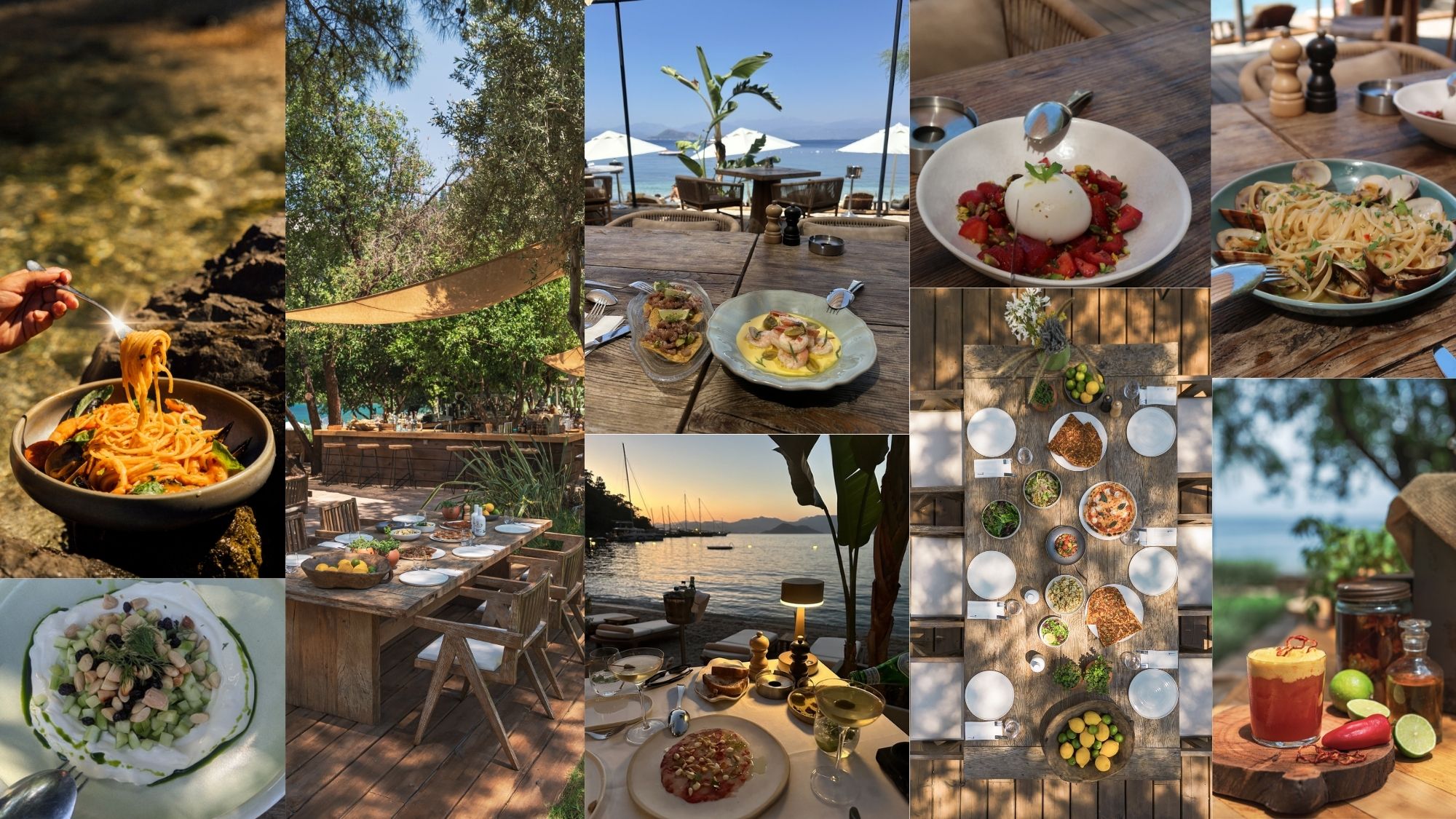
Yazz began life as a beach club, and occasionally would-be revellers pull into harbour, ruddy-skinned, and ready to party. I witnessed as much on my first night. As I was twirling a forkful of linguine vongole and not feeling particularly glamorous (blame the day drinking), three women in matching white outfits tumbled off a docked boat, joined by a single man, trim, tanned, and with an appetite for rakı. The quartet seemed to know their way around the restaurant, so perhaps they knew precisely what they were doing. Still, I couldn’t shake the feeling they were chasing a night Yazz wasn’t particularly interested in giving them.
For the most part, though, the crowd is more relaxed: well-heeled couples, Turkish families and yacht-dwellers are happy to let lunch bleed into dinner rather than dance around the DJ booth.
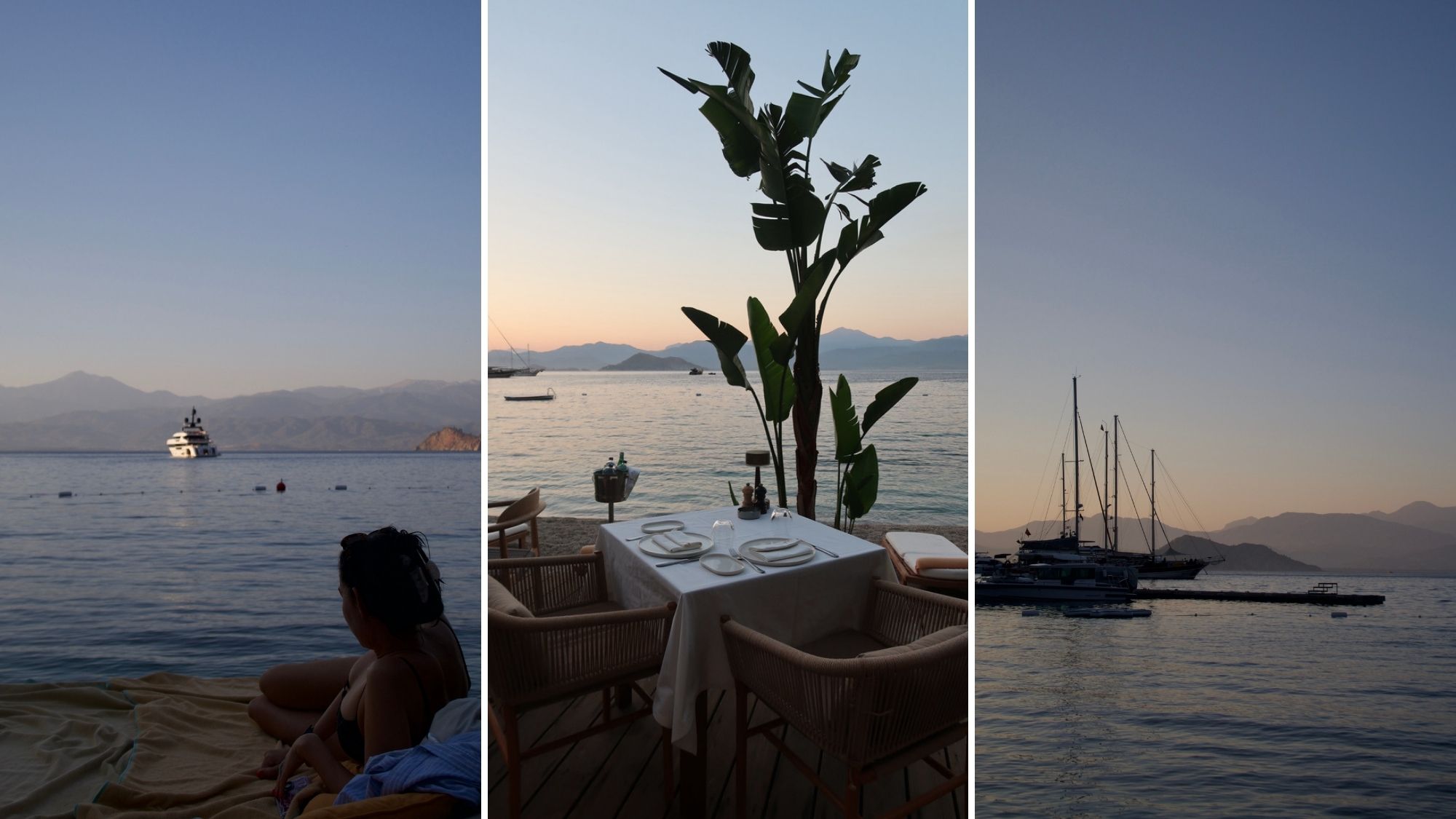
The same aesthetic runs inside: earthy tones, linen, wood, stone, and huge picture windows. All suites come with king-size beds, private outdoor space and walk-in rain showers. Mine also had an added outdoor shower and a private chill-out pool, though the ocean was within skipping distance.
Early mornings were for coffee on the terrace, or, if I was really early, on a lounger, letting my toes tap the pool like a piano before the sun beat down too heavily.
There are thoughtful details, too: a pillow menu, yoga mats and widescreen TVs with Netflix and YouTube (we watched Jason and the Argonauts while unpacking, which was pleasingly campier than I remembered). The bathrooms are cool and spacious, stacked with Le Labo products.

Breakfast is quite the undertaking. The options are dizzying and we dedicated ourselves to exploring them (it’s a tough job etc, etc.) The Turkish breakfast was a table-swallowing spread of freshly baked bread, cheeses, dips, fruit, sucuk and great slabs of honeycomb. Then, we’d order from the hot menu, too. Menemen one day; meats and eggs the next.
The wider menu is mainly Mediterranean. At lunch, we ate ceviche and crab crudo with a crisp local white; for dinner, I found myself eating more pasta than I’d expected on a trip to Türkiye. Not that I was complaining.
There are, however, moments when Yazz’s superyacht clientele makes itself known. One evening, I almost ordered the lobster linguine before doing the currency conversion and realising it hit around the £250 mark.
Though we rarely had room, sütlaç, Türkiye’s creamy rice pudding, was a favourite.
There is plenty to do at Yazz, though the longer I stayed, the less inclined I felt to do it. I enjoyed a gentle hatha yoga class beachside and signed myself up for paddleboard yoga. Then, I fell victim to the aforementioned breakfast, lay down under the shade of a pine tree and slept through the hour-long session.
I was, in theory, equally tempted by everything from canoes (especially the glass-bottomed ones), waterskiing and wakeboarding to SeaBobs, wakesurfing and E-Foiling; you know the watersport famously loved by Mark Zuckerberg, if you want to go full billionaire cosplay. All come at an expense, but the main cost I wasn’t willing to fork out for was losing snoozing time, and so I skipped the water hoverboard (and most everything else).
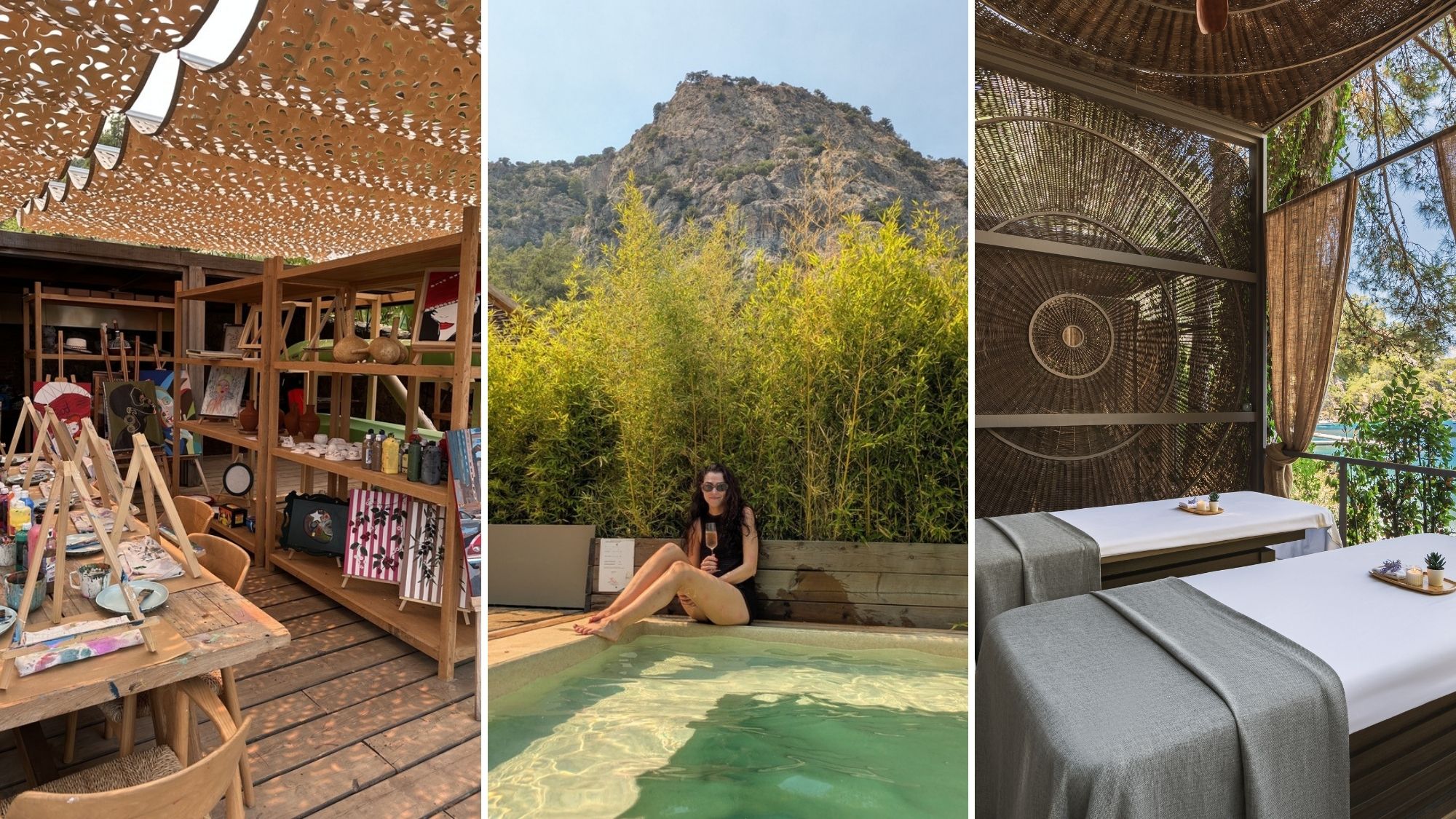
Back on dry land, there’s an outdoor gym and personal training, plus pickleball, badminton, beach volleyball, and table tennis. There’s workshops aplenty: ceramics, candle-making and, on the day I arrived, straw hat painting. Everything is outdoors and open, including the spa where treatments are performed by Balinese therapists overlooking the ocean in secluded treatment rooms seemingly carved into the rockface.
But the best facility is arguably the bay itself. With nowhere you need to be and almost everything arranged within a few minutes of the water, Yazz makes it all-too-easy to build a full itinerary only to abandon it completely.
Contrary to everything I’ve just said about relinquishing plans to Yazz’s slower pace, the standout moment of our stay did, in fact, involve one such plan.
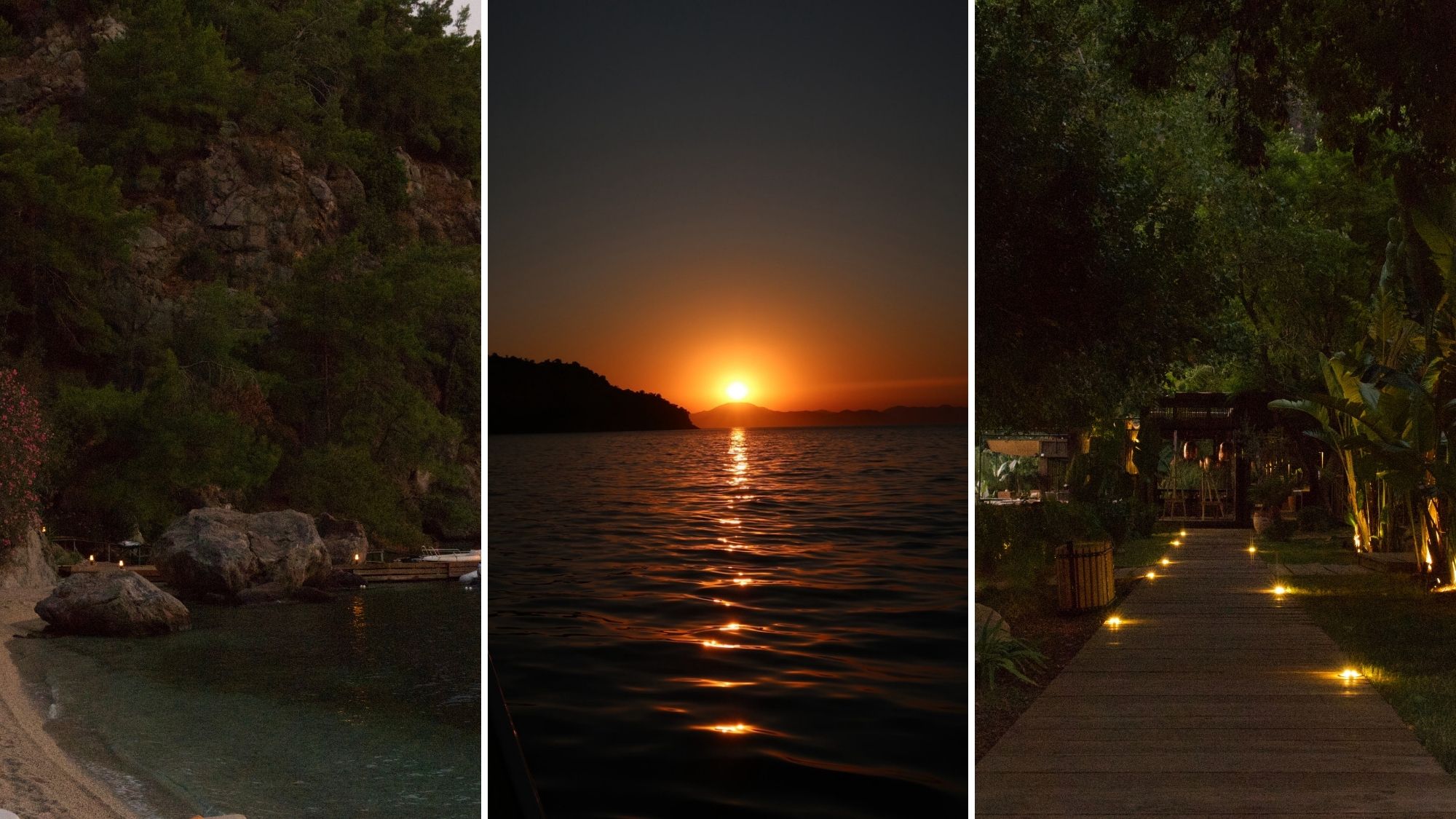
On our penultimate evening, we stepped aboard Moonday for a private sunset cruise. Yes, we went full Bond. As we pulled away from the bay, champagne was poured (and quickly quaffed), and cherries and pistachios were nibbled at as we cruised along the coastline to watch the sun slink into the Mediterranean.

Rates at Yazz Collective start from £500 per night for a Deluxe Room on a bed-and-breakfast basis, with a minimum two-night stay. Boat transfers to and from the hotel are included in the room rate.
Private sunset boat trips start from £380, while non-motorised watersports start from £60 and motorised options from £80.
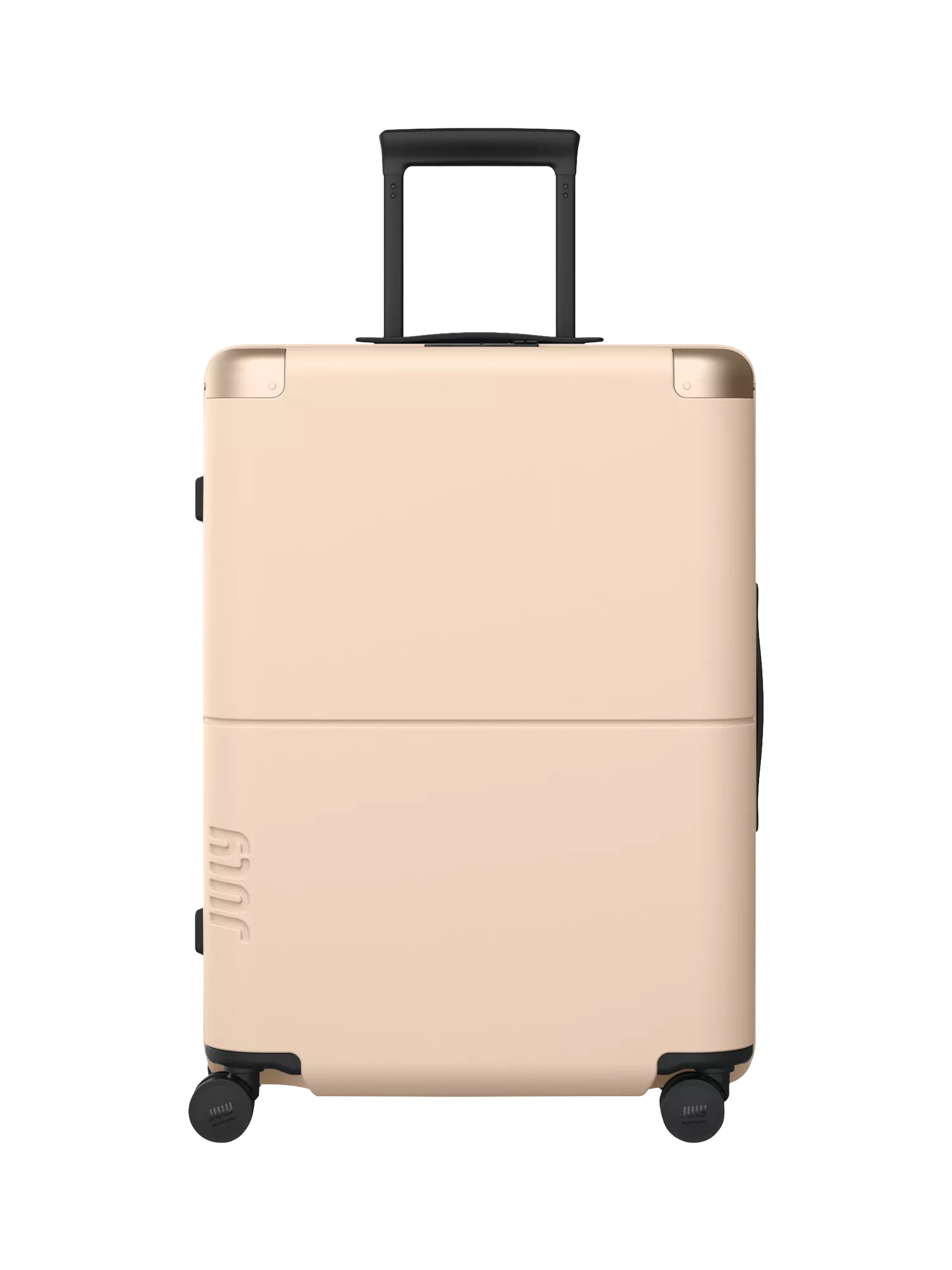
A roomy carry-on with quick-access storage and expandable capacity — ideal for anyone determined to travel light while packing seven unnecessary bikinis.
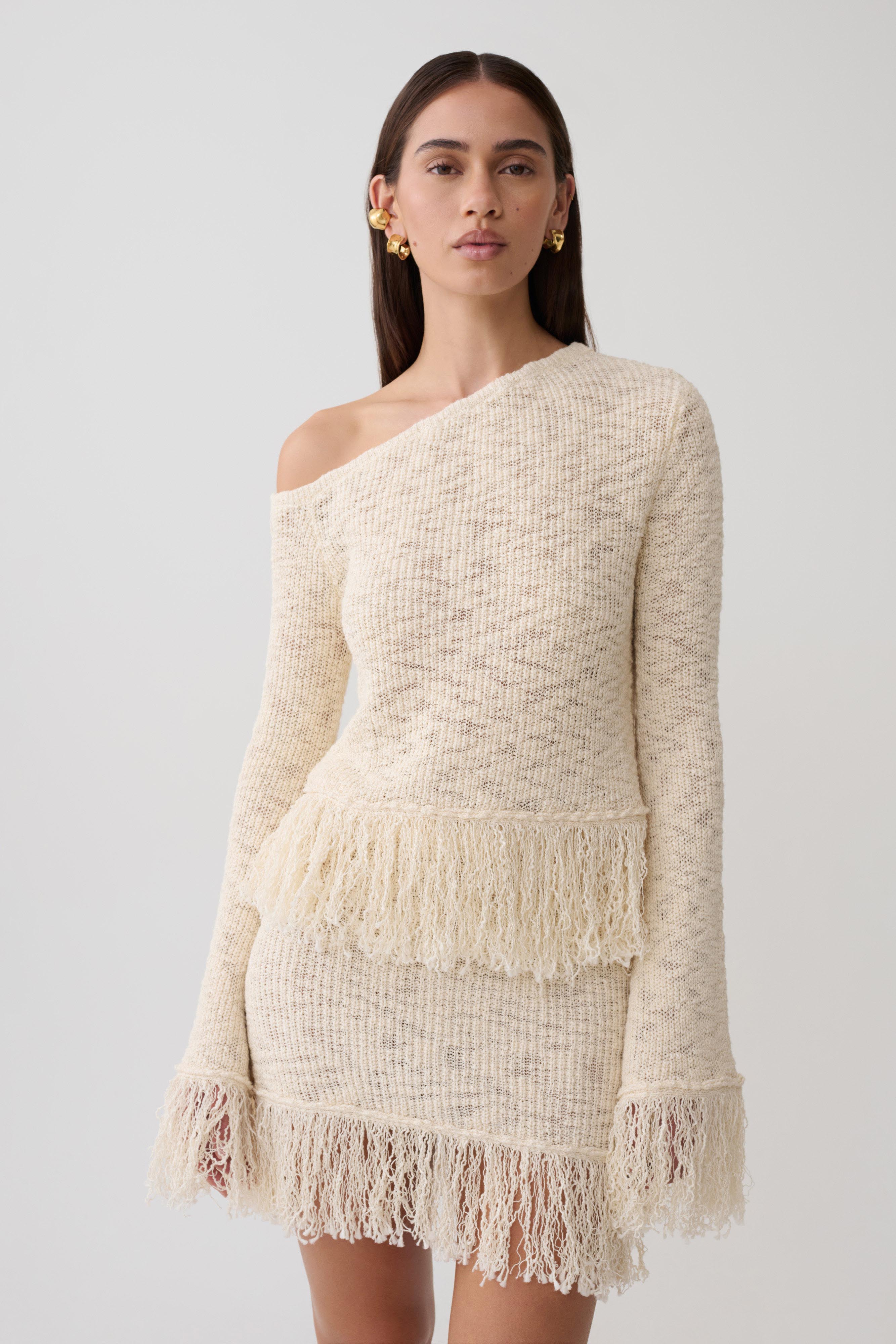
Meshki's cream knit with an asymmetric neckline and dramatic fringing is the perfect throw-on layer for cooler Mediterranean evenings.
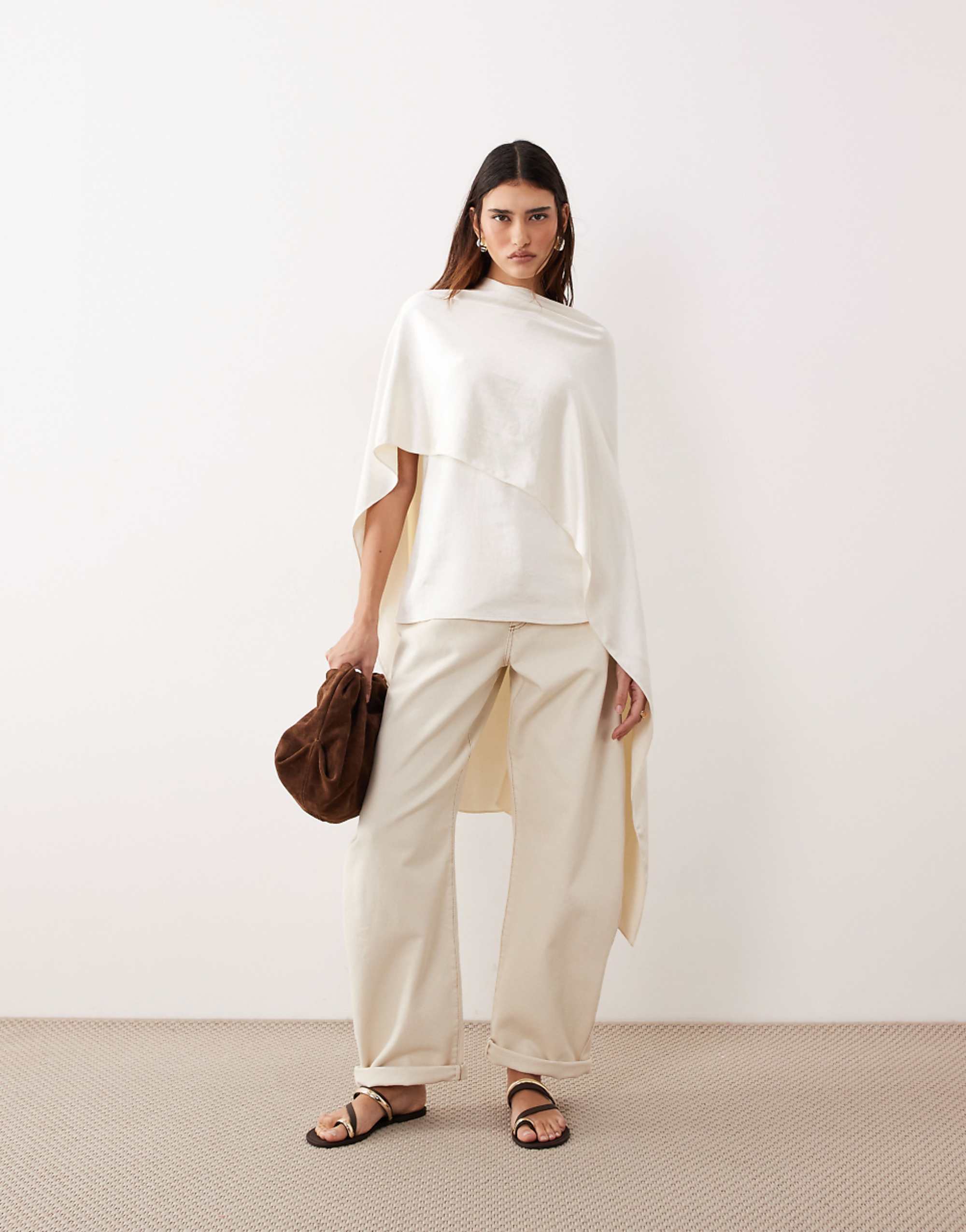
The curved-leg and rolled hem keep this pair relaxed enough for travelling, but polished enough for dinner.
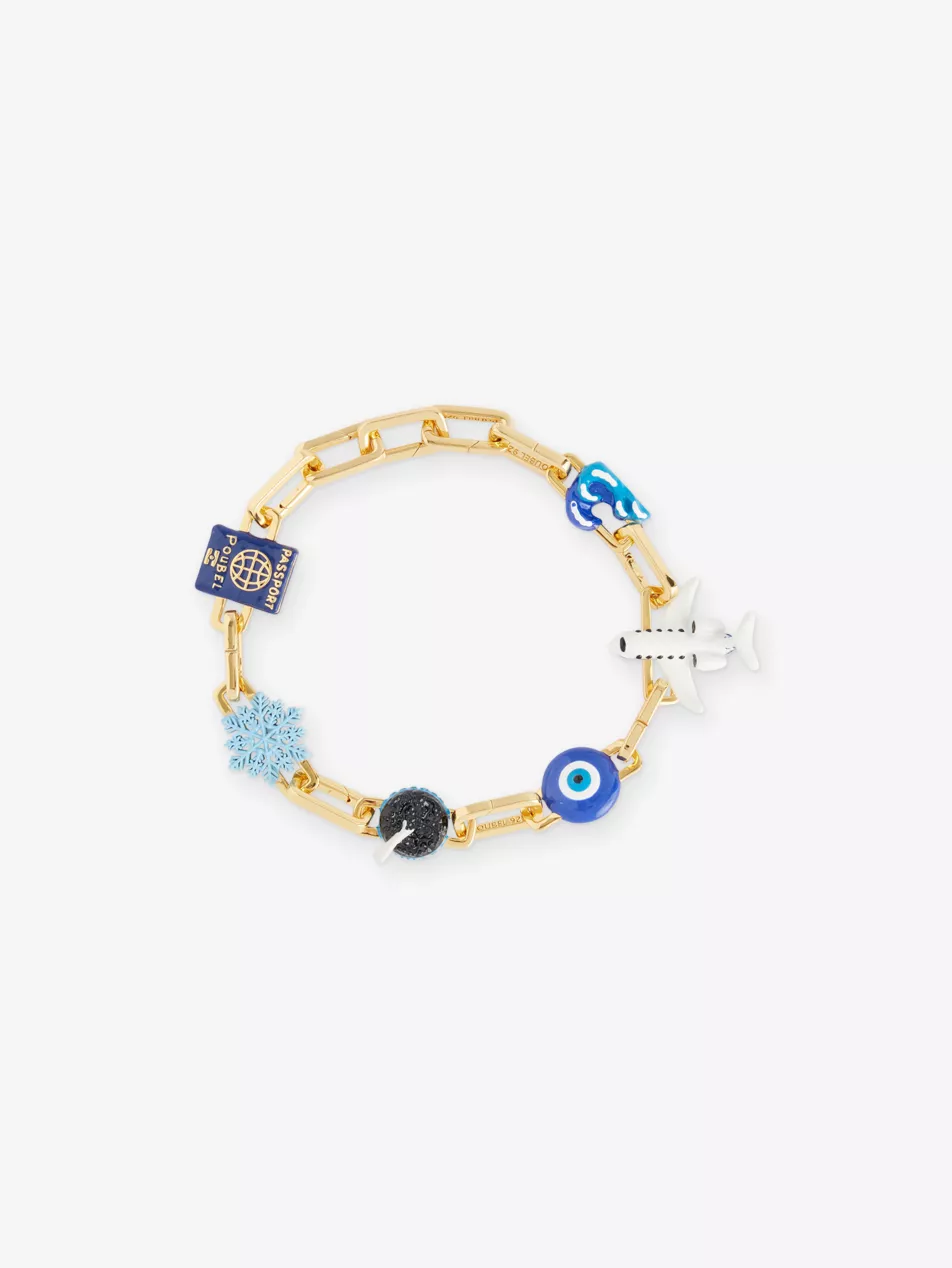
A playful 14ct gold-vermeil charm bracelet dotted with hand-painted travel motifs — essentially a very chic souvenir of your summer adventures, complete with an Evil Eye charm to ward off bad energy.
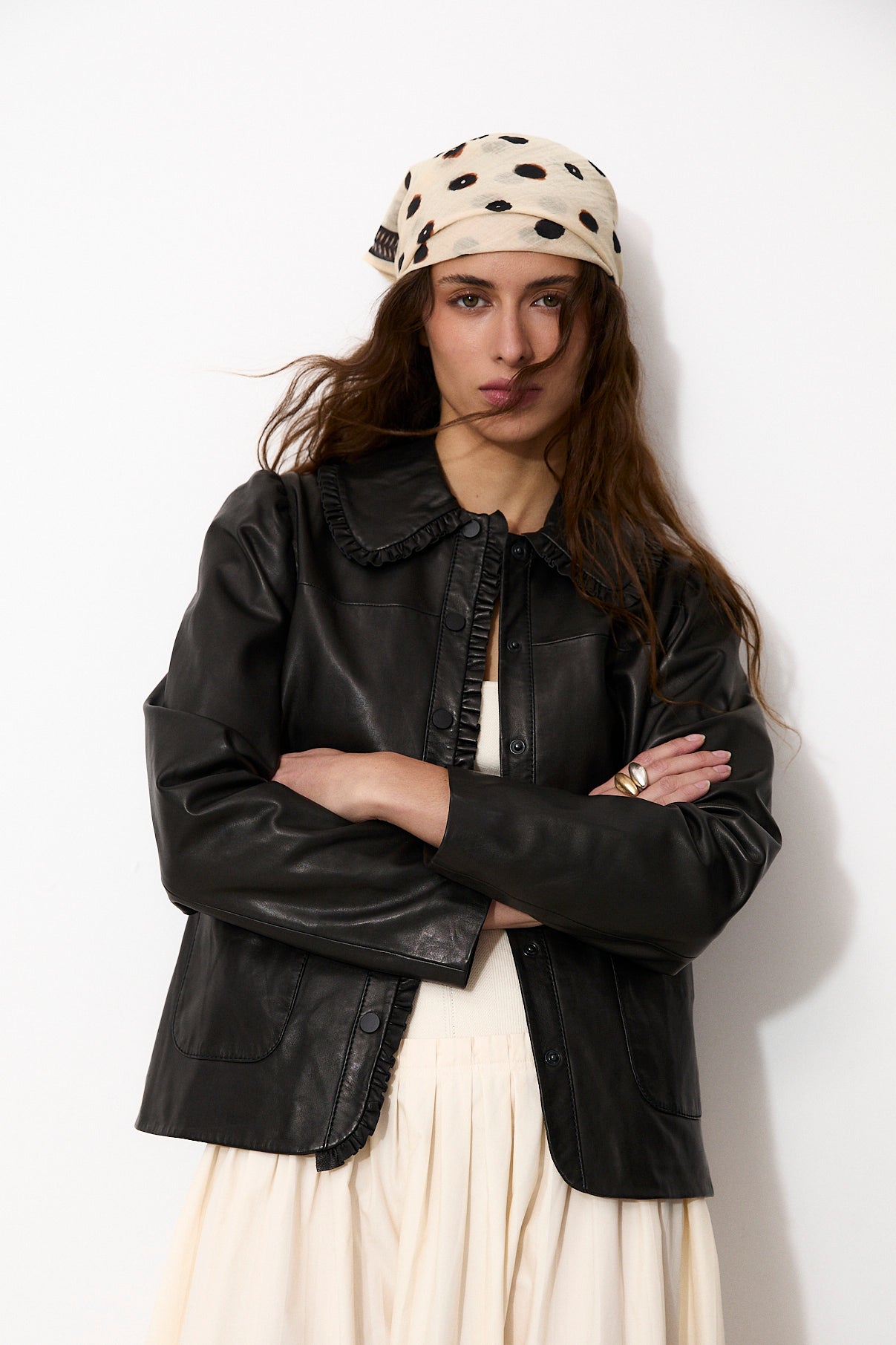
A colourful printed scarf that earns its suitcase space twice over; wear in your hair, around your neck or tied onto a bag for an easy holiday upgrade.
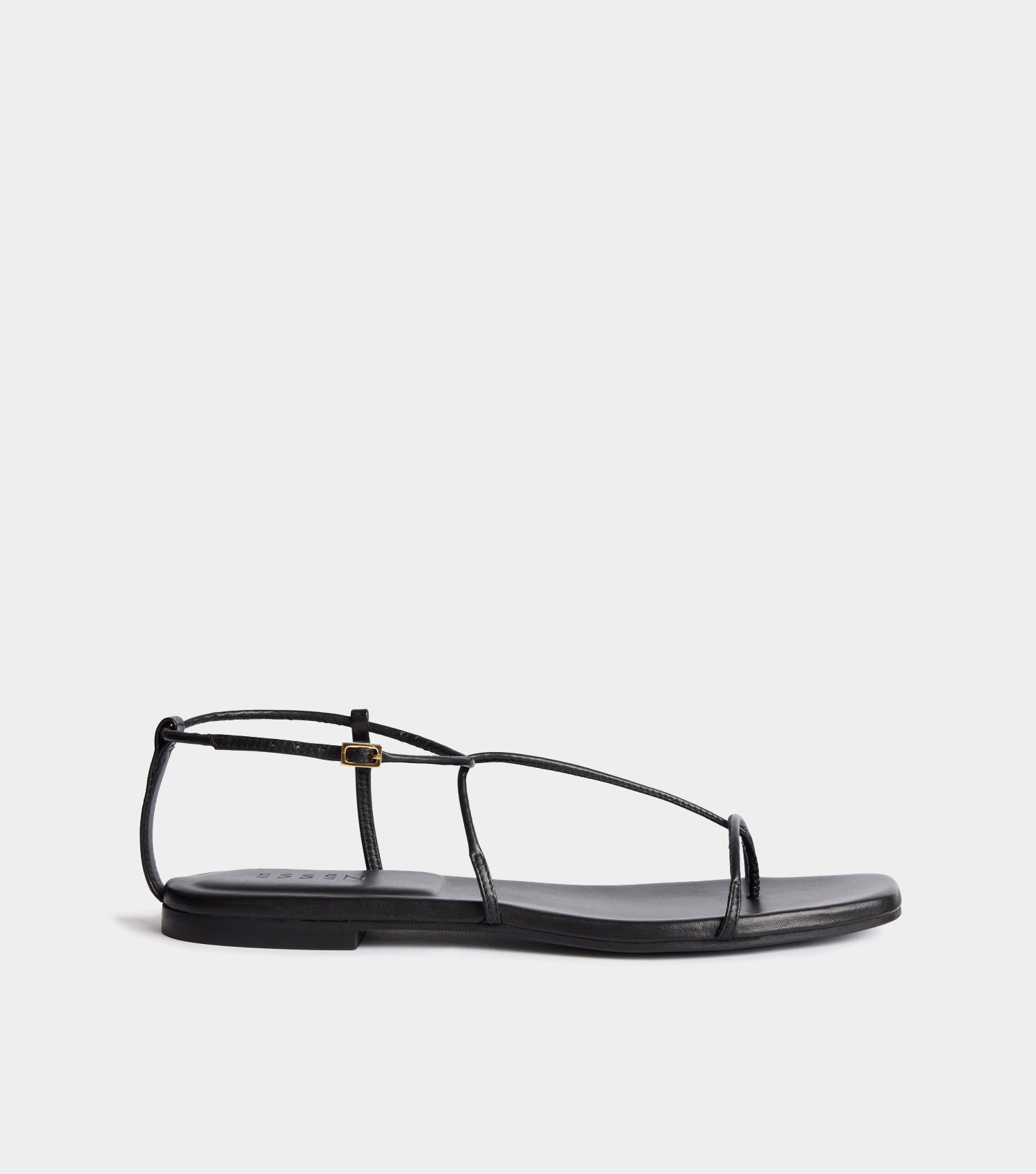
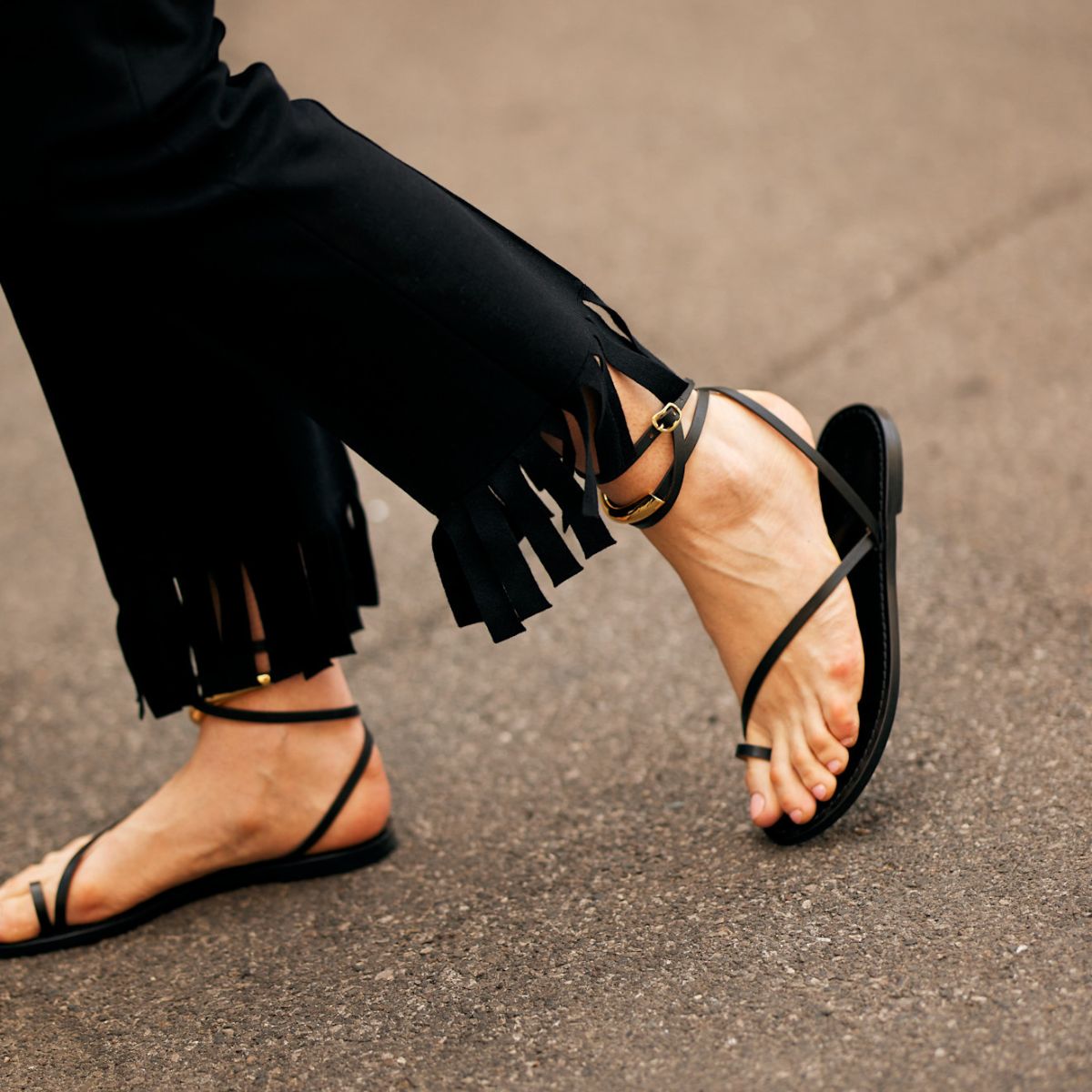
Minimal black Italian-leather sandals with barely-there straps and a cushioned sole make this pair elegant enough for dinner and comfortable enough for the walk back afterwards.
I’ve been thinking a lot about friendship lately. Specifically, the women I couldn’t imagine my life without, and how embarrassingly easy it has become to go weeks, sometimes months, without properly seeing them.
We are, after all, very busy people. There are jobs, partners, children, ageing parents, life admin and approximately 38 WhatsApp conversations we are already failing to keep up with. Friendship can start to feel like another thing on the list. Something we’ll get to when everything else is done.
Except, it turns out, friendship might not be a nice-to-have at all. It may be one of the pillars of staying well; a biological necessity.
One look at the research, and that post-friendship exhale starts to make perfect sense. A 2010 meta-analysis of 148 studies found that people with strong relationships had a 50% greater likelihood of survival than those with weaker social connections. The researchers also found that the mortality risk associated with social isolation was comparable to - and in some cases greater than - risk factors such as obesity, physical inactivity and heavy alcohol consumption. In other words, your friends are, quite literally, either adding years to your life or taking them away.
And for women, the story gets even more interesting. Because friendship doesn’t just make us feel better - it can change what's happening inside our bodies. Neuroscience research suggests that close friends can begin to synchronise with one another - their brains, emotions and even psychological responses falling into step. In a sense, spending time with someone we trust creates a shared version of the world: one that can feel safer, more familiar, and crucially, easier to navigate.
So that feeling after a two-hour catch-up and you walk home lighter than you arrived; it turns out - it isn’t just in your head - your body has been asking for her all along.
Hooked? Before you rush off to text one of your 38 unopened WhatsApps with “I’m so sorry for the slow reply”, let me throw one more thing into the mix: if female friendship is so deeply wired into us, what happens when we stop making time for it? Why, despite knowing how much we need one another, do so many of us push our closest friendships to the bottom of the list? Experts, come forward. It’s time to find out what we’re risking when we do. Keen to read more? See how one Health Writer got on treating friendship as a wellness habit, and scroll through expert-backed healthy ageing habits and Blue Zone tips while you're here.
“Friendships can actually influence our neurochemistry and change how we perceive the world, experience stress, how threatening the world feels, and even how demanding a task appears,” explains behavioural scientist Ghazal Moenie.
It is a deceptively big claim for something we tend to think of as fairly ordinary: a quick coffee, walking home together, sitting on the sofa talking absolutely nothing. But there is growing evidence that the presence - and quality - of our closest relationships can change the way our bodies respond to the world around us. Research has found that people had lower blood pressure and heart rate reactivity when facing stress with a supportive friend than when alone. TDLR: friendship can really alter how difficult we perceive life to be.
The implication is not that friendship magically takes all our stress away. Rather, close relationships can act as a buffer: making the same challenge feel less threatening, and perhaps more manageable.
For women, there may be an additional layer. 26 years ago, researchers at UCLA proposed the idea of “tend-and-befriend” - essentially, that women may respond to stress in a slightly different way than the familiar fight-or-flight response. When something goes wrong, our instinct isn’t necessarily to run or retreat. We might call a friend. We might gather the women around us. We might talk it through, look after someone else, or simply need to be near people who make us feel safe.
Naturally, there’s biology behind that instinct, too. The research suggested that oxytocin - sometimes referred to as the “bonding hormone” - plays a role in encouraging social connection and helping regulate the body’s stress response. “Oestrogen can enhance the effects of oxytocin, which may help explain why this response is particularly relevant to women,” says Moeni.
Evolutionarily speaking, the theory goes, women were encouraged to both “tend” - protect and care for offspring - and “befriend": make those social connections that could offer all of the above.
It gives a rather beautiful biological explanation for something most of us already know: the friend we call when everything feels too much may not be distracting us from the stress; she may be a part of how our bodies know to carry it.
@femalequotient Female friendships, old and new, give us courage, support, inspiration and so much more. In fact, studies show that girlfriends can actually help you live longer by reducing stress and improving heart health. You read that right, girlfriends are good for your heart, in more ways than one ❤️ Tag *that* friend who’s been your ride-or-die through the decades!
♬ original sound - Female Quotient
I can’t be the only one who feels heavily lost - emphasis on the heavy - when I don’t spend quality time with my girlfriends. Nothing light; I’m talking sitting down, opposite one another, discussing the woes of the world. I know that once I’ve had this, I feel like I’ve been pieced back together. The more I researched, the more one question kept cropping up: what happens to our health when we don’t have connection?
If we are, as research suggests, biologically wired for closeness, the absence of it matters significantly. “There is lots of research now showing that being lonely is linked to poor mental health, high anxiety and high stress,” explains neuroscientist Antonia Hamilton. “In older people,” she says, “loneliness is also associated with dementia and heart disease.”
And the physical effects appear to run deeper than feeling low or lonely. A 2024 systematic review of 24 studies, representing almost 300,000 adults, found that social isolation was linked with higher levels of inflammation, frailty and cognitive decline, as well as disrupted sleep and a higher risk of death.
But Hamilton is keen to point out: “Connection can be protective, too. For young people with mild depression or anxiety, she says, joining a structured social group once a week for at least six weeks can have benefits comparable to antidepressants. It doesn’t much matter whether that’s a choir, walking group, dance class or book club. The important thing is the regularity of the connection.”
Time to welcome a mindset change? Connection isn’t something we simply have. Going off what the experts have to say, it’s something we have to keep doing.
There’s a rather boring reason keeping close friendships gets harder as we get older: we stop seeing each other by accident. “Friendships need time, availability and repeated contact, and adulthood often removes all three,” says Psychologist Dr Sophie Mort. “Work, relationships, children, caring responsibilities and simply having less energy can mean that the spontaneous contact we had earlier in life becomes much harder to maintain.”
Which explains my newfound ability (I thank my fully developed prefrontal cortex for this) not to be offended when a friend doesn’t reply for two business days. We have jobs, partners, children, admin, ageing parents, and occasionally, absolutely nothing left to give. However, be aware of the subtle trap here: giving each other grace can quietly morph into giving up.
“Friendships rarely disappear because somebody consciously decides, ‘I no longer value this person,’” says Moenie. “More often, tiny moments of friction accumulate.” Time. Distance. Competing Demands. We can start interpreting a missed message as evidence of how much someone cares, when sometimes life is simply getting in the way.
Not to mention there’s a bigger cultural problem at play: “We tend to overrate romantic relationships compared to platonic friendships,” Moenie says. “Friendship is often treated as a sideplot, by accident.”
The Irony: the busier our lives become, the easier friendship is to prioritise - and the more important that friendship may become. “There is a danger in continually placing our friendships on the back burner,” says Moenie, “because these are often precisely the periods when that support becomes most important.”
Trying to be a better friend takes up a huge, unrented space in my mind. So, I wouldn’t be doing my journalistic duty if I didn’t ask the question we all want answered: without turning friendship into yet another self-improvement project, what actually makes the biggest difference to maintaining friendships that matter - and, given what we now know, perhaps even living longer?
The answer, according to behavioural science, may be less about trying harder and more about making friendship harder to lose. “Changing the environment often works better than relying on motivation alone,” explains Moenie. Her advice is to make friendship “Easy, Attractive, Social and Timely - the EAST framework. Pair a catch-up with something you already enjoy. Make plans recurring rather than renegotiating them every time. Reach out when the cue naturally appears, rather than waiting for the mythical moment when everyone is free.”
There’s also what Moeni calls an “implementation intention”: deciding in advance when and where something will happen. “We should catch up” is a lovely sentiment. “I’ll call you on my commute home Thursday” is a plan.
And I like her suggestion to lower the threshold for what “counts” as connection. “One of my favourite areas of research looks at weak ties” - the work friend you see in the kitchen, the neighbour you chat to, the person at the pet shop who remembers your cat. These small interactions can boost happiness and feelings of belonging, too.
I started this piece wondering whether I was spending enough time with my friends. I’m finishing it wondering why we ever decided friendship was something we could afford to put on hold. Because the women we make time for, inconvenience ourselves for and show up for aren’t a nice addition to our lives. They are part of what keeps us well, and quite possibly, on this planet for longer. So, consider this your sign to hug your friends that little bit tighter. You’ll find me doing the same.

A nice little addition to your next friend date - the Polaroid FLIP turns moments you’d usually leave buried in your camera roll into something tangible to keep - because sometimes the best way to make time with your friends is to capture it in the moment.
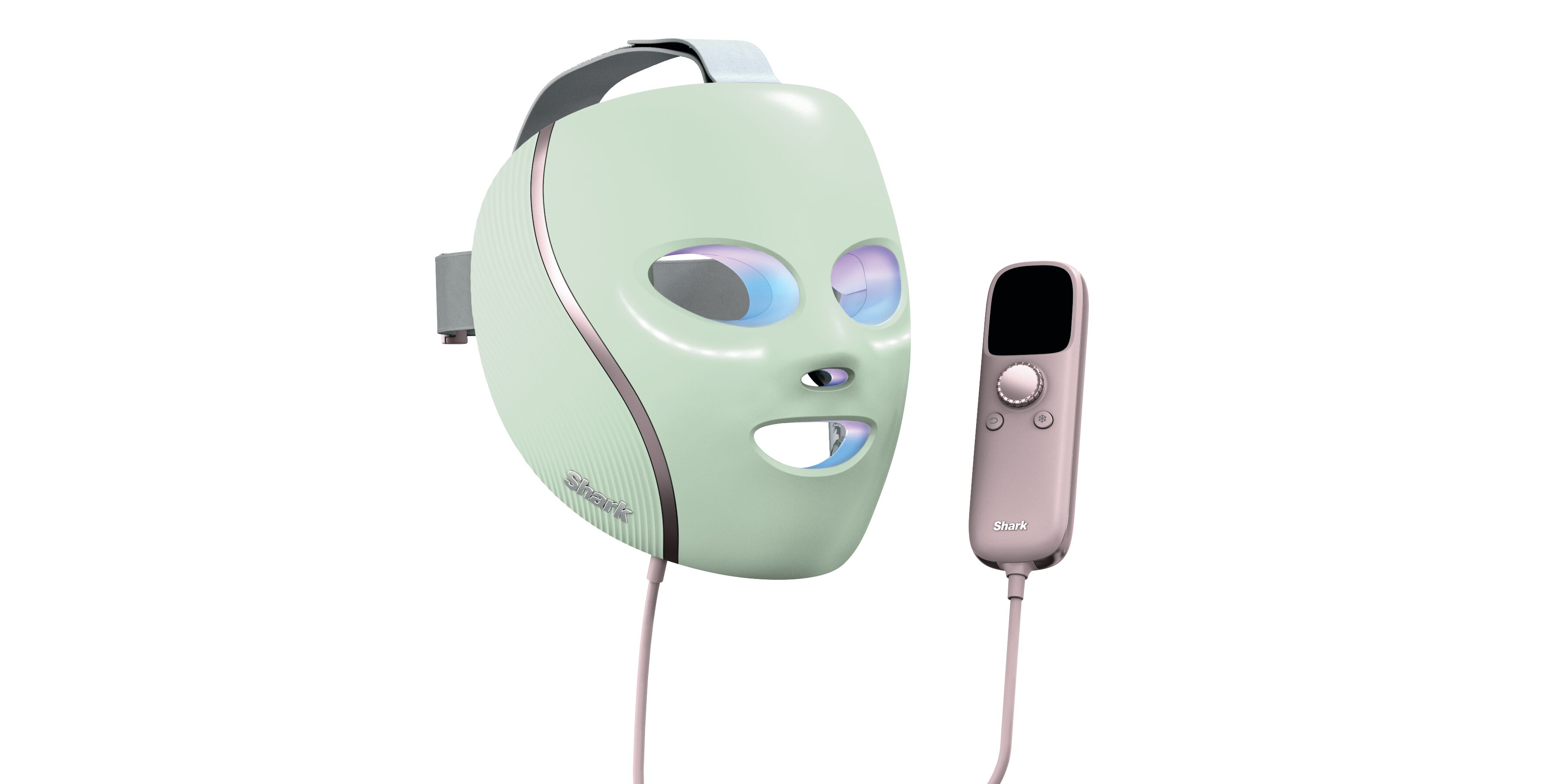
One thing I love to do with my friends is share and compare skincare hacks. The Shark CryoGlow is the perfect addition to a best-friend date that turns into an overnight - something to pass between you while you debrief, gossip and put the world to rights.

It’s getting to that time of year when the “fancy a crisp autumnal walk with a pumpkin-spiced latte?” texts start rolling in. Your response should obviously be yes - and your outfit should be suitably autumnal. The Adanola Pocket Fleece is cosy, oversized and made for exactly this sort of friend-date uniform.
Welcome to What Lily Loves, a personal edit of the pieces, places, and ideas currently inspiring me. Think of it as your insider guide to what’s shaping my wardrobe and daily rituals. From standout finds and under-the-radar designers to shopping destinations, cultural hotspots—from restaurants and theatres to podcasts—here are the latest discoveries I’m loving.
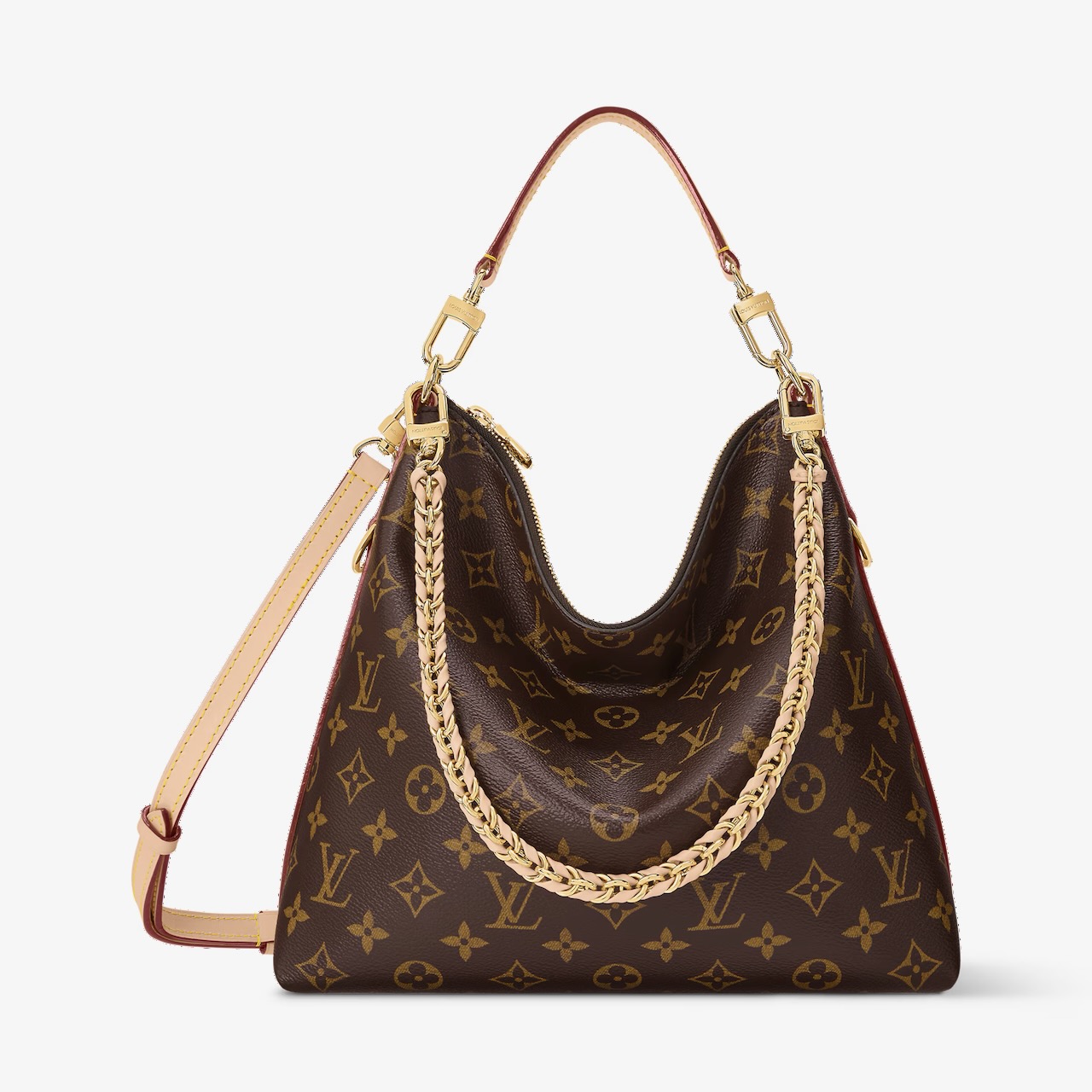
Few fashion houses have been able to create a logo as iconic as the Louis Vuitton monogram. Whilst it’s instantly identifiable, its simultaneously understated and refined in equal measure. This season, the Multipass bag is the newest addition to Louis Vuitton’s handbag collection and new Monogram canvas style. Designed with versatility in mind, it features multiple straps and ways to carry it, with all the hallmarks of a timeless everyday carryall.

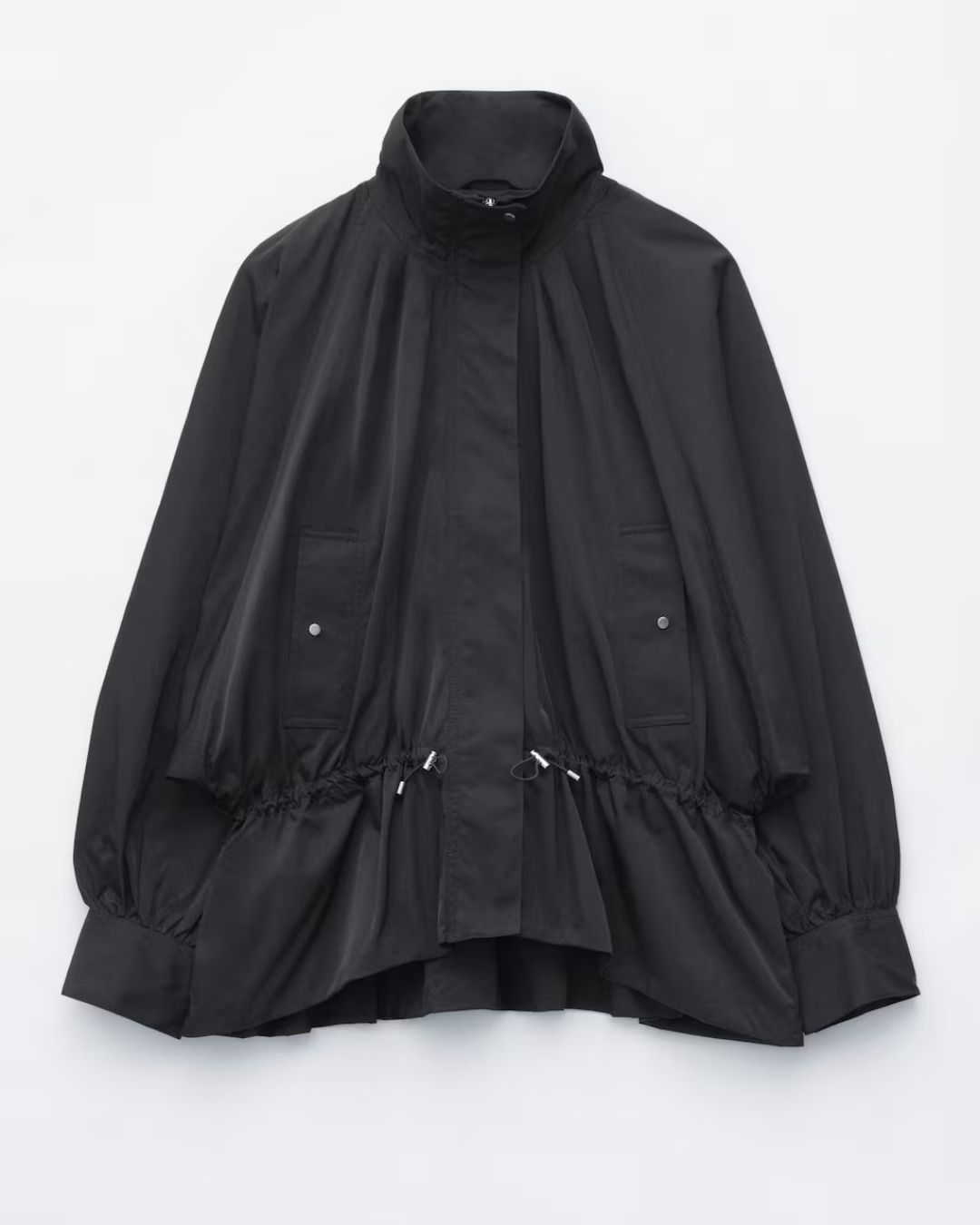
Whilst the last three months have felt like we've all migrated closer to the sun, following a summer of endless heat and a worrying lack of rain, thankfully the weather gods have answered our prayers, and rain is finally on the cards. With unpredictable weather comes the need for transitional jackets that are as polished as they are practical. This season offers a rich variety of styles to suit every mood and taste. Reformation’s Eleanor jacket, in a rich brocade, will gently transition me from the bright colour palette of my summer wardrobe into autumn. Whilst the COS belted peplum jacket jacket can be worn as a coverup and layered under a shirt or knit when the temperatures drop.

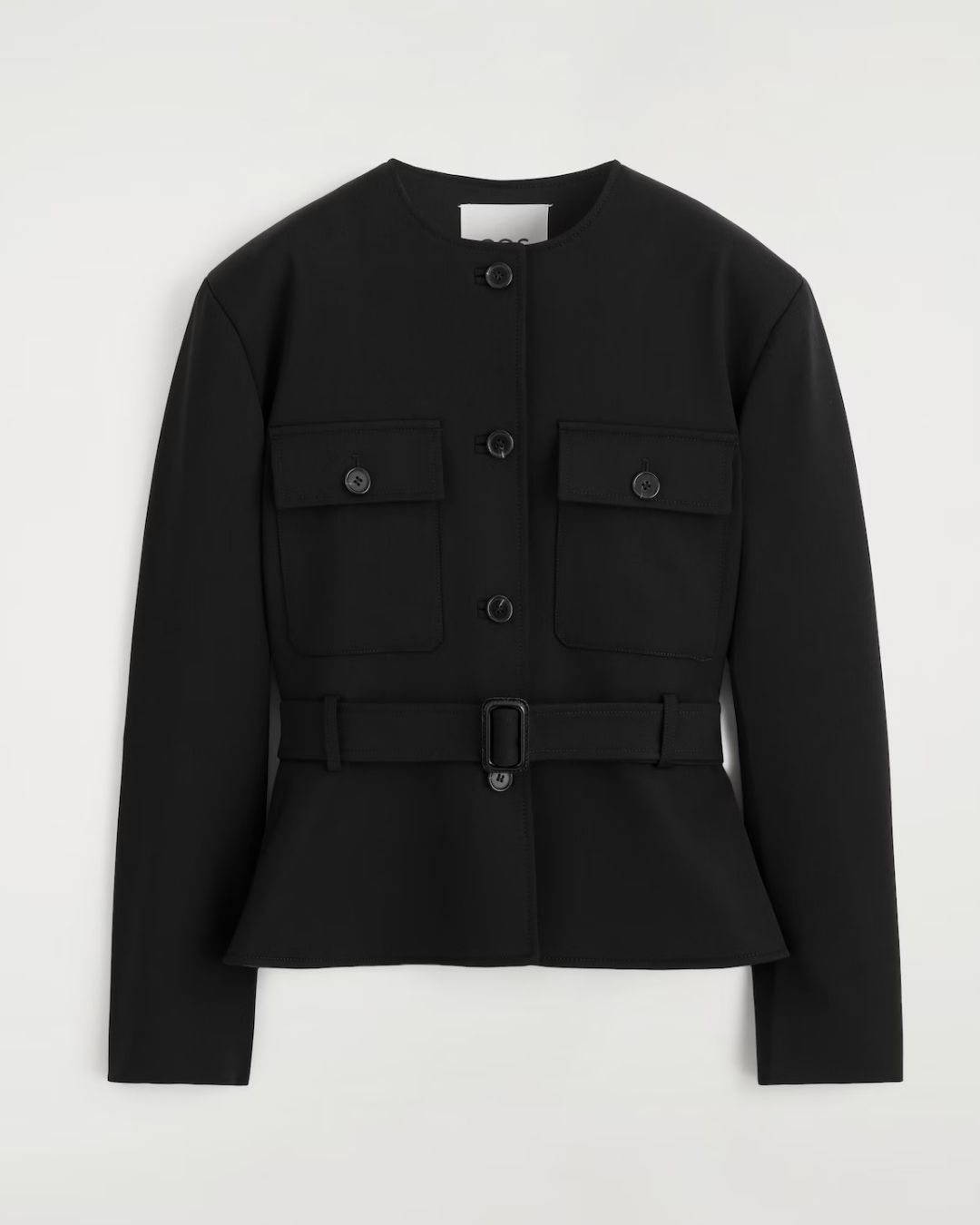
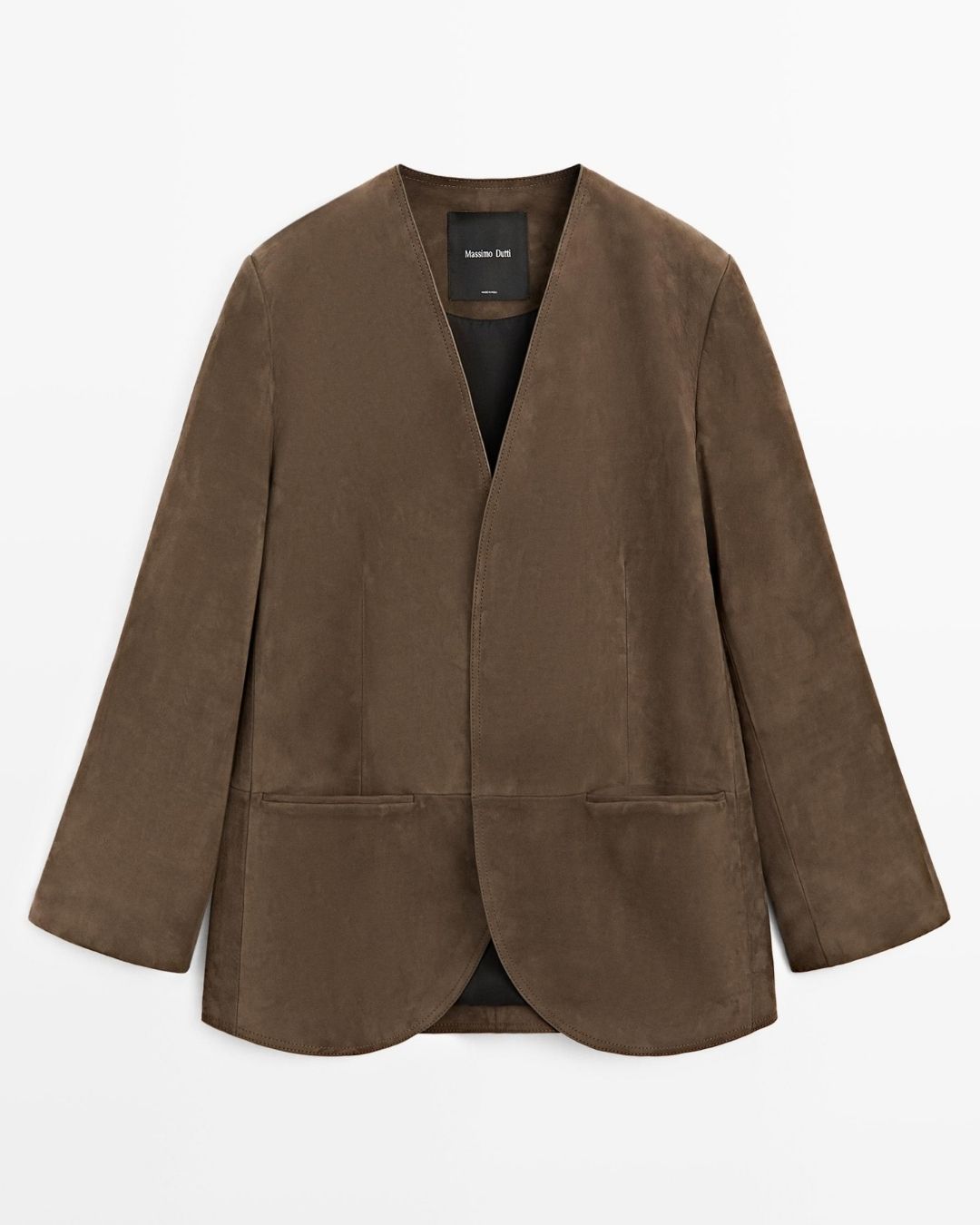
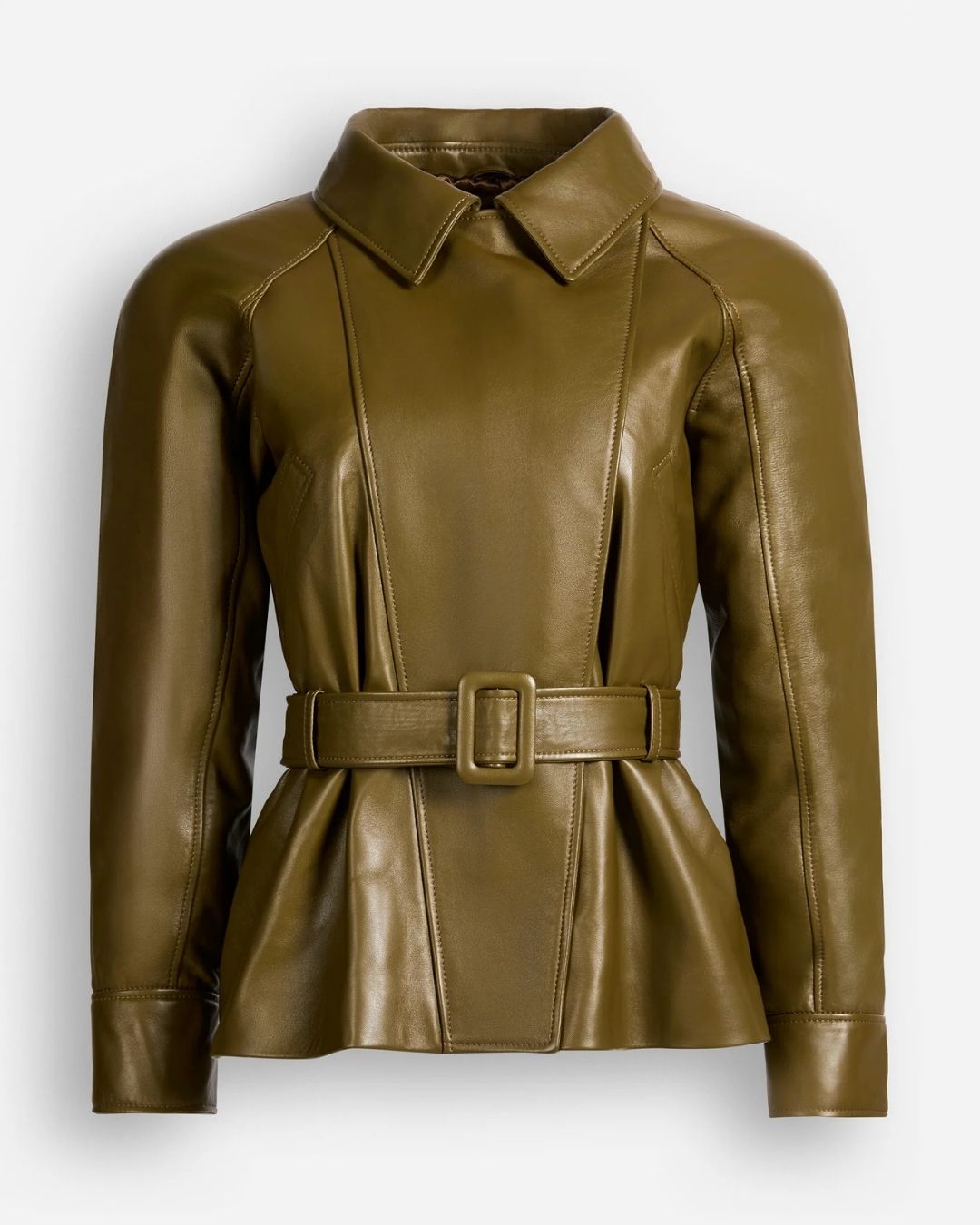
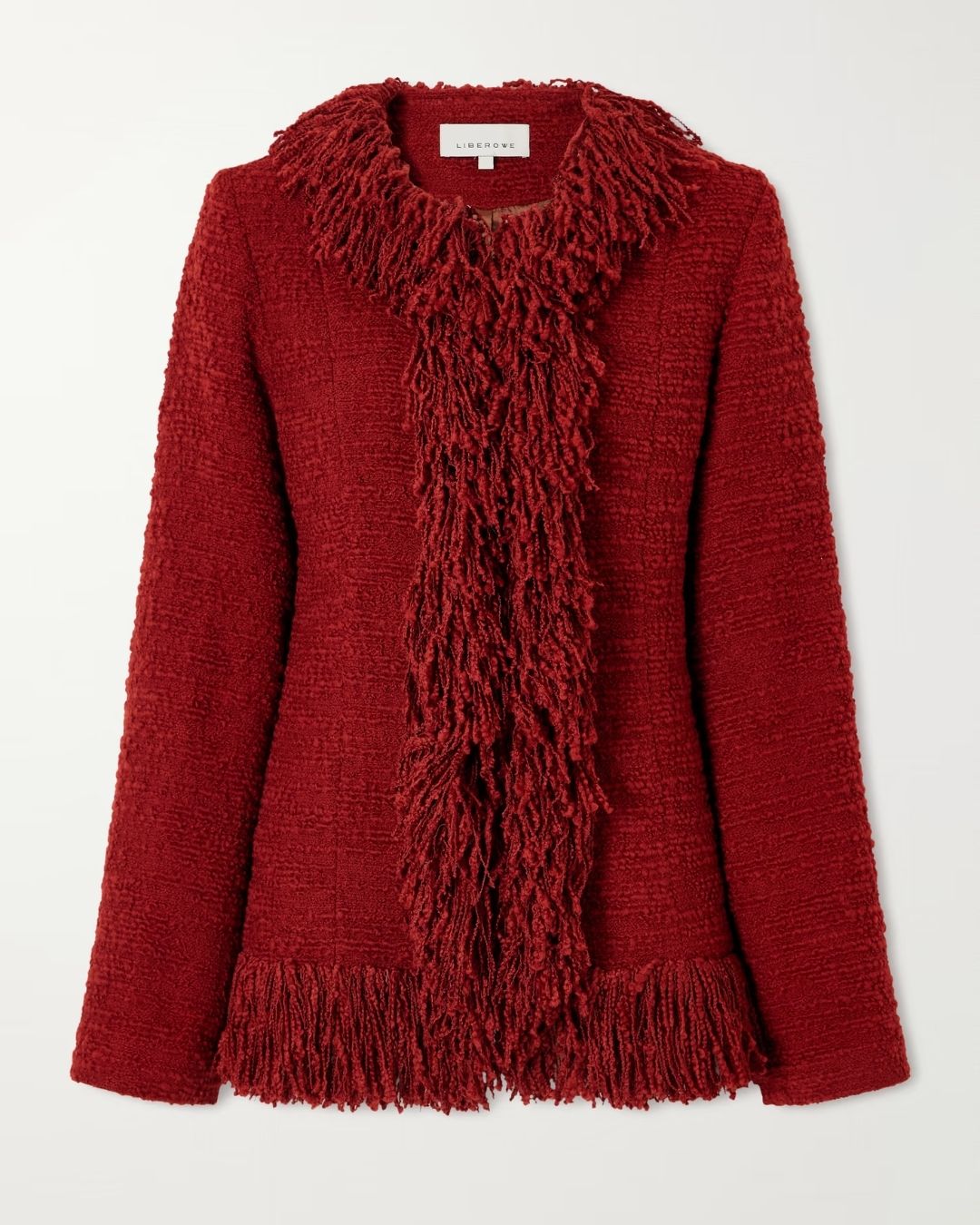
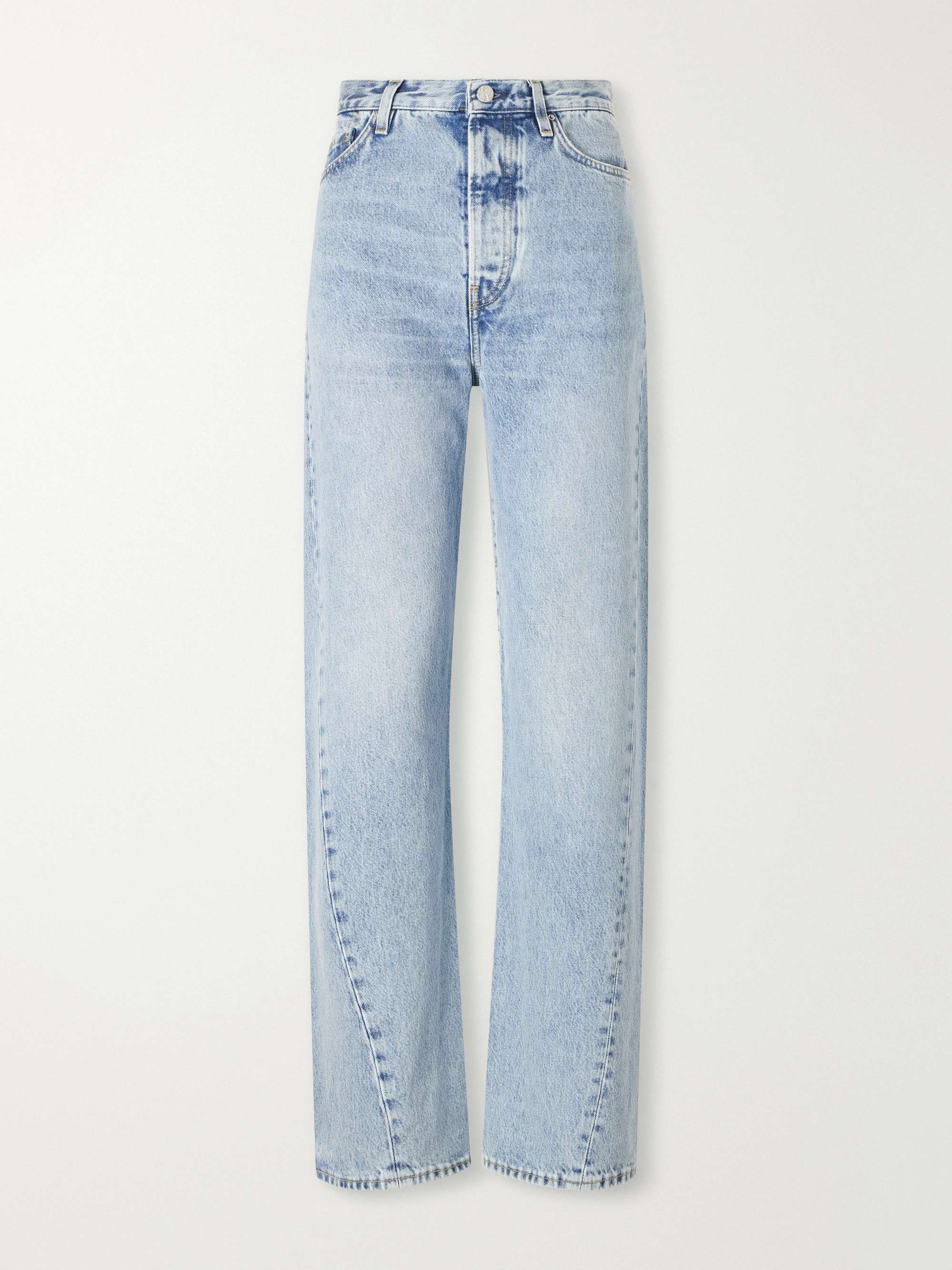
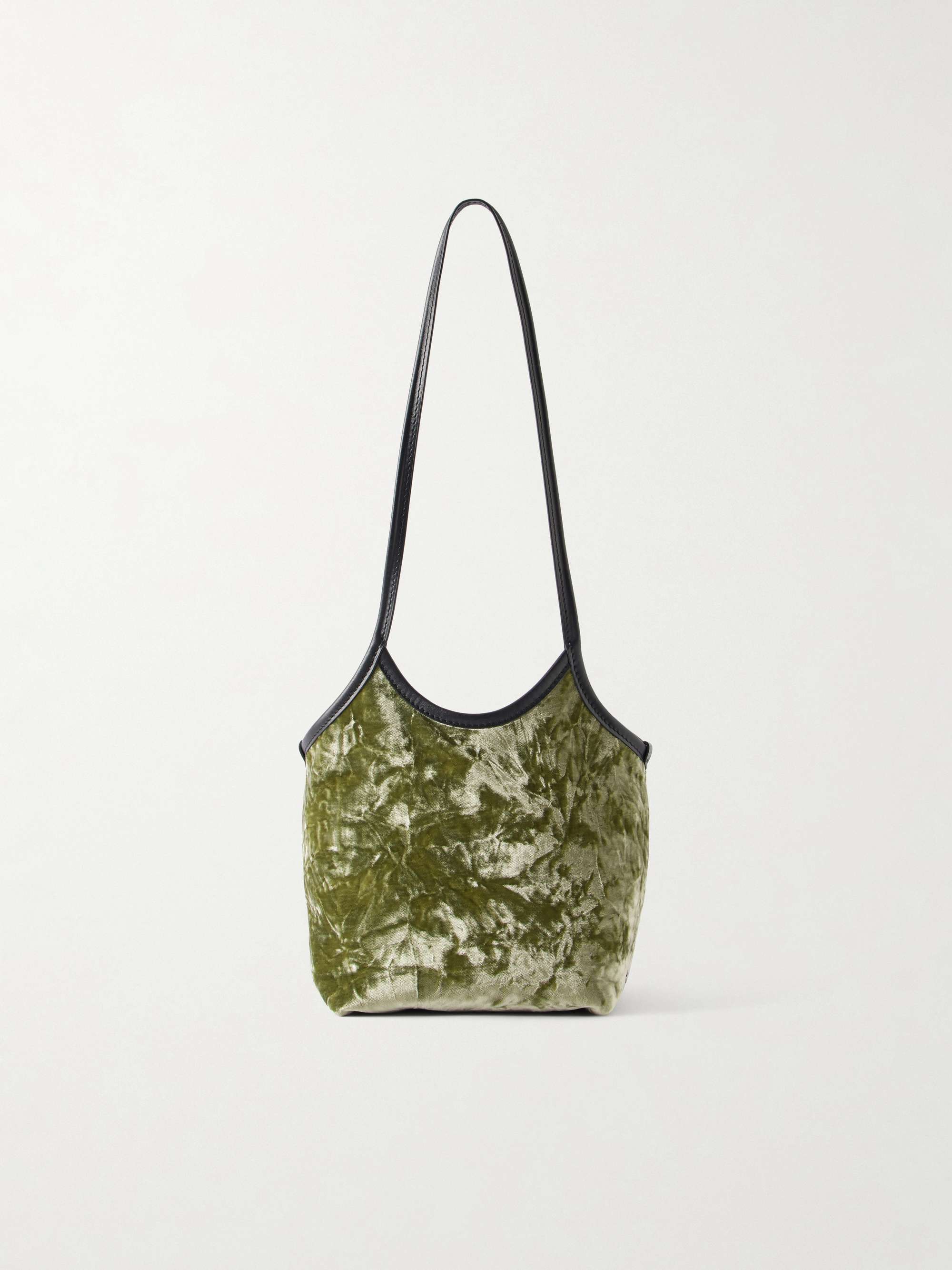
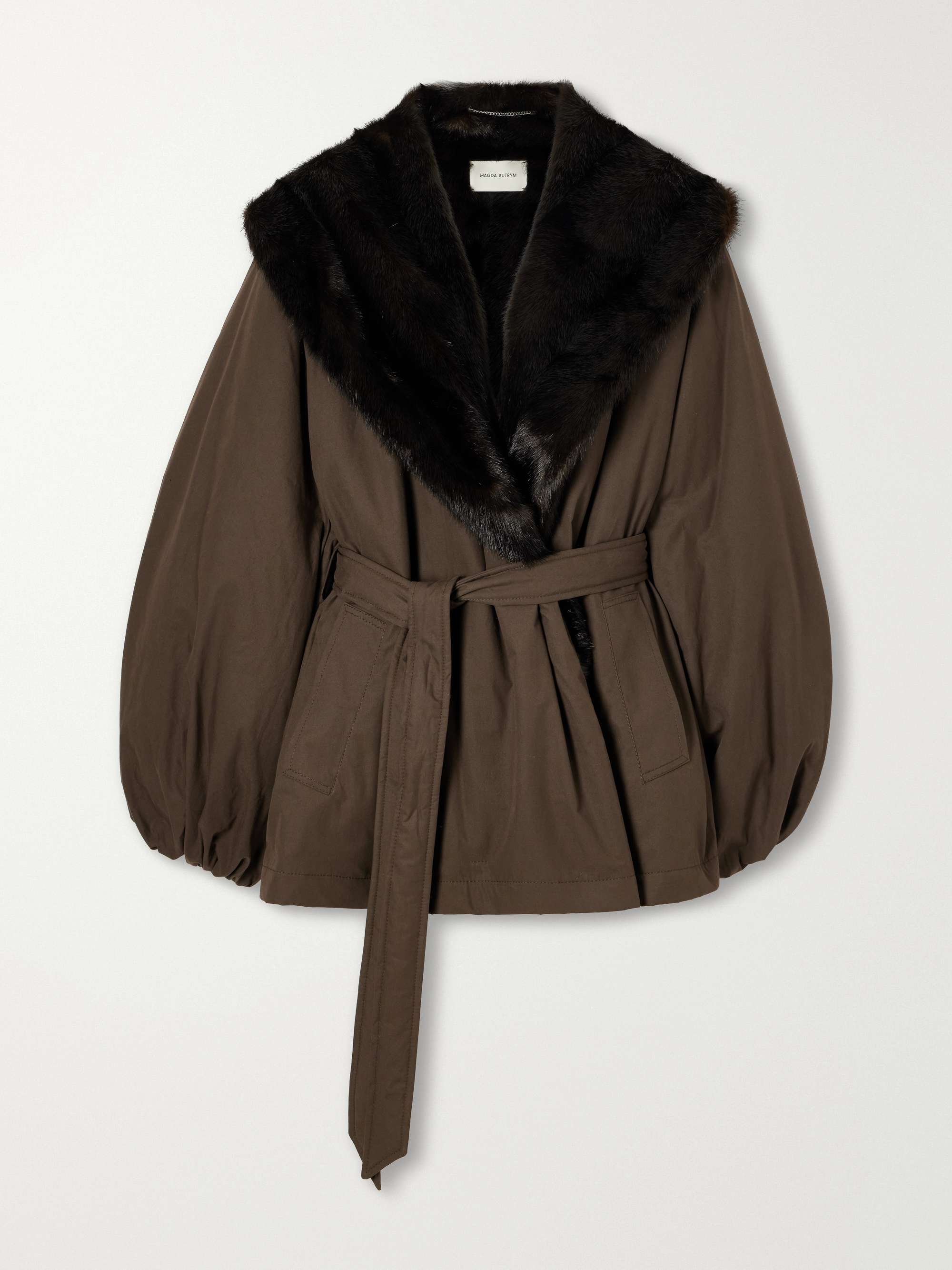
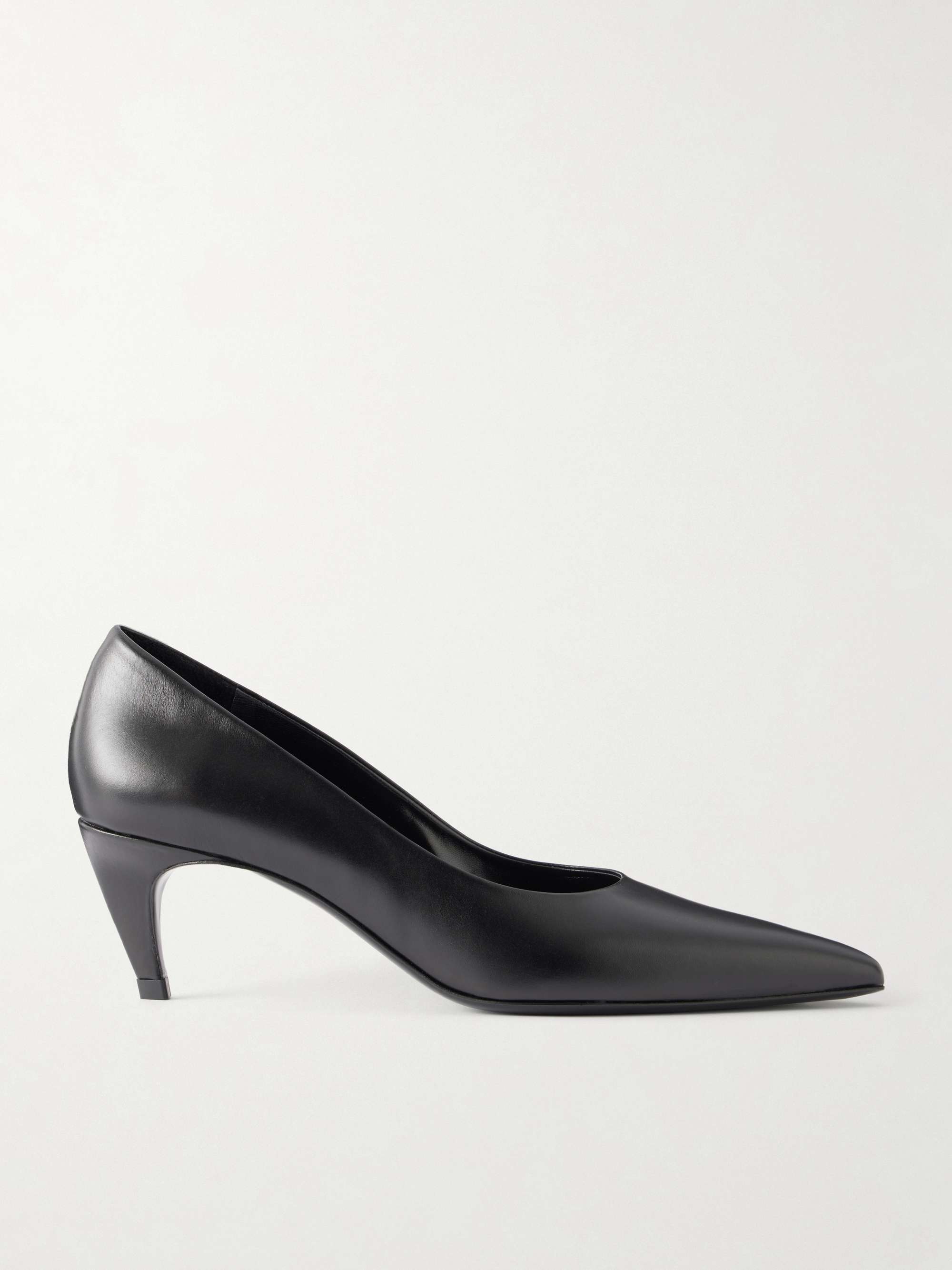
As a new season approaches, I always take a mental inventory of my wardrobe. What am I not wearing anymore? Which pieces need replacing, and which gaps need filling? This week, the Net-a-Porter New In page had me genuinely excited for cooler days: wearing jeans once again after a three-month hiatus (this Toteme stonewash pair is the wash I’ve been searching for) and swapping my designer handbag for German label Valesque’s dreamy crushed velvet shoulder bag. After much demand, cult shoe label Jude has finally added a lower heeled version of it's Blade pumps to the collection, and Magda Butrym's fur-trim jacket is the splurge item, I'm finding hard to resist.
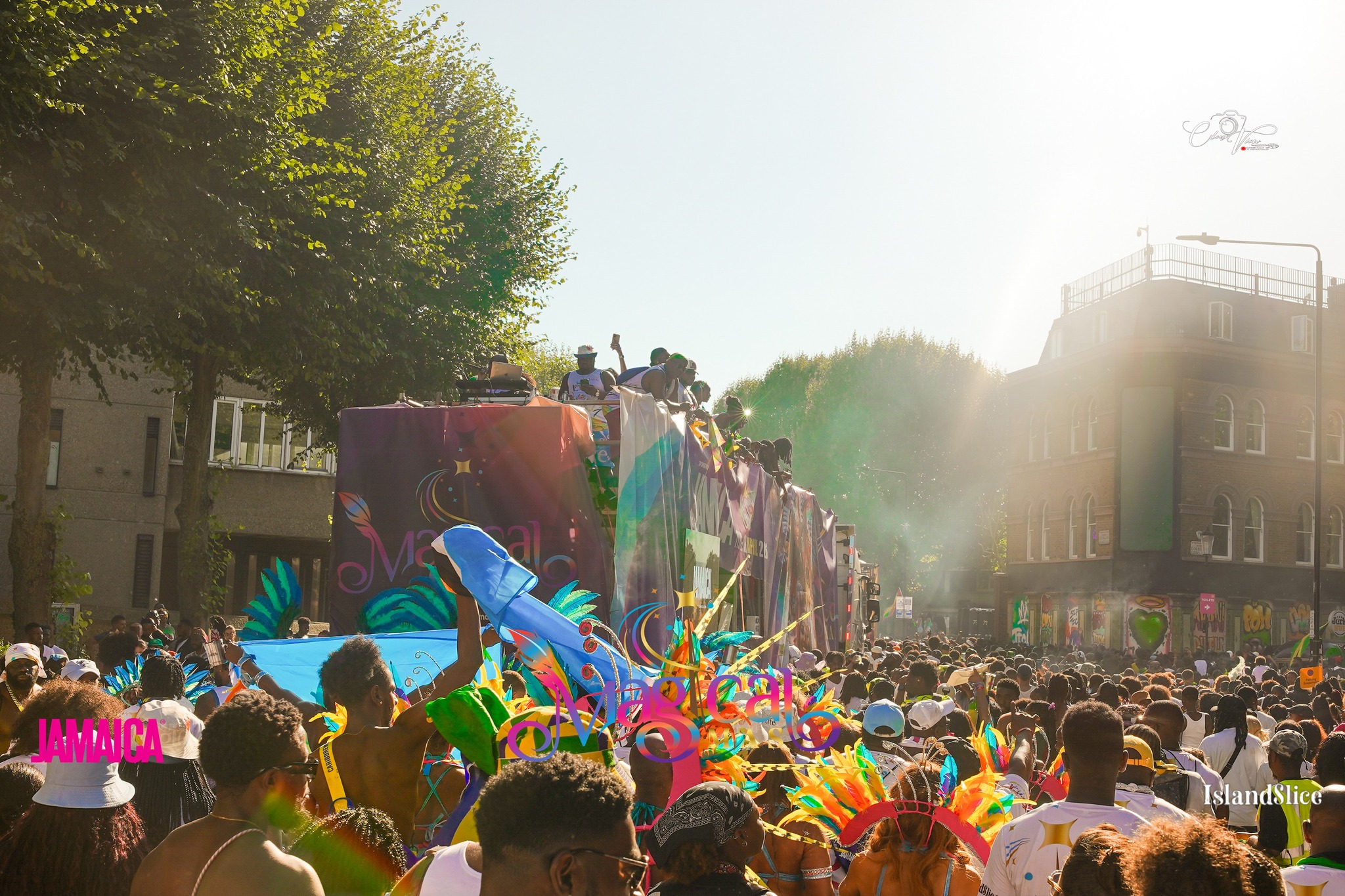
In London this weekend is the 60th Notting Hill Carnival, marking six decades of celebrating London’s rich cultural tapestry and community. Many London residents and visitors to Notting Hill Carnival still don’t know about its origins. Founded in 1966 by social worker Rhaune Laslett, the Carnival began as a children’s street party designed to unite a neighbourhood affected by racial tensions and violence. These tensions were heightened following the murder of Kelso Cochrane, a young Antiguan man who was killed in a racially motivated attack in May 1959.
A spontaneous procession led by Russell Henderson’s Steel Band helped spark the tradition that has become one of the world’s largest carnivals, second only to Rio Carnival. The Carnival contributes an estimated £400 million to London’s economy, and having taken part multiple times myself, I can say it is not to be missed.

I’ve always been a mountain lover. I’m lucky to have family who live in Switzerland, which meant I spent winters skiing and summers hiking the many mountain routes from their chalet, enjoying local Valais cheese sandwiches for lunch and the ever-changing watercolours of the sunset as entertainment come nightfall.
Sharp, pine-scented air, the distant clang of cowbells, and jagged mountain peaks set to a background so breathtakingly beautiful your brain can’t quite compute it’s real are my idea of a truly perfect holiday. There’s something about being in the mountains that’s unlike anything else—to me, it's the ultimate spiritual and physical reset.
Which is why I’ve been absolutely chomping at the bit to visit the Dolomites, a mountain range in northern Italy that sits across the regions of Trentino-Alto Adige, Veneto and Friuli-Venezia Giulia. You’ll likely have noticed the influx of holidaymakers hiking in this European destination this year—Google searches for the destination are up +5,000%, and the mountain range has become an undeniable hotspot thanks to the many TikToks bringing the sheer beauty of the destination online.
So when an invite to Sensoria Dolomites, an adults-only, all-inclusive, design-led wellness destination in the mountains, landed in my inbox, I couldn’t wait to try. With an extensive spa offering, breathtaking mountain views, and a focus on ensuring you leave feeling refreshed, revitalised, and rested, it ticked all the right boxes.
If the above sounds like your kind of break, then you’ll want to add Sensoria Dolomites to your bucket list. We spent two nights there in May, chasing that particular Dolomite quiet, and it was so good, I'm already planning my trip back.
I know we're in for a treat from the second we step out of the car. Sitting in Seis am Schlern, right by the Alpe di Siusi, pine trees, wildflower meadows, and the Sciliar mountain provide an undeniably beautiful and relaxing backdrop.
Paired back, minimalist decor echoes the nature outside, and the hotel’s interiors are basic yet considered; think plenty of Alpine natural wood, muted colours, and stacked bookshelves for you to peruse. It’s not grand or showy in the way you might expect a luxury Alpine hotel to be; rather, the design team has crafted a lobby that feels like a design-conscious, intimate living room. Pale spruce, natural stone and tactile fabrics make you feel like you should enjoy the space with a glass of natural wine or a good book, and the atmosphere is calm, intimate, and unhurried—it feels like a retreat destination, rather than a hotel.
Every element has been considered; floor-to-ceiling windows immediately invite nature in and draw your eye to the stunning mountain panoramas just behind you; piano music drifts through the lobby; and each area has a distinct scent, designed to help you unwind. The lobby smells unbelievable: a heady mix of bergamot and cedarwood, which reminds me of one of my favourite Aromatherapy Associates essential oils.
Staff are attentive but never overbearing; many are happy to chat about the local area and things to do, switching from German to Italian to English with ease. From the get-go, I can tell that this is going to be an experience centred around feeling present; of seeing, feeling, and switching off.
With 47 rooms and suites to choose from, the hotel errs on the intimate side, reaffirming its ethos of quiet luxury, personal connection and space to slow down and switch off.
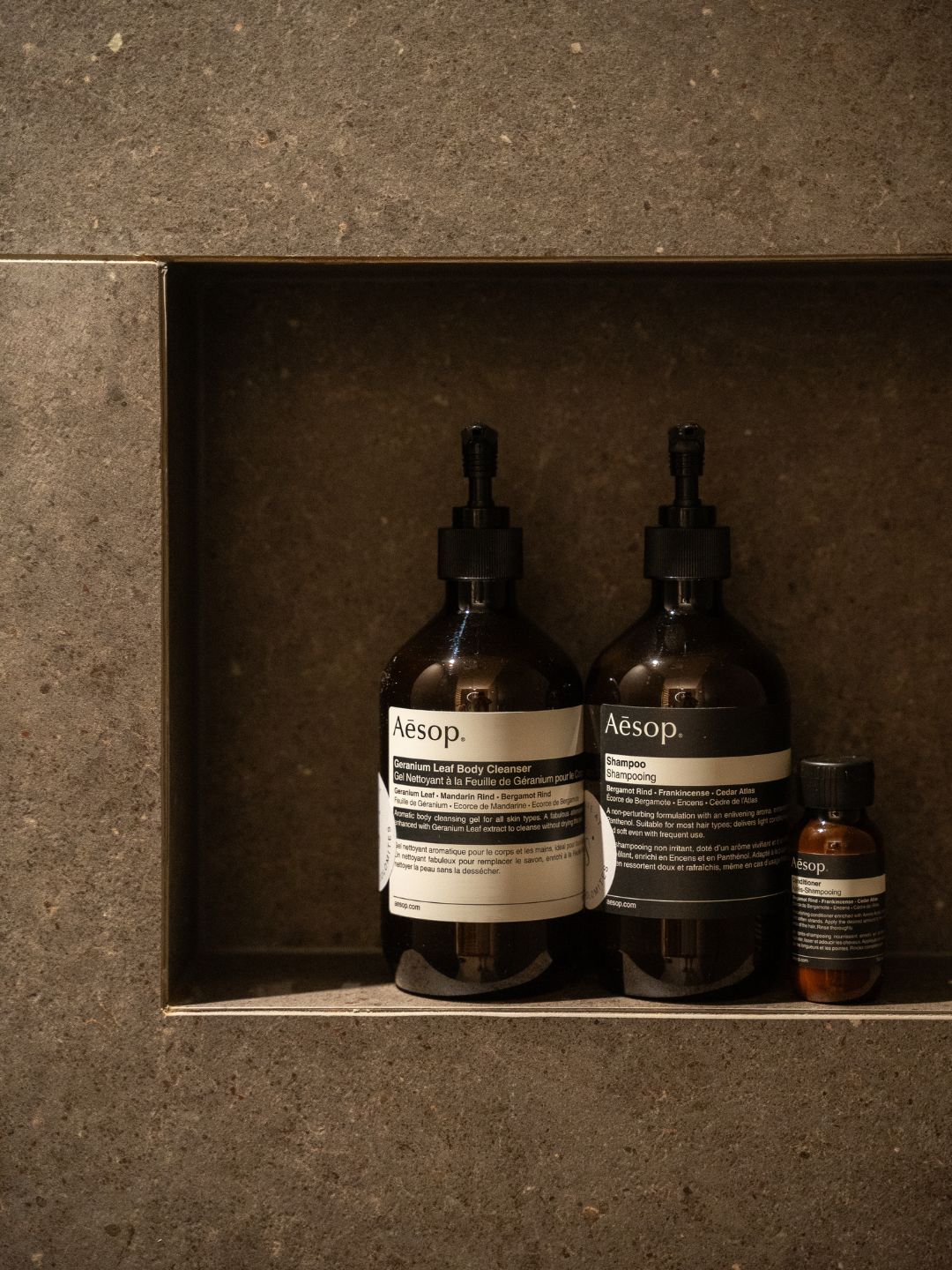
On the design front, the rooms mirror the calm of the rest of the hotel and prioritise natural, tactile materials like local wood throughout. The king-size beds are spacious and comfortable, the minibar is stocked with local essentials, and the bathrooms are kitted out with rainfall showers and Aesop products.
The mountain views are, of course, the main attraction; our room has a balcony overlooking Schlern, making the landscape feel like part of the room.
If you want to go all out, be sure to book The Suite—a 125m² space with its own private spa, Finnish sauna, freestanding bath, outdoor whirlpool and terrace.

One of the main USP’s at Sensoria Dolomites is its all-inclusive offering; something which I usually steer well clear of, but that’s done really well at this location. Rather than it feeling like a traditional resort-style all-inclusive or package holiday, it feels like a thoughtful add-on to ensure you fully switch off for your stay.
Breakfast, lunch and dinner are all included, with a “snack” bar open during the afternoon for when you're feeling peckish. Breakfast was a standout for us—choose from fresh local breads, honeys from the valley, cheeses, meats, salads, cakes and more or order off the menu. I had an omelette both days, with fresh rye and local salted butter, and it was divine.
The star of the show is the six-course gourmet dinner, with the menus changing daily and taking inspiration from the Alps, Mediterranean and French cuisine. Local produce is prioritised, as are regional dishes. Each of the courses is delicious, but our standout favourite was the Schlutzkrapfen, a traditional South Tyrolean half-moon pasta filled with spinach and ricotta and served with melted butter and Parmesan.
Drinks are included, too, and you can choose from South Tyrolean wines, beers, spirits, aperitifs, local soft drinks and spring water. We loved the Kerner wine, a crisp, aromatic white wine from South Tyrol, but also the freedom to try so many local drinks as part of the package.
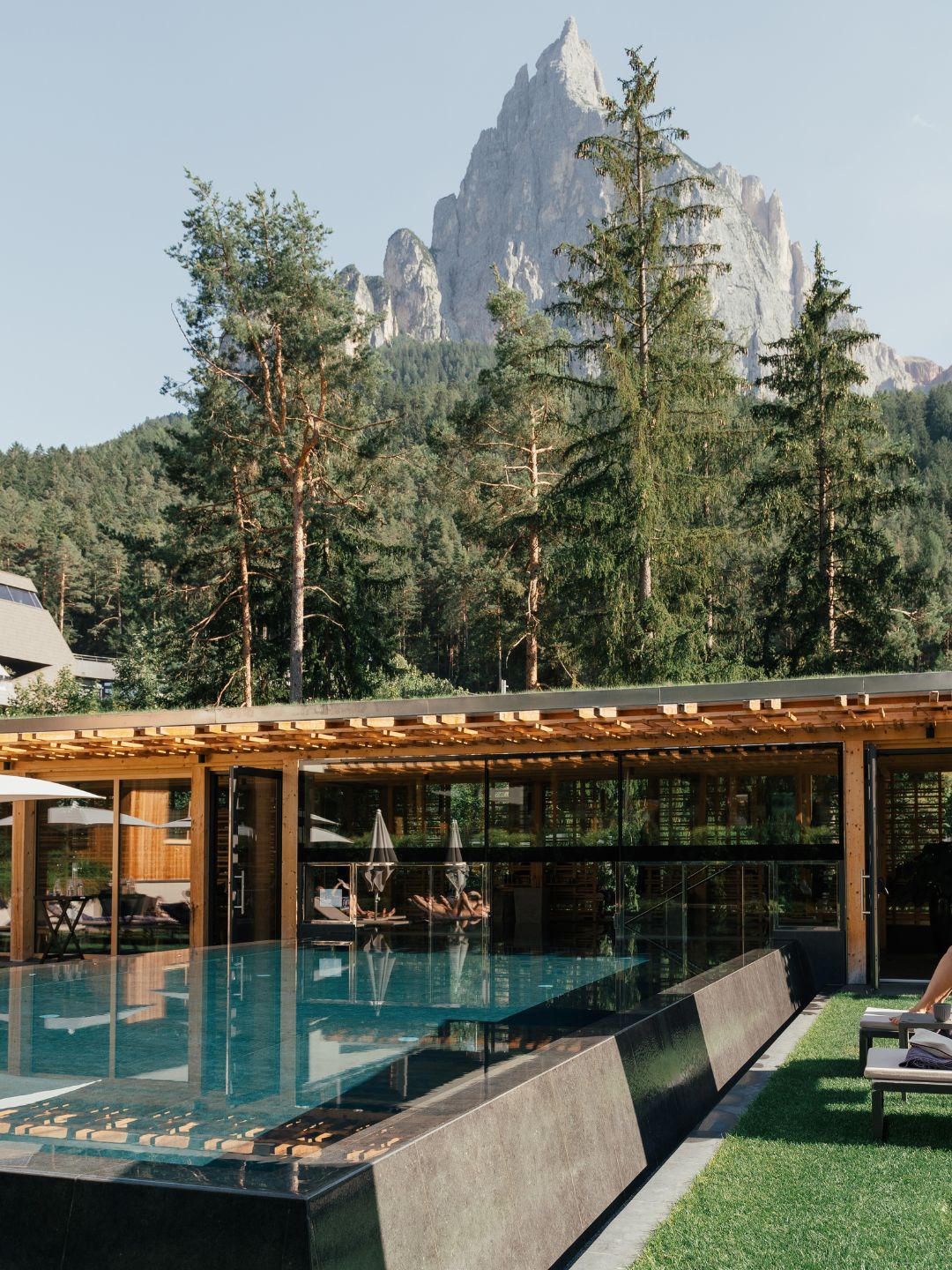
This is where Sensoria Dolomites really comes into its own, with an extensive spa offering that’d relax even the most uptight of people. There’s ample to choose from, including an indoor pool, an outdoor pool, and a pine bath house with some of the best views of the mountains.
The spa is extensive, and a cosy rabbit warren of offerings. Head to enjoy a large Finnish event sauna, an organic sauna, and a steam sauna, plus dedicated relaxation spaces and plenty of treatments, if you'd like to add them on.
They also offer guided hiking tours, mountain biking, and other activities for during your stay. We hiked to the Alpe di Siusi, taking the cable car (around a 5-minute walk from the hotel) with the hotel's tour guide Patrick, and it was a really memorable day out. The hiking trails are breathtaking, and you wind past sheer rock faces, turquoise lakes, and sweeping alpine meadows. Don’t miss Antonio’s Sauna Shows, either—a traditional Aufguss ritual that he guides you through (he's one of only a handful of trained Aufgussmeisters in the whole of Italy). He themes each night, making it entertaining, relaxing, and undoubtedly unique.
Sensoria isn't just a hotel with a spa attached—it's a genuine wellness philosophy, built around the kind of stillness that's almost impossible to manufacture back home.
Stay at Sensoria Dolomites from £408 per night. 39040 Seiser Alm, South Tyrol, Italy, sensoria-dolomites.com. Flights with SKY ALPS go direct from London Gatwick to Bolzano, which is a short 25-minute taxi ride from the hotel.
