There are few things I’ve done more often as a woman than choose a form of contraception. I've tried seven, to be precise - and yet, somehow, I still couldn’t give you a particularly convincing answer to the question: what exactly have I been putting in my body? Which feels… problematic.
I’ve taken the pill; switched pills; stopped taking it. I’ve had things inserted into my body, removed from my body and spent more time than I’d care to admit wondering whether what I was experiencing was “normal”. The conversation, more often than not, has been simple: here are your options, here’s how effective they are, and then came the part I came to know all too well: wait it out and see.
Contraception is hardly niche. In the latest Women’s Reproductive Health Survey published in 2025, more than 41,000 people in England reported using contraception - and almost a third had stopped using a method in the previous year. Of those who stopped or switched, 54% said side effects were a reason. So when something so deeply embedded in women’s lives still involves so much trial and error, it's worth asking why. Of course - some trial and error is inevitable. Everyone’s experience is different. But there’s a difference between knowing something might take time to settle and feeling like you’re being asked to wait it out and hope for the best.
That doesn’t mean every woman leaves the doctor's office confused, or that every symptom is caused by contraception. But it does make me wonder: are we being given enough information, space and agency to make genuinely informed choices about our bodies?
So, I’m using my slightly chaotic contraceptive history as a starting point to interrogate the gap between what we’re told to expect and what it’s actually like to live with contraception.
I’m not here to demonise it. I’m here to ask the questions we should have been asking all along - because “give it a little while and see” probably shouldn’t be the end of the conversation.
I've Tried 7 Types of Birth Control. Here's What I Wish I'd Known Sooner
What is contraception actually doing to your body?
For something so many of us use, contraception comes with a surprising amount of folklore. "Take a break every few years." "It’ll ruin your fertility." "No period? Surely the blood must be building up somewhere." "And if you gain weight on the pill, then the hormones have changed your metabolism."
The trouble is, it can be surprisingly difficult to separate what we’ve heard from what we actually know.
So, before we get into the myths, what is contraception actually doing? “Hormonal contraception essentially changes the hormonal signals that control ovulation and the menstrual cycle. Depending on the method, it can stop an egg being released, thicken the mucus at the cervix so sperm can't travel through it as easily, and make the lining of the womb thinner,” explains Dr Mahshid Nickkho-Amiry, Fertility Specialist. “Different methods do this differently. The combined pill, patch and vaginal ring contain oestrogen and progestogen and primarily work by stopping ovulation. Progestogen-only methods, such as the implant, mini-pill, injection and hormonal coil, work mainly through the effects of progestogen, although their effects on ovulation vary."
The hormones aren’t simply sitting there indefinitely, either. “You're not ‘storing up’ hormones in your body or permanently switching off your reproductive system," Amiry goes on. "These are reversible effects.”
Which brings us back to the folklore. On the idea that you need to periodically stop contraception, Amiry is clear: “For most reversible contraceptive methods, there isn't a medical reason to periodically stop if the method is working well for you and remains medically appropriate.”
The fertility question is similarly persistent, but not factually accurate, according to the doctor. “For the majority of reversible methods, that isn't the case. Using contraception doesn't mean you're damaging your future fertility.”
Which side effects should you expect - and which shouldn’t you have to endure?
Crowdsourcing contraception is a skill so many of us have learned: "The pill gave me migraines." "My contraception made me feel low." "Her coil changes her periods." Everyone’s experience is, and will be, different - but share enough of these stories and “common” can start morphing into “normal” - and “normal” can start to feel like something we’re expected to endure. Turns out, it's very much not the same thing.
I learnt that distinction the hard way. I had a coil for 18 months and, after six of those, was having two periods a month, with bleeding lasting an average of nine days (tear-jerking, I know). Because I’d been pre-warned by so many women who’d come before me, I assumed this was simply part of the deal and bore it.
But that raises a more useful question: Is this normal, and is this something we should accept?
“‘Common’ describes how frequently something happens, but it does not tell you how much of an impact you should be willing to accept. A side effect can be completely expected and still be a very valid reason to change methods. Understanding what side effects exist allows you to make a personal decision and weigh the risks and benefits of each contraceptive choice yourself,” says fertility physician Dr Natalie Crawford.
And therein lies the problem: “We sometimes confuse a side effect being medically expected with it being something a woman should have to tolerate. A symptom may improve with time, but if a contraceptive is negatively affecting how someone feels or functions, it may simply not be the right method for her. Contraception is an important healthcare decision, and women deserve to be making these choices with true informed consent - which includes believing that women should not have to suffer.”
So, repeat after me: expected is not the same as acceptable.
Why does finding the “right” contraception feel so much like guesswork?
After seven different methods, I’ve learnt that choosing contraception is less like making an informed prediction and more like placing a small, medically supervised bet on your own body. And as it stands, that uncertainty isn’t anecdotal. Jennifer Hall, Professor of Reproductive Health at UCL, points to a bigger problem: despite decades of widespread use, we still know surprisingly little about why one woman will experience a particular side effect and another won’t.
“Given that billions of women have used hormonal contraception over the last 60+ years, it's staggering how little research has been done on this. With sufficient research, we could get to a point where we would have a better idea of who is more likely to experience which type of side effects from a given contraception. This information could then form part of the counselling and decision-making process and reduce the trial-and-error process.”
And, as a woman in 2026, her point feels particularly pertinent now. Let’s be clear: contraception has transformed women’s lives by giving us unprecedented control over fertility, and in many cases, pain management. Its place in women’s health cannot be underestimated. But, Hall says, expectations have changed: women - particularly younger women - “are less willing to simply accept debilitating side effects as the price of that freedom. The innovation hasn’t kept up with the changing expectations,” she says.
That, right there, is the uncomfortable gap: contraception has come a long way, but the way we find out whether it suits us hasn’t kept pace. We still ask women to try a method, wait a few months, and see what happens - then call the result “finding what works.”
How long are you really supposed to wait it out?
“Give it a little while and see how you get on” sounds harmless enough, right? When you’re living through the "little while", it can be surprisingly difficult to know when you’ve waited enough. I’ve counted the cycle, second-guessed the symptoms, and had multiple breakdowns as proof of wondering whether stopping would mean I’d given up too soon. Then comes the even more daunting thought: if this isn’t working for me, I have to go through the whole process again.
“When you start a hormonal method- the pill, patch, ring, injection, implant, or hormonal IUD - the body needs time to adjust,” says Sasha Hakman, reproductive endocrinologist. “Common early effects - breast tenderness, nausea, mood changes, and irregular spotting - are possible adverse effects but usually fade on their own within three to five months of continuous use.”
That gives “wait it out” a timeframe. But it doesn’t mean you have to keep waiting indefinitely. Among contraceptive users in England who had stopped or switched methods, a 2023 UCL analysis found that 54% said side effects were a reason for doing so. Suddenly, my habit of thinking “just give it another month” feels less like patience and more like procrastination.
So when does waiting become a decision rather than a default? “If breakthrough bleeding or spotting is still significant after about three months, it's reasonable to consider a new method and/or be evaluated for other causes,” Hakman says.
The point isn’t to tough it out. It’s to know that “wait and see” should come with a plan.
The trade-offs nobody thinks to tell you about
The thing about contraception is that the benefits can be huge - think regular periods, less pain, and clearer skin, not forgetting having to think about pregnancy every time you have sex. But sometimes, getting one thing you want means accepting something you really don’t. I, for one, have become a reluctant connoisseur of contraceptive trade-offs: lighter periods, but more frequent ones. Better skin, but a disappearing sex drive. No hormones, but heavier bleeding. Set-and-forget convenience, but a whole new set of symptoms to contend with.
And that’s where we begin to see the gaping holes in our contraception knowledge. The choice starts to look less like: which method works? And more like: what trade-offs work for me?
Research backs this up. In a 2015 study of 2,590 women choosing a new contraceptive method, 44.6% ranked side effects among their top three considerations, alongside effectiveness and safety. What this tells us is clear: we’re not just choosing contraception based on our needs anymore; women are weighing up a whole list of competing priorities.
“No method is ‘best’ for everyone; the right choice depends on your medical history, what you most want to prioritise (reliability, bleeding pattern, hormones or not, reversibility, convenience),” says Hakman. “Combined methods tend to make periods lighter, more predictable, and less crampy. Progestin-only methods often make bleeding lighter or absent but sometimes unpredictable. The copper IUD is hormone-free but can make periods heavier and more crampy.”
On paper, those are clinical outcomes. Translate those to real life; they’re your sex life, your periods, your body. There’s no universal hierarchy - only what you’re willing to trade.
What science still can’t tell us about mood, libido and weight
Mood, libido and weight: three things we like to assume we have control over. So imagine noticing a change in one of them after starting contraception - and not really knowing whether contraception caused it, whether it will settle, or whether you’re simply going to have to live with it.
“Many factors are influencing all three. One of these is your hormones. But hormonal contraception is not all the same. Different hormones, doses, and delivery routes all impact women differently. The biggest gap is that research can tell us what happens on average, but we are still not very good at predicting who will personally experience a side effect. If you notice a change in your mood, libido, or weight after starting a new contraceptive, trust your body and don’t suffer,” says Crawford.
What doesn’t sit right with me is that two women can take the same thing and come away with completely different stories. A 2025 UK study of 337 women found that side effects could look very different from one woman to the next - even among those using the same method. What suited one could leave another wondering what on earth was going on with her body.
Which brings me to the slightly maddening bit: some of the things women most want contraception to explain - our mood, libido, weight - are also some of the hardest things for science to pin on one variable.
As Dr Richard Ma, researcher specialising in sexual and reproductive healthcare, explains, “There are so many other factors at play that researchers can struggle to isolate the effect of the contraceptive itself. Stress, relationships, sleep, mental health, lifestyle, age - all the usual suspects are capable of muddying the waters. In research speak, these are “confounders”. In real life, they’re just… life.”
The irony is that the very things that make women’s experiences hard to study are also what make them so personal. Sure, studies can tell us what tends to happen across a group, but when you’re sitting in a GP’s office to do the math on whether your pill is behind your disappearing libido, “on average” isn’t especially helpful.
What should a good contraception appointment actually look like?
Maybe a tale as old as time: you walk into your GP appointment with a few reasonable questions, and somehow walk out having agreed to “see how you get on” again.
After enough of those conversations to last a lifetime, I qualified to offer this slice of wisdom before I hand things back to the professionals: you do not have to leave your appointment with contraception. Revolutionary, right?
I’ll admit, there’s no eighth round of trial-and-error for me. After having my coil removed a year ago, I’ve decided that if something were to happen, I’m in a place where I’d be more than happy with that. That’s a very personal decision, and one that absolutely won’t be right for everyone. But after seven different runs, it’s made me think about what I wish the 16-year-old version of me had known before she started on this journey.
Let us spare a minute for the generations before us who had far fewer options. The fact that we can choose between pills, implants, coils, patches, rings, and more is a brilliant thing. But choice only counts when you understand what you’re choosing. So, in the spirit of not letting the generation of women to come feel the burden of confusion, Hall gives us insight into what your appointment should look like: "Think about what you want from your contraception before you start talking about what’s available. We can only counsel based on what we know about how common certain effects are. I think it’s also important to remember that what is an unacceptable side effect for some people is an ideal outcome for others."
For some people, not having a bleed is unacceptable. For others, it’s the best “side effect” contraception could offer. Knowing what matters to you is part of the decision.
Next, do a little homework. “There are so many different options that there isn’t time in an appointment to go through every single one and all its pros and cons, and even if there were, you might then feel rushed into making a decision.” She recommends reliable sources such as the NHS website and Contraception Choices, and suggests thinking about what you do and won’t want before you walk in.
Then, ask the questions - all of them. “I would want women to know that they are allowed to ask anything!” Hall says. “Ask whatever it is you are concerned about - this is different for everyone.”
Will it make my boobs bigger? Does it increase my risk of cancer? Could it affect my fertility? Will my partner be able to feel it? What pain relief is available for insertion or removal?
Ask. That appointment is yours for the taking.
So, to the woman on the other side of this article, maybe recognising yourself in my seven-method drama, take this with you: you are not a passive passenger in your healthcare. Ask. Question. Pause. Change your mind. Your brain is your plus-one to the appointment, so make sure it gets a seat at the table.
Shop MC UK's tried-and-loved favourites
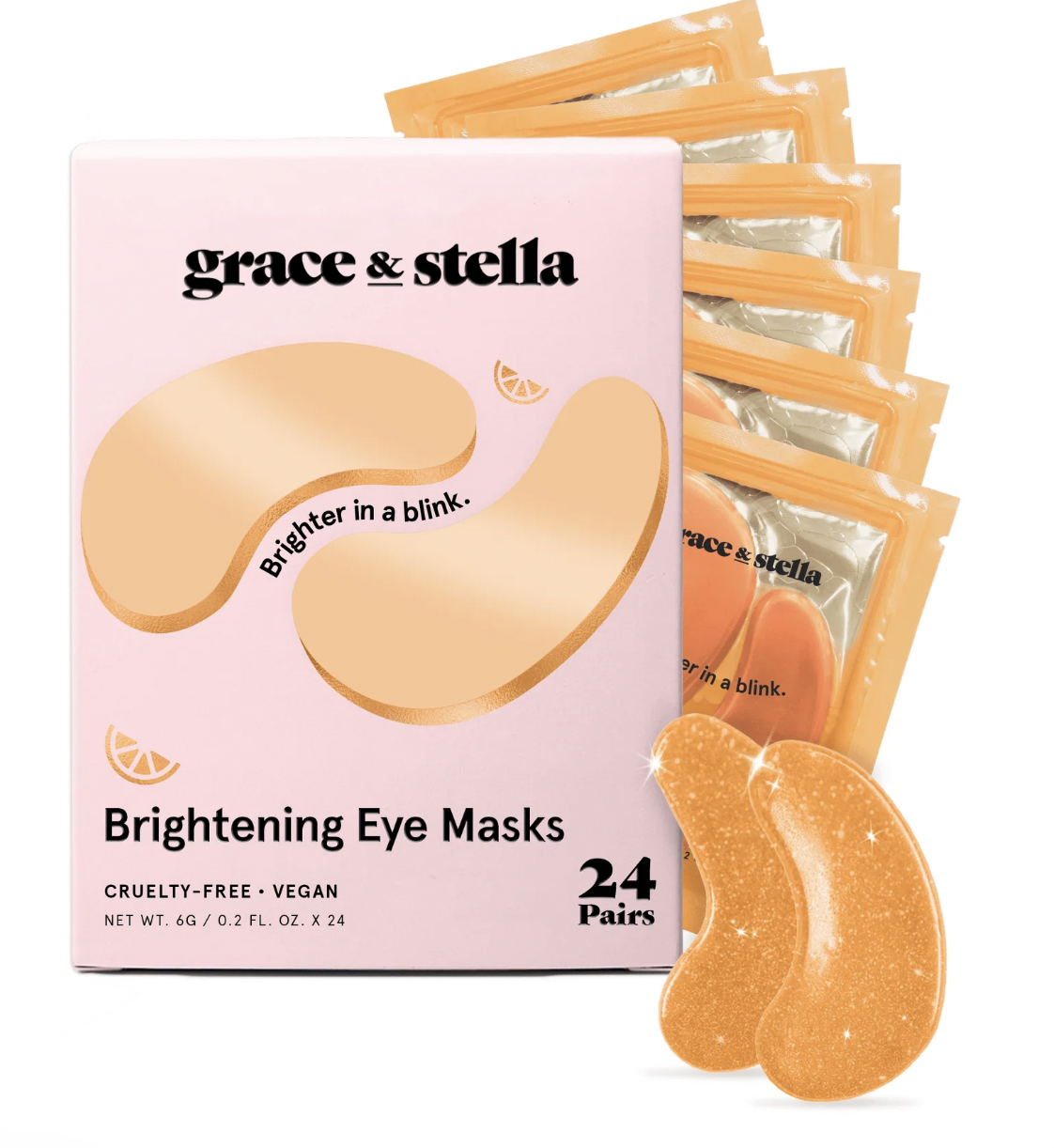
Now, if you’re anything like me and constantly on the hunt for an eye patch that works as hard as you do, look no further. These brightening vitamin C masks are basically my new sidekick - dog walk? On. Morning workout? On. First coffee of the day? Also on. They leave tired-looking eyes feeling fresh, hydrated and considerably more awake, all in 15 minutes.

I’ve been testing these for the past few months, and honestly, I’m not sure I can ever part with them. The New Balance SuperComp Rebels are lightweight, seriously springy and somehow make even the runs (or my incline walks on the treadmill) I’d rather avoid feel a little more appealing. A solid new addition to my fitness rotation - and, judging by how often I reach for them, a very permanent one.

Consider this your sign to upgrade your hoodie rotation. TALA’s Cocoon is soft, flattering and just the right amount of slouchy - the kind of layer I personally throw on for a dog walk, coffee run, gym trip…or, frankly, any occasion that doesn’t require a real outfit. Emotional support hoodie? I think yes.
from Latest from Marie Claire UK https://ift.tt/QJkUwO7
via IFTTT

No comments:
Post a Comment