There’s a particular kind of anxiety that seems to arrive in your late twenties: suddenly, everyone becomes very interested in your ovaries. The phrase “biological clock” starts appearing everywhere - in conversations, social media, normally served alongside nuggets of unsolicited advice. Tick-tock. Your eggs are ageing. Your fertility is declining. And here’s the thing: some of it is true. But generations of women have been handed the same message: don’t wait too long. And that fear can be hard to shake.
Yes, fertility changes with age. But knowing that doesn’t have to mean living your twenties in panic, feeling as though you’re racing against an invisible deadline. There is power in understanding your fertility, knowing what actually matters, and making decisions based on facts rather than fear. Your biological clock is information - not a countdown to your life expiring.
The irony is that, despite being told to start thinking about my fertility journey at 20 (thank you, endometriosis), I know surprisingly little about it. I know the basics. But ovarian reserve? AMH? When fertility actually begins to decline, and by how much? I couldn’t confidently tell you.
And as a women’s health journalist, that feels like a fairly glaring omission.
So, consider this me staging a mini intervention with the phrase we’ve all come to share a universal shudder with. I’m not asking for false reassurance; I don’t think any of us are. What we want is to know what’s true, what’s exaggerated and what, frankly, we should have been told years ago. Because understanding our fertility won’t stop the clock ticking. But it might mean we’re finally the ones holding the stopwatch.
Here's what actually happens to fertility with age
Right, let’s get down to business. If, like me, you’ve been throwing the phrase around with enough confidence to convince yourself you know what you’re talking about, gather round. It’s time for a fertility 101.
According to reproductive health expert and founder of Hertility, Professor Helen O’Neil, there isn’t actually one biological clock ticking away. There are two separate things happening at once: how many eggs you have, and how healthy those eggs are.
First, egg number. “You’re born with every egg you’ll ever have,” explains O’Neill, “and that number falls steadily from before birth onwards. By 30, around 12% remain; by 40, around 3%. Eventually, that supply runs out, and menopause occurs.”
Then there’s egg quality, which is less about how many eggs you have and more about whether an egg has the right number of chromosomes when it divides. O’Neil likens it to skin ageing: the process happens to everyone, but the pace varies from woman to woman. “Chromosomal errors become noticeably more common from the mid-thirties,” she explains, and crucially, it’s egg quality rather than egg number that matters the most for whether a pregnancy happens and continues.
So, what about the number 35 we’re so often served as a landmark number? Well, nothing dramatic happens on your 35th birthday. “It’s a gradual curve that steepens over time,” says O’Neill. Thirty-five is a medical convention, not a switch that flips on your birthday. In fact, one 2014 landmark study of six natural-fertility populations found that only around 12% of women had reached the end of their natural fertility by 35.
Time to take stock: society would have us believe it’s the clock we need to be watching. But what O’Neil is saying is: yes, age is a factor. A factor. Not the entire equation. Egg quality matters, too - which makes me realise I’ve spent an awful lot of time worrying about the countdown, and remarkably little time understanding what’s actually happening inside it.
What do we really know about egg quality, ovarian reserve and ovulation?
To women’s health specialist Dr Ravina Bhanot, there’s another misconception worth filing away: your periods aren’t a fertility report card. “Egg number starts declining before birth, while markers such as AMH, which reflect your ovarian reserve, tend to fall more steeply from the mid-to-late thirties. Egg quality becomes increasingly important from the mid-thirties, while ovulation and regular cycles are usually affected last.”
Feeling the fertility haze? No need. Put simply, you can have perfectly regular periods while your fertility has already begun to decline - and a low ovarian reserve marker doesn’t automatically mean you can’t conceive.
But what exactly is ovarian reserve? In short: an indication of how many eggs you have left. One of the main ways doctors assess it is through AMH, a hormone produced by the small follicles in your ovaries. Think of it as a rough indication of your egg supply.
And the more I learn about all of this, the less I’m beginning to see my fertility as a literal clock at all. There isn’t one number counting down towards some great reproductive deadline. Several things are happening at once, each on its own timeline - and even the tests we have to measure them come with caveats.
And as O’Neil points out, while we can measure ovarian reserve, “there’s currently no test that can directly tell us the quality of our eggs. Quality isn’t uniform: even in your twenties some eggs are abnormal, and even at 40 some are perfectly normal.” AMH doesn’t measure egg quality either, and a 2017 study of 750 women found that low AMH did not meaningfully reduce their chances of pregnancy within six or 12 cycles. “It’s not a fertility score,” says O’Neill, “and it can’t predict natural conception on its own.”
One more thing worth bringing into the conversation: fertility isn’t solely a female responsibility. “Sperm quality also declines with age, while lifestyle factors can affect male fertility,” says O’Neill. “A healthy pregnancy is a shared biological project, not simply a countdown on the woman’s side.” So, if we’re going to talk about reproductive timelines, perhaps we should stop acting as though there’s only one biological clock in the room.
So, what I’ll be taking from all of this - and perhaps you are too - is that AMH can be useful, particularly as a personal baseline tracked over time, but it’s only one piece of the picture. Age shifts the odds; it doesn’t sort women neatly into ‘fertile’ and ‘infertile’. Fertility is less a countdown and more a collection of moving parts.
So why has this become such an anxiety-inducing conversation?
As I’ve been in the depths of research, I keep coming back to one question: why is fertility so often treated as something we only need to think about when we’re ready for a baby, despite being part of our wider health? By the time we do start looking, we’re confronted with a confusing mix of statistics, success stories and, increasingly, social media advice.
There’s evidence that we’re not exactly being handed the tools to navigate it. A 2024 UCL study of 931 teenagers found that 45% were already worried about future parenthood, yet just 35% rated their sex education as good or very good. They also found that fertility was among the topics more likely to be learnt about outside school.
I don’t think the answer is to tell women not to worry. Fertility really does change with age. Instead, we need to ask whether we’ve turned a genuine biological reality into a level of urgency that isn’t always proportionate.
Joyce Harper, Professor of Reproductive Science at UCL, says conflicting messages are part of the problem. “Celebrity pregnancies and influencers talking about having children later in life can feel more relatable than population-level statistics, while the reality is that fertility does decline with age. Women today are juggling a lot,” she says - from careers and finances to housing and finding the right partner - so fertility decisions are rarely based on biology alone.
The language around fertility can be as powerful as the biology itself. “Repeated messages that women are ‘running out of time’ can create anxiety, guilt and pressure,” says Harper. Some women may feel pushed into decisions before they’re ready; others may disengage because it all feels too overwhelming. “Neither outcome is helpful.”
And honestly, that’s what I’ve wanted from this conversation all along. Knowing the facts shouldn’t leave women feeling like they’re running out of time. It should leave us feeling like we finally have some.
So, what does all this mean for women who aren’t ready yet?
Where does that leave those of us who aren’t ready for children yet (or might not ever be)? According to reproductive specialist Dr Lucky Sekhon, the most useful thing is to know all the information, rather than panic.
"If having biological children is important to you," she says, "it’s worth understanding how fertility changes with age and paying attention to your reproductive health. That means not ignoring very irregular periods, severe pelvic pain or other symptoms, and speaking to an OB/GYN or reproductive endocrinologist if you have concerns - particularly if you have endometriosis, previous ovarian surgery or a family history of early menopause."
“Egg freezing may be worth discussing for some women, too,” she mentions - particularly if you think you’re likely to build your family after 35 or have certain fertility risk factors. But importantly, it isn’t something everyone needs to rush into. Nor should an AMH result become another number to obsess over.
Sekhon's key piece of advice is this: “Know your reproductive health before you need it. Pay attention to your menstrual cycle, don’t ignore symptoms like very irregular periods or severe pelvic pain, and understand that fertility is part of your overall health.” And I’m taking that as permission to wrap myself in information, rather than letting my “biological clock” wrap itself around me.
Maybe the point isn’t to stop the clock
Here’s my truth: what if I leave it too late? still pops into my head at least once or twice a month.
I’m an anxious girl. I live by what-ifs: what if I want children one day, but not for another five years? What if I spend so long being certain I’m not ready that, by the time I am, my biology has other plans?
But this is precisely why this conversation matters: whether you desperately want children, aren’t sure, or know you don’t want them at all. You deserve to understand what’s happening in your body without feeling like every birthday is a deadline. And, actually, this is a conversation men need to be a part of, too - fertility is not a one-woman story.
Because fertility decline is real. But so is the anxiety we’ve built around it. The answer isn’t to pretend either one doesn’t exist, but to understand the difference.
Shop MC UK's tried-and-loved favourites

For the days when comfort is non-negotiable, TALA’s Cocoon Zip Through Hoodie is an easy win. Super-soft, flattering and made from organic cotton, It’s the kind of throw-on layer you’ll reach for whether you’re heading to the gym, grabbing a coffee or simply refusing to put on proper clothes.
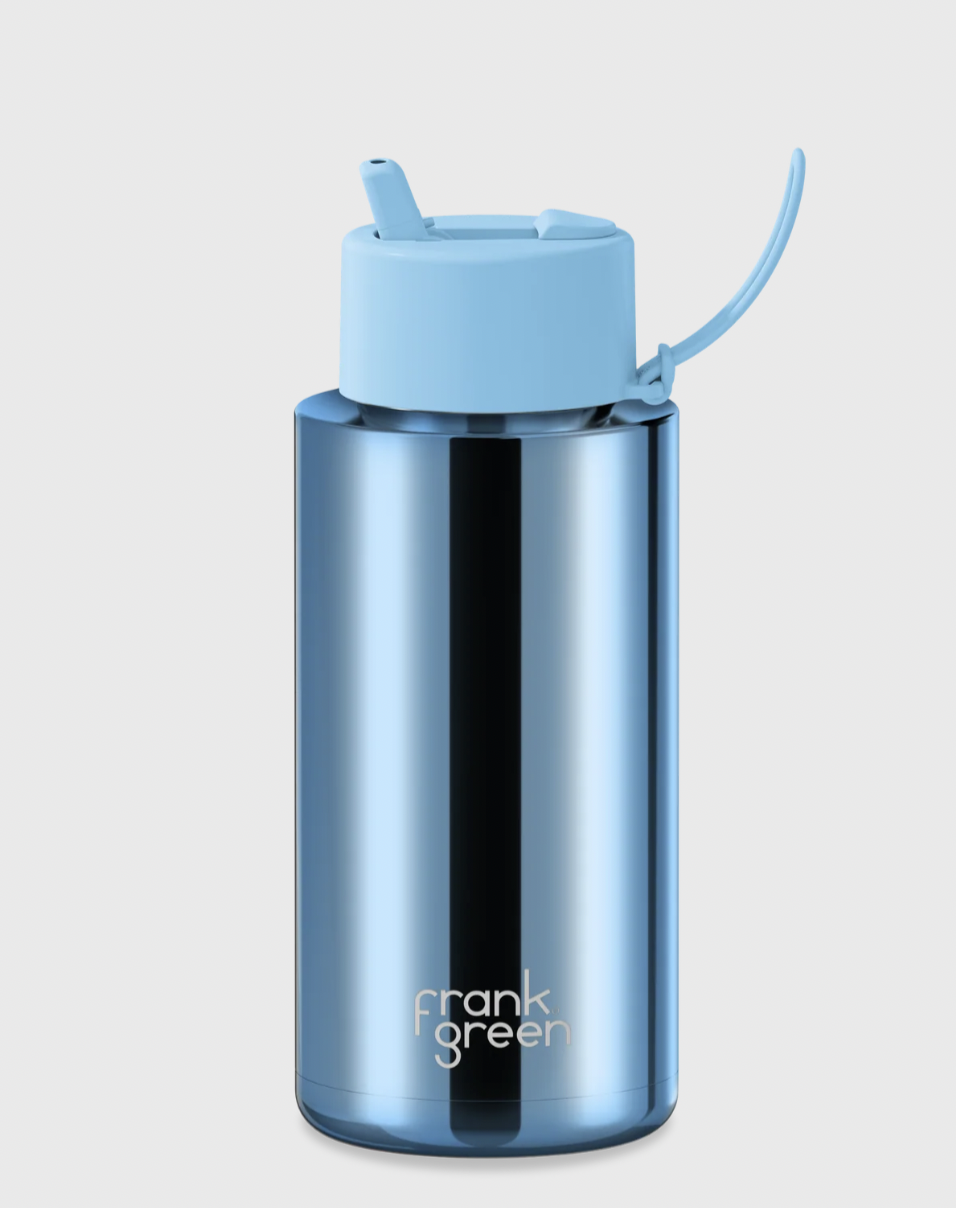
There is quite literally nothing like buying yourself a fresh water bottle and suddenly becoming extremely committed to hydration. I’ve been loving Frank Green’s ceramic-lined bottle for making my daily water intake feel more appealing - and, frankly, looking at it on my desk is motivation enough to keep sipping.
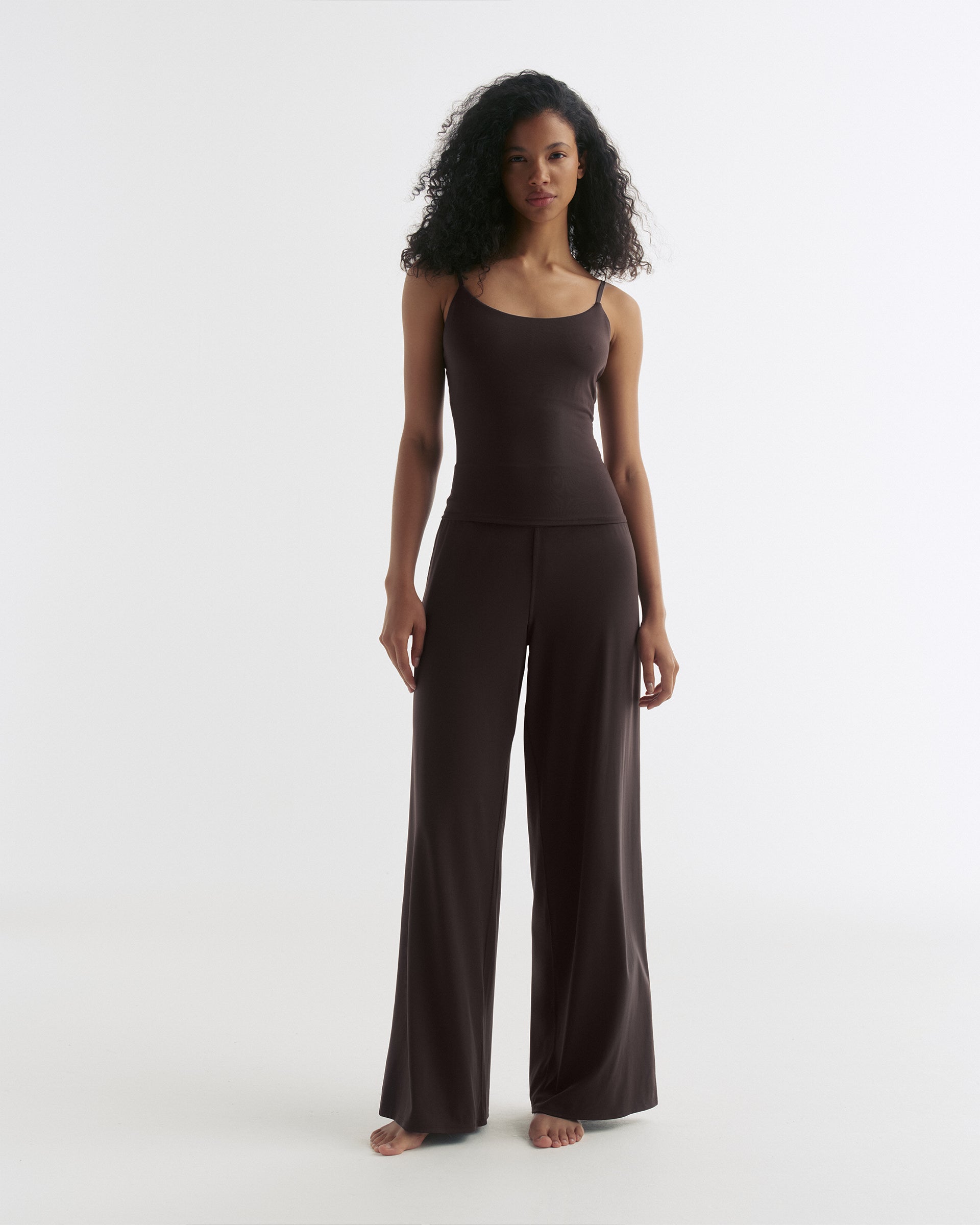
If you’re anything like me, finding a pair of trousers that are genuinely comfortable and make you feel vaguely put together is a small miracle. Adanola’s Wide Leg Yoga Pants have become a firm favourite for exactly that reason: soft, stretchy and ridiculously easy to wear, whether I’m heading to Pilates or simply committing to a day of doing very little.
from Latest from Marie Claire UK https://ift.tt/w6qHSoP
via IFTTT

No comments:
Post a Comment