I'm always on the lookout for new facial treatments – particularly those that work to actively contour the face rather than target skin quality. As someone who's recovering from hormonal acne, I'm pretty picky about who touches my face for the latter. But a sculpting facial massage appointment? Sign me up.
This is why when I first heard about fascia facials, I knew they were calling my name. Listen, I love my gua sha and facial rollers so much (and use them every day) but I'm always keen to try something that delivers more dramatic, instant results. Here's what I learned from giving the treatment a go first-hand.
What is the fascia?
Fascia is the connective, supportive tissue that wraps around your muscles, bones, organs and nerves. It also supports structures such as blood vessels and fat compartments. It's present all over your body, but in your face, there are a couple of specific 'systems' that are worth knowing. "The key fascial layer often discussed is the SMAS, the superficial musculoaponeurotic system, which is important in facial structure and ageing," explains Consultant Dermatologist, Dr Sidra Khan.
With this in mind, it makes sense that without giving your fascia attention, you may see signs of puffiness, tension and less definition. It's important to note, of course, that the fascia alone is not responsible for the appearance of your skin and face by any means, but it can be a contributing factor. Stress and tension kept in the jaw, shoulders and neck can contribute to fascia becoming stiff and therefore less smooth, flexible and healthy overall.
What is a fascia facial?
My experience of a fascia facial was pretty typical: this is not a relaxing treatment, but a pretty vigorous facial massage that aims to contour the face, reduce puffiness and aid in lymphatic drainage.
The fascia has long been a focus of Korean contouring facials, so I went to try one out at Pure Glam Beauty. Of their 'Korean Signature Contour,' they explained: "Fascia work is a key part of the treatment. We use targeted techniques to release tension, improve circulation and encourage lymphatic drainage. The goal is to reduce puffiness, enhance facial definition and create a naturally sculpted appearance. Unlike traditional facials that focus mainly on the skin, this treatment works with the deeper facial structures that influence facial shape and contour."
The facial combines stretching motions and firm massage with the fingers, down the neck, shoulders and across the face. My facialist used lifting movements and pressure point work, and did a round of dry massage (with gloves) and one with oil for better slip. It was noticeably different from a 'regular' facial as it's much more focused on facial structure and tension rather than skin quality.
A typical fascia-focused facial will begin with a double cleanse, then move into a series of facial massages (either with or without product and gloves), followed by face masks, moisturiser and mist.
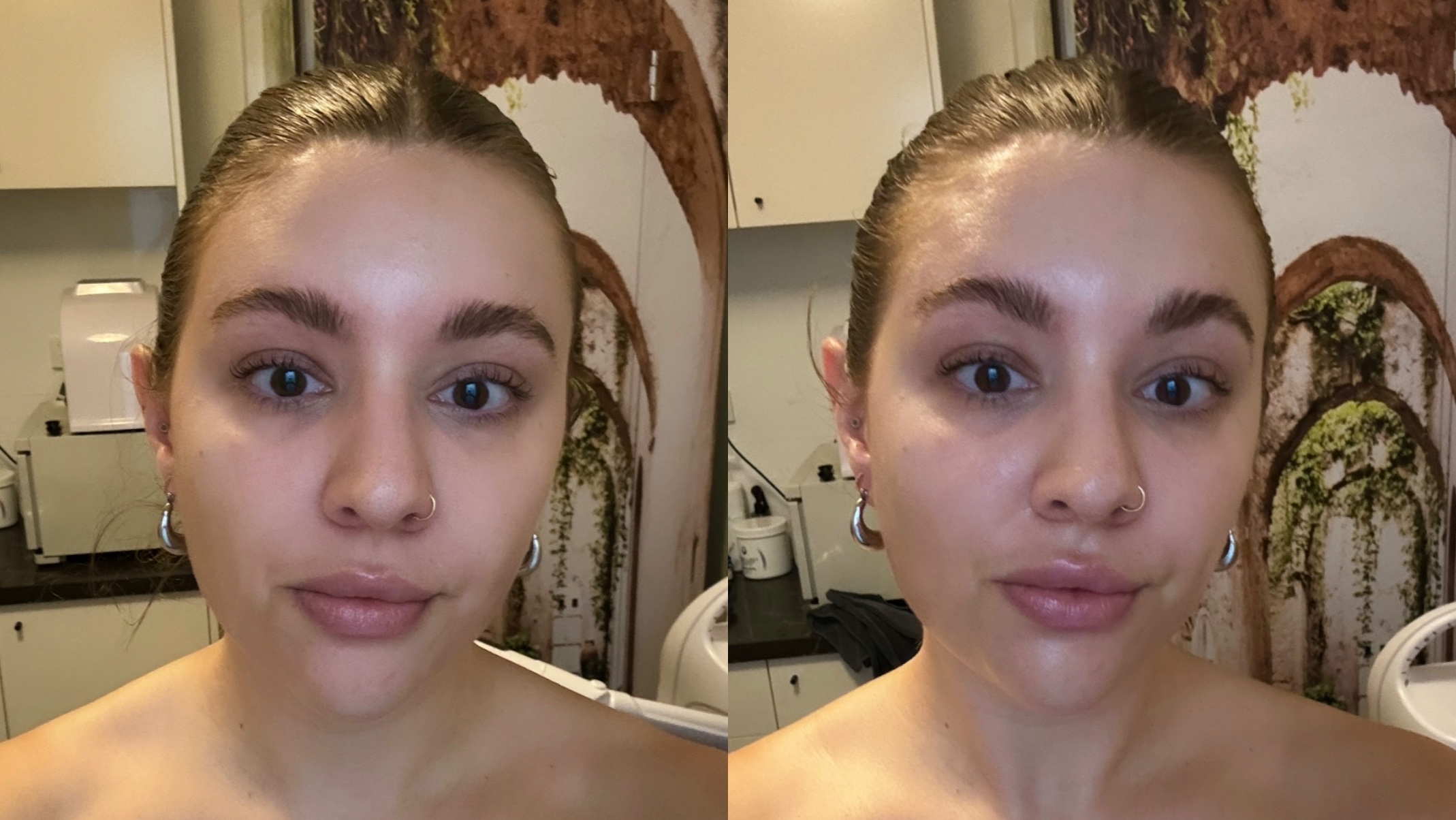
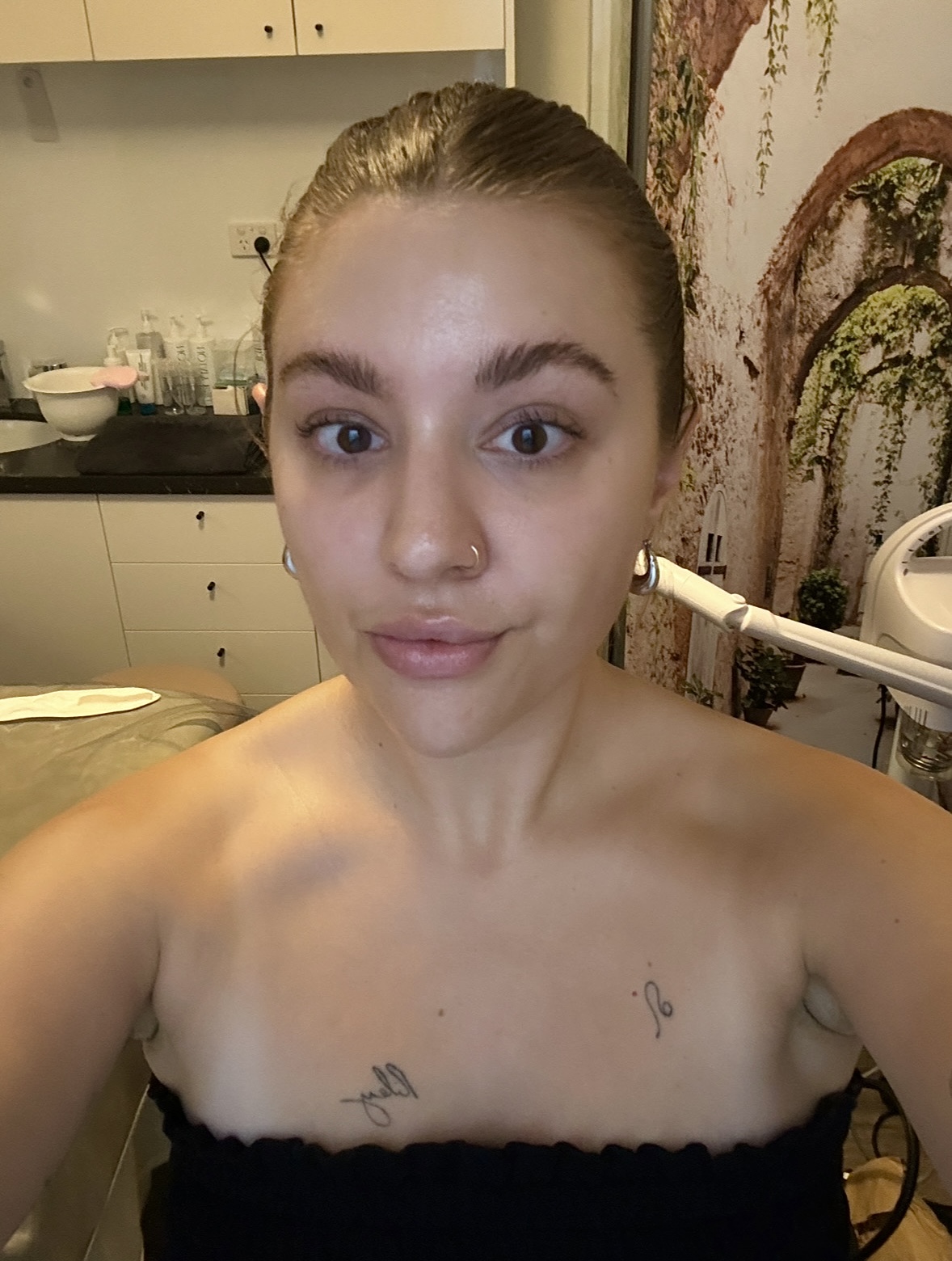
It wasn't the most comfortable treatment I've ever had (particularly at the bit around my neck, which was very sore because my muscles there are tight), but I definitely saw an instant lift post-treatment. When looking at my before and after pictures, you can see a subtle contoured effect particularly along my jawline and cheekbones.
Who would benefit from a fascia facial?
If, like me, you've been experiencing water retention and puffiness around your face, a fascia-focused facial can definitely be a great choice. This is a treatment to try if you want to contour and define the face, rather than enhance skin quality or concentrate on specific concerns such as acne or eczema.
My facialist actually told me that the ideal number of facials to aim for is about 20 a year, if you want long-lasting structural change. For most of us this may not be achievable, but it can be a great one-off treatment for temporary lift and definition. If you have a wedding, party or other special occasion, for example, booking in a week prior for one of these can make a huge difference. As you can experience a little puffiness and soreness the days following an appointment, it's best not to leave it any closer to the date.
Can you do a fascia facial from home?
In theory, yes, but I'd argue this may be better suited to the professionals as we're dealing with the deeper structure of the skin rather than the superficial layers. That said, if you're willing to learn more about the practise and put it to the test, you can benefit from at-home facial massage techniques that aim to improve the fascia.
This is best done with fingers (although if you want to simply try facial massage, a gua sha or roller can make it easy). I'd suggest following a step-by-step tutorial like the ones by @anastasiabeautyfascia: a skin expert who's built her following by focusing on the all-important fascia. Anastasia is proof that long-term attention to the fascia can literally change the shape and structure of the face.
I loved having this treatment and would definitely go back for more, but I'm not sure I personally have the willpower (!!) to perform it on myself regularly. For that, I'll be sticking to my handy gua sha which subtly improves puffiness over time. A professional fascia facial will instead become my special treat.
from Latest from Marie Claire UK https://ift.tt/Sihm5VM
via IFTTT

No comments:
Post a Comment