‘Why we should sit less’ reads the headline on the NHS website. My cursor moves across the screen, scanning the myriad reasons, which range from slowed metabolism to dysregulated blood pressure, that I should be spending less time in my current position.
It’s a quandary many of us face. Research has suggested that sitting down for long periods may be as harmful to our health as smoking, but by and large, modern life makes it unavoidable. The majority of jobs these days require us to be on a screen for upwards of nine hours at a time, and while, sure, we can get a standing desk or squeeze in a quick walk at lunch, the reality is that our bodies will still be feeling the pinch.
It’s why Pilates, championed for its postural correcting, muscle strengthening and mobilising effects, is one of the best practices we could be incorporating into our weekly routine.
Ahead, I ask two world-leading instructors for the ride-or-die moves they’d recommend to every desk worker, whether you choose to go to studio classes or work out from the mat at home. Then, ever the willing guinea-pig, I put each and every one to the test, religiously practising them every day for a week, to find out how different my body would really feel.
For my thoughts, read on. And for more Pilates inspiration, check out our guides to the best Pilates moves for runners, the best 30-minute Pilates workouts for when you’re in a rush, and the home Pilates accessories which are actually worth your money. Plus, discover how one writer got on when she tried out the BetterMe Pilates workouts on her busy WFH days.
Calling All Desk Workers: These 7 Pilates Moves Come Instructor Recommended
What are the benefits of Pilates for desk workers?
Research has established that Pilates is a good idea for most of us, but for those who sit at a desk all day, it’s particularly important. Below are just some of the reasons to add the practice to your routine if you find yourself glued to a laptop for most of the day.
1. It helps to protect muscle mass
“Extended periods of inactivity, especially seated, can lead to muscle atrophy,” explains Marsha Lindsay, classical Pilates instructor and founder of Nobu Pilates. Atrophy, which means a loss of size, strength and mobility, can particularly affect the legs and glutes in those who spend their days desk-bound. Regular Pilates can counteract this, says Lindsay, by “strengthening your muscles, increasing blood flow and ensuring you move well.”
2. It supports posture and spinal health
“When we sit at a desk, our neck can tilt forward, which is unnatural and incorrect,” explains Lindsay. “Over time, that position becomes second nature to the body and the muscles supporting an upright posture become both weak and tight.”
Pilates, she says, “trains those muscles to fire up correctly and reminds them to maintain an uplifted posture.”
3. It increases mobility and flexibility
Sitting at a desk puts our hip-flexors and hamstrings into overflexion, which, over time, causes them to become tight, says Lindsay. “This, along with poor mobility in the spine, can lead to pretty serious disc issues if not addressed.”
Eloise Skinner, Pilates instructor, author and therapist, agrees. “Pilates improves flexibility in the hamstrings and creates mobility for the major joints of the body, which will help with the aches and pains of sitting for too long, as well as helping to prevent injury in other parts of life.”
4. It builds mind-body connection
When we’re at a desk, absorbed by the distractions and demands of work, focusing on how our body feels can fall pretty far down the agenda. This is exactly where Skinner says Pilates can provide benefits beyond the physical.
“The ability to focus on one's body and breath is especially important for those who spend long periods of time disconnected from their body,” she explains. “Bringing a sense of attention and awareness to one's movement is central to moving well, correcting alignment, and reducing the risk of injury or long-term aches and pains that come from poor posture or strength.”
“The breathwork in Pilates can also be used as a tool to reduce stress and anxiety,” she adds, “helping a practitioner feel more calm and grounded.”
How often should desk workers do Pilates?
The beauty of Pilates is that it’s very difficult to overtrain, which means that both trainers are fairly relaxed in their recommendations. “It really depends on personal choice, lifestyle and other fitness preferences,” says Skinner, who notes that keeping a diversity of exercise in our routine is a good idea. “Research shows that a variety of fitness practice is great for the body and development of skills,” she explains, recommending that we also incorporate resistance training, sports or dance into a weekly schedule.
Pilates, she says, can complement all these practices, meaning it can be flexibly built into your week. Lindsay agrees, reminding us that whilst in theory we can do as many Pilates sessions as we like, many of us are juggling commitments that enforce their own limitations. “Time is always going to be a constraint, but two regular sessions will still be extremely beneficial. Ultimately, it’s consistency which is key to results.”
7 Pilates moves every desk worker should try - according to world-class instructors
1. Standing roll down
If you work at a desk, the chances are you’re familiar with back, neck and shoulder tension. It's why the first move Skinner recommends is the standing roll down, which she says relieves tension whilst creating mobility and alignment in the spine.
“From standing in neutral, bring your chin to your chest and roll down slowly,” she says, adding that we should try to “move each bone sequentially and individually, allowing your back to round down.” She also reminds us that it’s perfectly ok to bend our knees if needed, and that moving slowly is crucial. “Take a few deep breaths into the sides of your ribcage at the base of the stretch before rolling back up the same way,” she says.
2. Seated roll up
From rolling down to rolling up, the seated roll-up is one of Lindsay's top picks.
“The roll up is brilliant for desk workers because it works on both strength and stretch,” the instructor explains. “On the way up and down, you access full-body strength while the stretch forward lengthens the calves, hamstrings, glutes, and lower back muscles.”
For beginners to perfect this move, she advises starting “with knees bent and feet flat on the mat or, with your feet anchored under a strap. Once the abdominals get strong, you can upgrade to straight legs with no assistance anchoring.”
3. The Saw
Our ability to twist is a key marker of mobility; one which Lindsay says can become weak when we sit for long periods of time, or rely on a swivel chair to turn. It’s why she recommends The Saw, which teaches spinal rotation, for all desk workers.
“The Saw recruits the obliques, spinal flexors and extensors to find the twisting action,” explains Lindsay, who says it can be helpful to get the assistance of an instructor to perfect the move. “If you’re self-practising, perform this with the soles of your feet pressed against a wall,” she suggests, “and try to maintain the feet-to-wall connection as this indicates that your pelvis isn’t shifting.”
4. The Mermaid
Lindsay describes this move as a real treat for desk workers, and she’s not wrong. “It’s a perfect side bend stretch for the upper body,” she explains, “as it safely puts the spine into lateral flexion.”
It’s also refreshingly easy to get right, but if you find it uncomfortable to sit with your knees tucked, Lindsay does have a modification. “Either open the angle to place your feet further from your hips or find a chair to practice the bend from a seated position.”
5. Shoulder Bridge
A perfect postural move to counteract the one we sit in all day, Skinner has the shoulder bridge listed amongst her favourites for desk workers. “This exercise allows for a strengthening of the back of the legs, which is great if you haven't had a chance to move around much during the day,” she says. “It also provides a good stretch for the spine, allowing you to focus on alignment and to feel more embodied by moving slowly and with intention.”
Her top tip? “Try to avoid flaring the ribcage or placing pressure on the lower back. Instead, think of engaging your glute muscles and lower abdominals to stabilise.”
6. Single Leg Circles
“This is an absolute must,” says Lindsay, who rates the move for the improvements it makes to our hip mobility. “Sitting creates stiffness which eventually leads to limited range of motion,” she explains, “which makes this circular motion very healthy.”
She warns that it’s easy to skimp on form, however, which is why she recommends starting small. “Concentrate on stabilising the torso against the leg movement,” she says. “The circles can gradually increase in size once this foundation has been achieved.”
If your hamstrings are too tight to keep your leg straight at first, Lindsay says not to worry. “Keep the knee slightly bent and externally rotate the thigh bone to reduce any restriction caused by tightness,” she advises. “In time, you’ll be able to start straightening the leg.”
7. The Swan
“Most desk workers sit in flexion,” explains Lindsay, “so moving the spine in the opposite direction is beneficial. It builds strength in the posterior chain and strengthens the abdominal connection needed to achieve the lift.”
She’s clear that this move requires us to concentrate on our core. “You must work on your abdominal strength,” she emphasises, explaining that a common issue is overextending the neck to achieve the arch. “The best tip is to keep your neck in line with your spine and focus on lifting your chest away from the mat.”
I practiced these 7 Pilates moves every day for a week, and saw huge improvements to my posture, strength and mobility
Days one to three
You should know, I’m a committed morning exerciser - if the workout doesn’t get done before I sit down at my desk, it’s not happening. I’m notorious for promising myself I’ll workout during the 3 pm slump, and by the time it rolls around, I’m making excuses.
But given that the purpose of this experiment is to counteract the effects of sitting all day, I thought it could be the perfect chance to build a new habit. I still chose to run, walk or do yoga first thing (such is my devotion to routine), but I made it my mission to step away from my desk to complete these seven moves every day between 2 and 5 pm.
The beauty is, they don’t take long. Collectively, this whole sequence can be completed in under 20 minutes, even when moving mindfully. From the outset I committed to 10-12 reps of each exercise (6 on either side for the unilateral movements) and made sure not to rush through any of them.
They’re all already familiar to me, so I had a head start, but if you’re new to Pilates I recommend following the above YouTube tutorials before practising each movement. Form really is everything to getting the most out of Pilates, especially for a move like The Saw, where it’s all too easy to move from the pelvis rather than the torso.
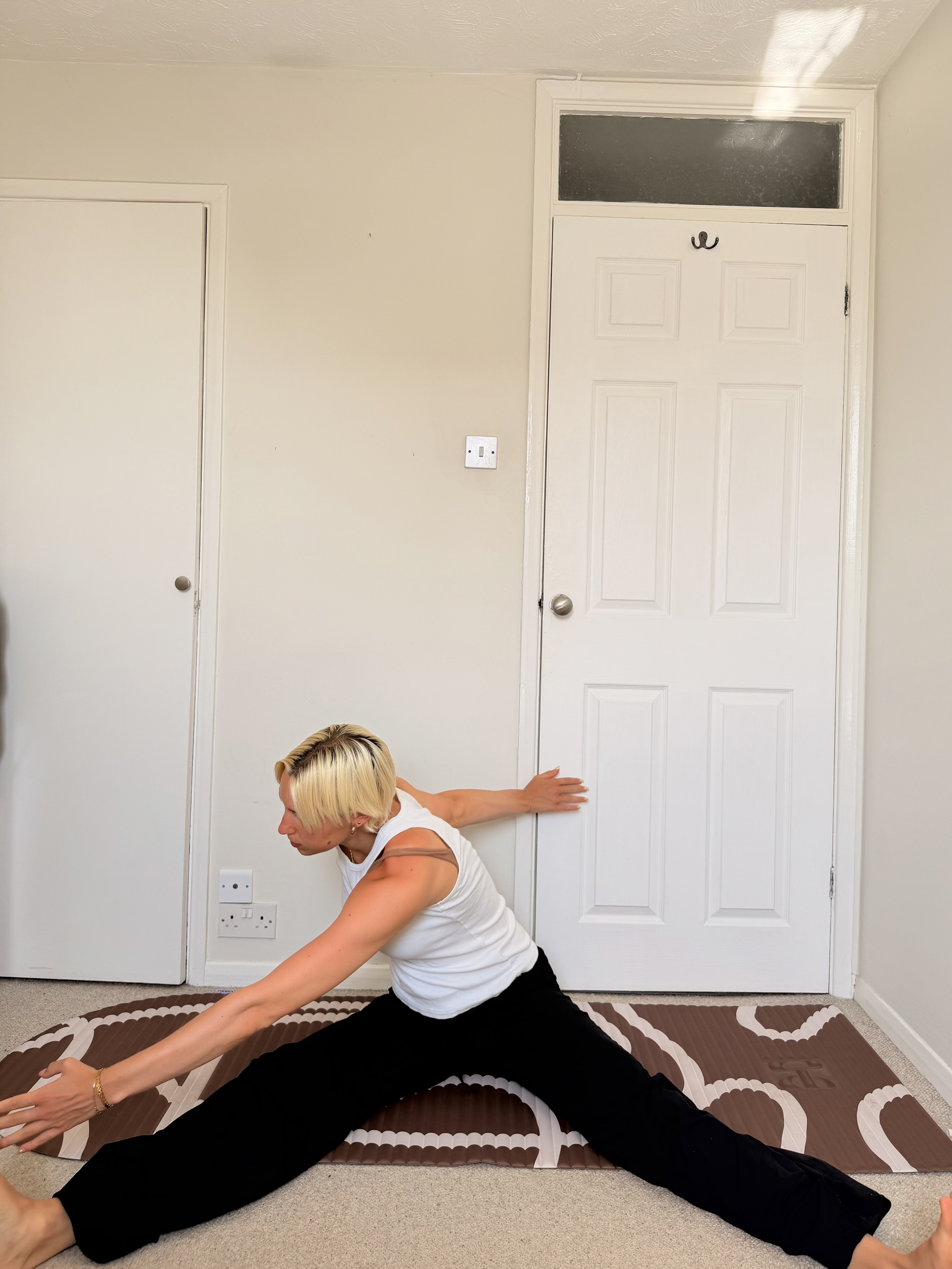
The biggest thing I noticed in the first couple of days was how little mobility I had, especially in my spinal rotation. My hamstrings, too, were super tight, and I needed to bend my knees generously in the roll down. To be clear, this isn’t cheating and actually is the best way to start when your hamstrings are screaming at you. The improvements are quick, too - by day three, I could get my legs virtually straight, which was a huge transformation from how the week started.
Days four to seven
By the latter half of the week, I was noticing huge improvements. Not only did I feel stronger practising the moves themselves (my core switched on more readily than it had on day one or two), but I was also much more aware of my posture in the many hours I was at my desk. It felt more natural to sit taller, to regularly twist to release my spine, and I found myself wanting to stand up more to maintain my new mobility.
The roll-up will always be one of my hardest Pilates moves - I have tight hips that always want to take charge when I should be recruiting my core. But the opportunity to practice it daily, within the context of just a few reps rather than a full class, was really rewarding. Being able to focus on form without overloading on volume meant I saw big improvements, especially when I concentrated on my breath. By day seven, I felt much more in control of the move, and my hips were noticeably less overpowering.
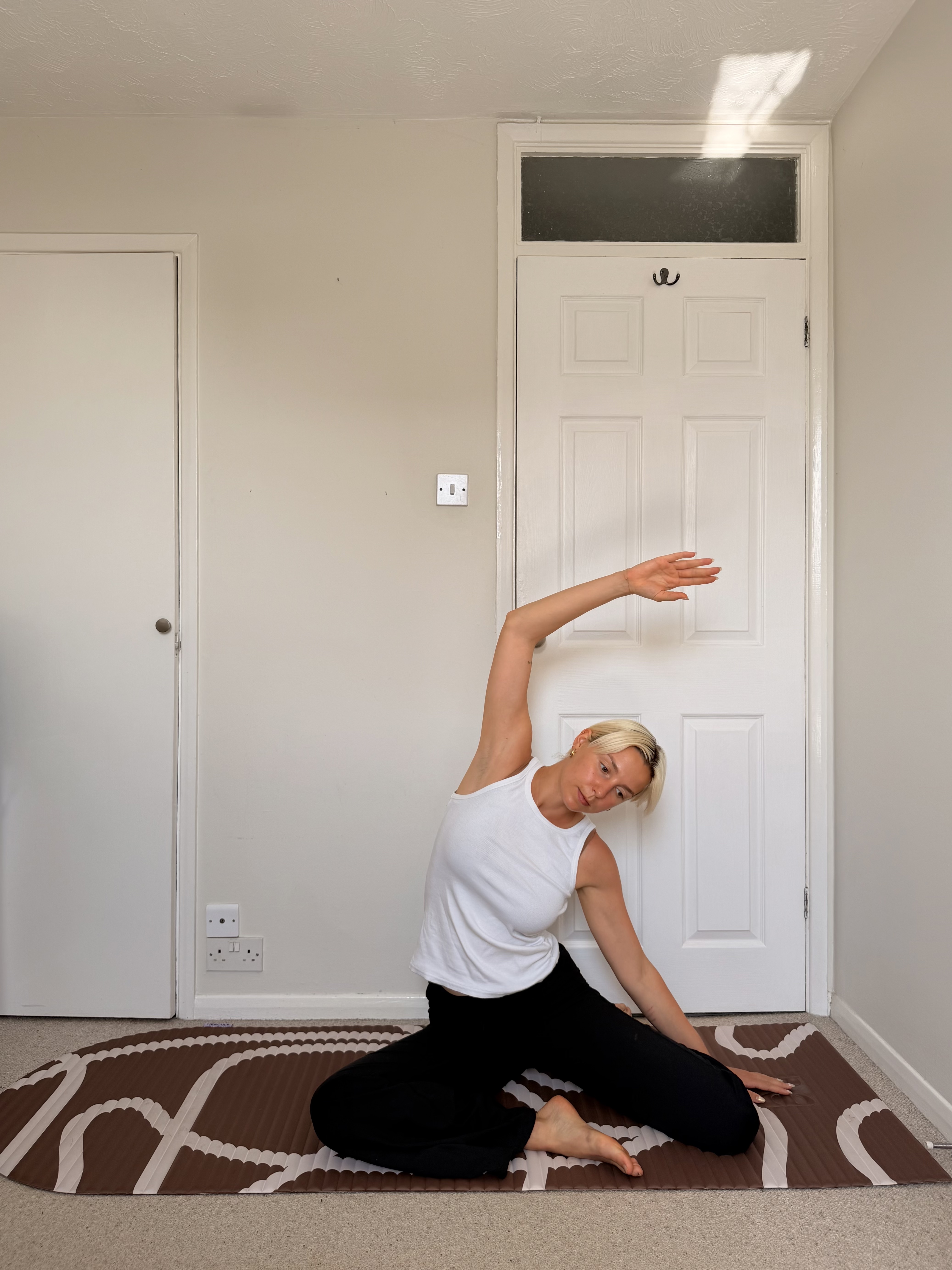
In short, this quick sequence really doesn’t invade your life much at all, but punches well above its weight in benefits. I felt stronger, taller and more mobile by the end of the week, and really enjoyed how the combination moved my body in a variety of directions. It feels well-rounded, challenging without being overwhelming, and there’s no doubt it will stay a regular feature in my exercise schedule.
Shop MC-UK approved Pilates essentials now:
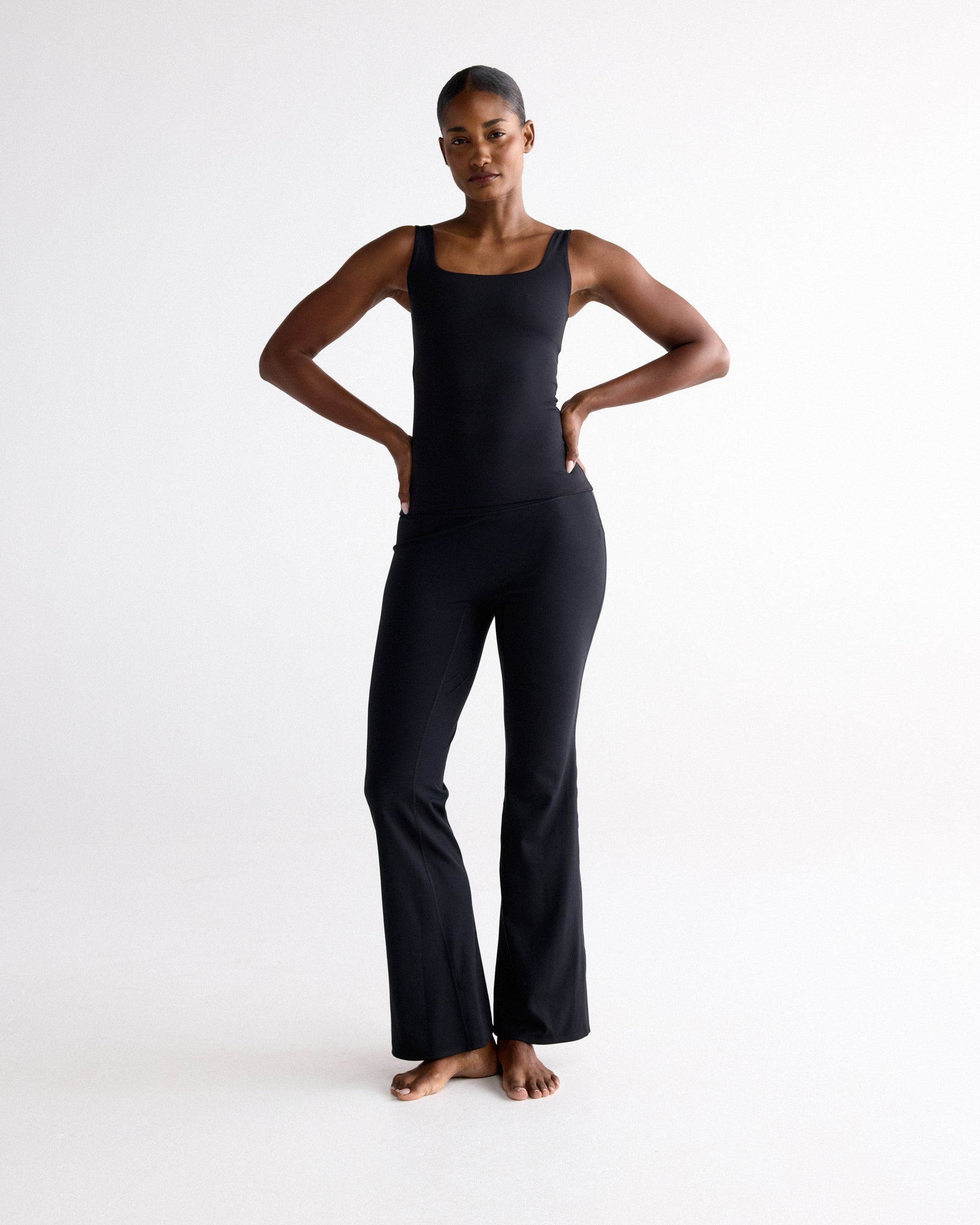
Historically, I’ve been a flares hater. I’m 5ft9, so I often find they’re too short, grazing my ankles in the wrong way.
Not so the Adanola flared yoga pants. They’re flattering without being restrictive, come in both regular and tall sizing, and are refreshingly affordable at £46. If you’re looking for an all-rounder Pilates pant to take you from workout to desk and back again, I’d wholeheartedly recommend.
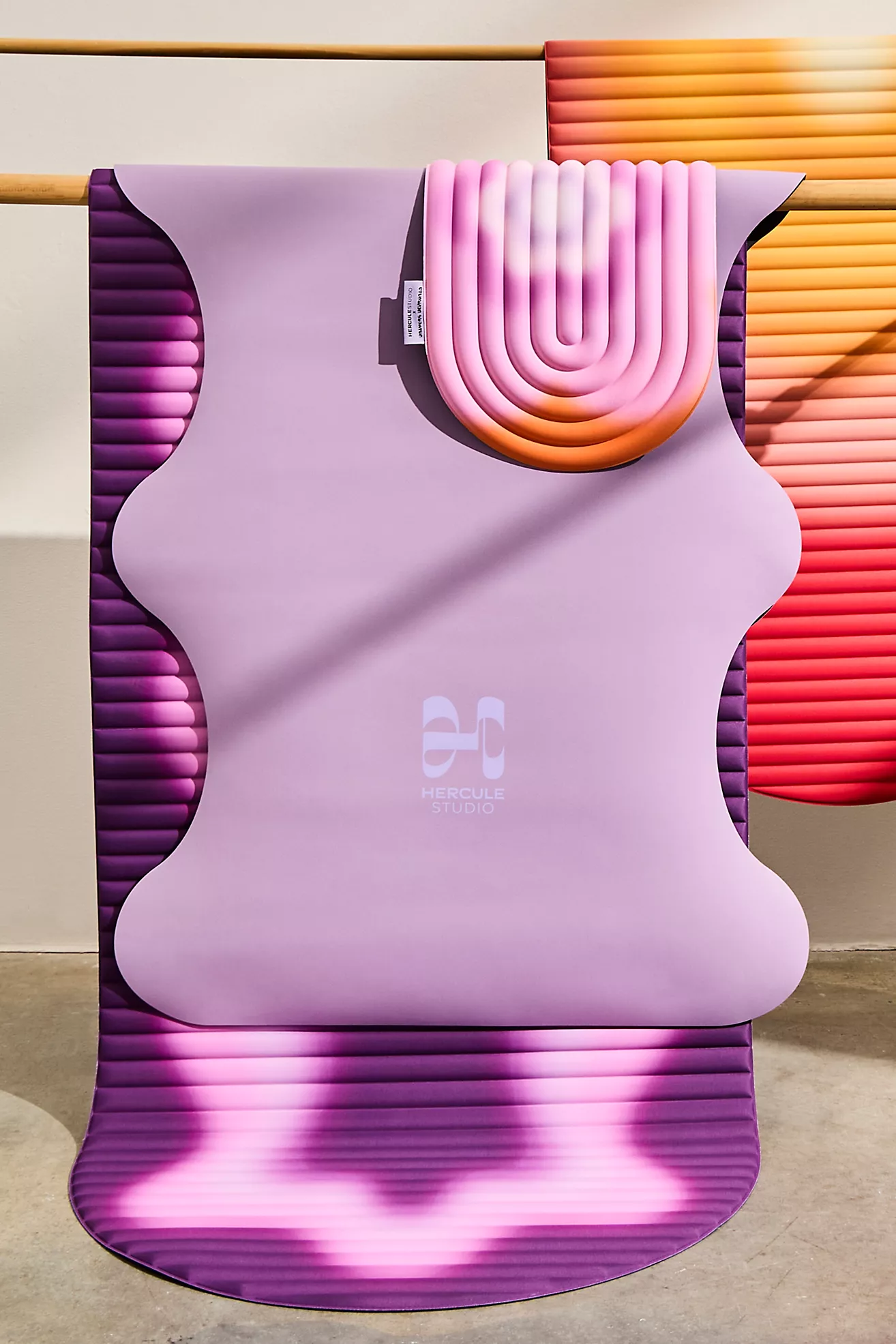
When practising Pilates at home, sometimes a regular yoga mat just doesn’t cut it - especially for moves that require you to be on your knees. That’s where Hercule’s mini mat can be a game-changer. Small and portable, it provides an extra layer of padding on top of your mat, or can be packed in your suitcase for on-the-go practice. Plus, it looks ultra cute.
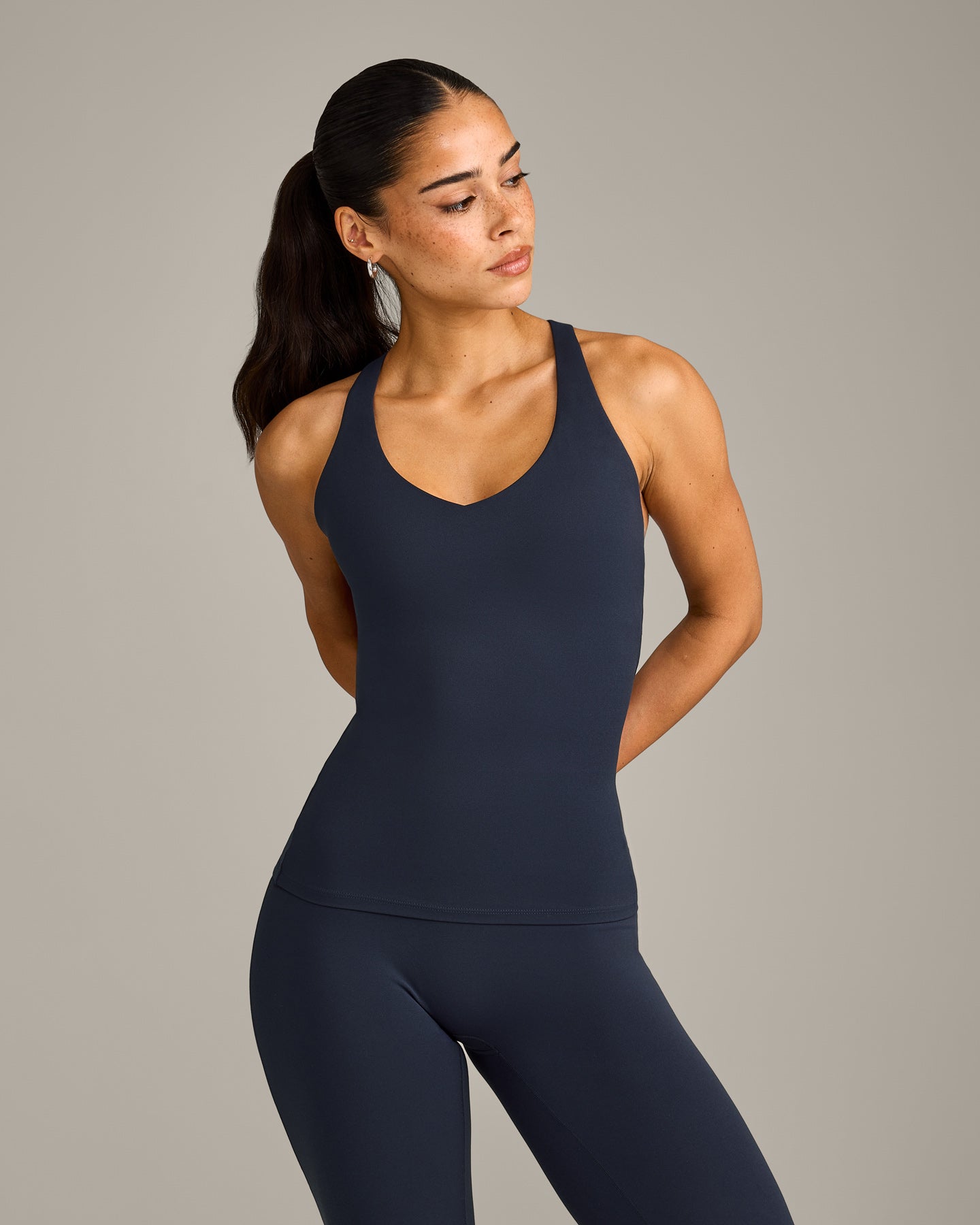
Oner Active clothing is a relatively new addition to my life (late to the party, I know), but I truly am a convert. Everything I buy from them fits like a glove, has proven long-lasting so far, and looks great, too.
This racer-back vest is a firm favourite, especially for those who prefer not to workout in just a sports bra. It’s comfy, flattering and looks great with the Adanola flares.
from Latest from Marie Claire UK https://ift.tt/T1MWtwA
via IFTTT

No comments:
Post a Comment